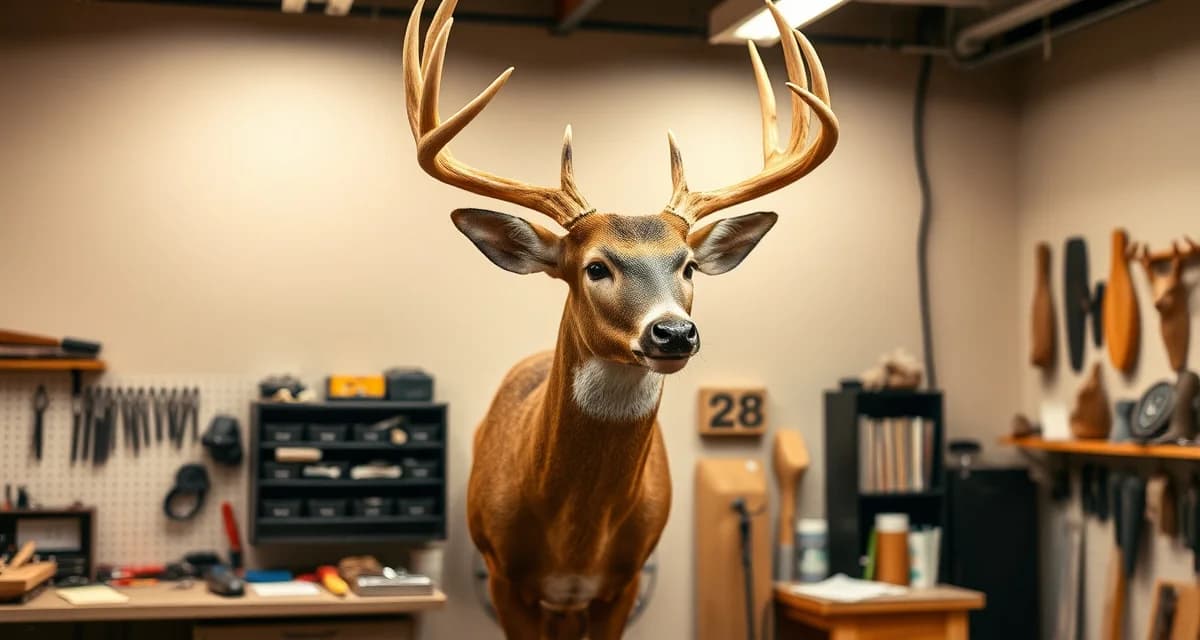
Midwest Taxidermy Shop Guide: Managing the Nation's Best Deer Volume
The Midwest produces more record-class whitetails than any other region in the country. Iowa leads all states in Boone and Crockett typical whitetail entries. Illinois consistently ranks in the top three. Wisconsin, Ohio, Michigan, and Indiana all generate trophy deer that attract hunters from across the country.
For taxidermists in this region, that means two things: high-value mounts and high volume. The combination of big deer and concentrated firearms seasons tests Midwest taxidermy operations in ways that longer, gentler seasons don't.
Here's how shops across Iowa, Wisconsin, Illinois, Ohio, and Michigan manage the Midwest's deer season reality.
TL;DR
- AI intake at 4 to 5 minutes per deer versus paper at 8 to 12 minutes per deer translates to double the intake capacity during Ohio's most critical two weeks.
- Shops that prepare operationally (intake systems ready, QR tags pre-printed, customer portal links ready to distribute) get through those 9 days without chaos.
- Inbound status calls drop by 90 percent or more.
- For Wisconsin taxidermists, those 9 days represent a massive proportion of annual deer intake.
- Here's how shops across Iowa, Wisconsin, Illinois, Ohio, and Michigan manage the Midwest's deer season reality.
- The 9-day season is not a surprise.
Iowa: World-Class Whitetails, Multi-State Customers
Iowa's antler restrictions and low deer density have produced a whitetail population that puts more B&C typical entries into the record books than any other state. That reputation draws serious hunters from Illinois, Wisconsin, Ohio, and beyond. Often hunters who've purchased expensive nonresident tags after years of applying.
For Iowa taxidermists, this means a customer base that's geographically scattered and emotionally invested. The hunter from Ohio who shot a 170-class Iowa whitetail isn't going to be a casual customer about the status of his mount.
The out-of-state communication challenge in Iowa:
At peak season, Iowa shops serving nonresident hunters deal with the same problem: customers who can't visit the shop and who call for status updates. The solution is a customer portal that gives those hunters real-time visibility without the phone call.
Shops managing 150+ deer per season with a significant out-of-state customer component find the portal return on investment to be immediate. Inbound status calls drop by 90 percent or more. The phone rings with specific questions, not "where is my deer?" calls.
Iowa's documentation requirements:
Iowa nonresident deer tags come with specific documentation requirements at intake. License number, tag number, and harvest location are all required. Out-of-state hunters aren't always familiar with Iowa's requirements, which means the taxidermist needs an intake process that captures this information consistently regardless of whether the hunter volunteers it.
Automated intake forms with required fields for Iowa-specific harvest data ensure this is never missed.
Wisconsin: The 9-Day Gun Season Pressure Cooker
Wisconsin's traditional 9-day firearm deer season, typically running from the Saturday before Thanksgiving, is the most concentrated high-volume intake period in the Midwest. For Wisconsin taxidermists, those 9 days represent a massive proportion of annual deer intake.
Wisconsin leads all states in deer hunters per square mile in many regions. The opening Saturday of firearms season produces more deer in Wisconsin than some states see in an entire season.
How Wisconsin shops prepare:
The 9-day season is not a surprise. It's on the calendar every year. Shops that prepare operationally (intake systems ready, QR tags pre-printed, customer portal links ready to distribute) get through those 9 days without chaos.
Shops that rely on paper during the Wisconsin gun season are operating with a bottleneck they created themselves. At peak intake during those 9 days, the difference between a 5-minute AI intake and a 10-minute paper intake is the difference between serving every customer and turning some away.
Wisconsin CWD documentation:
Wisconsin's CWD management zones create documentation requirements that vary by county. Deer from CWD-positive zones require specific harvest location documentation that goes beyond standard harvest tag information.
Software that includes state-specific compliance fields (required for Wisconsin CWD documentation at intake) ensures this information is captured at the moment of intake rather than chased down after the fact.
Illinois: Trophy Deer and Non-Resident Hunter Volume
Illinois ranks top three in B&C whitetail entries and produces some of the largest typical and non-typical bucks in the country. Like Iowa, the state's trophy reputation attracts nonresident hunters from Indiana, Ohio, Michigan, and beyond.
Illinois archery season opens in October, well before the November firearms season that dominates intake at most Midwest shops. That extended archery season means Illinois shops are managing intake earlier than most of their peers, and the season extends into late January for some species.
The Illinois extended-season challenge:
Illinois's long season means more capes in the system simultaneously over a longer period. A cape taken in early October might be in the tannery when December gun season capes are coming in. The tannery queue management for a multi-month Illinois season requires tracking that paper simply can't do cleanly.
Digital tannery tracking that logs shipment date, tannery destination, and return date for each job gives Illinois shops visibility into their tannery queue across the extended season.
Ohio: Two-Week Firearms Intensity
Ohio's two-week firearms season is one of the most concentrated high-volume periods in the Midwest. The season typically runs in late November through early December, and a significant number of Ohio hunters take their deer during this period.
Ohio's ODNR has increased compliance inspection frequency in recent years, making accurate harvest documentation at intake increasingly important for Ohio taxidermists.
Ohio's compliance environment:
Ohio ODNR inspections look for harvest tag documentation, license numbers, and legal status of harvested deer. The intake records that satisfy these requirements need to be complete and organized.
Digital intake systems that require harvest tag documentation as a non-skippable field at intake create an Ohio compliance record that's both complete and instantly accessible during an inspection.
Ohio's capacity challenge:
A two-week firearms season that concentrates intake creates a surge management problem. Ohio shops that are set up for efficient intake during that window handle the volume. Shops that aren't have lines, missed intake details, and customers who leave frustrated.
AI intake at 4 to 5 minutes per deer versus paper at 8 to 12 minutes per deer translates to double the intake capacity during Ohio's most critical two weeks.
Michigan: Upper Peninsula Wilderness and High Volume
Michigan's deer hunting splits between the Lower Peninsula's agricultural-edge hunting and the Upper Peninsula's wilderness character. The UP produces serious deer and serious hunters who travel long distances for the experience.
UP hunters are often far from home when they drop a deer and choose a taxidermist based on reputation and availability. Those hunters are also far from home during the entire production period. They're portal customers by necessity.
Michigan's multi-zone complexity:
Michigan has both firearm and archery deer zones, and the regulations vary by zone. License numbers, harvest dates, and zone documentation are all part of Michigan's taxidermist record requirements. A shop serving hunters from multiple Michigan zones needs intake forms that capture zone information accurately.
Michigan waterfowl overlap:
Michigan sits on the Atlantic and Mississippi flyways. Waterfowl season overlaps with deer season in many years, creating simultaneous deer and bird intake for shops that work both species. The species-category-specific intake workflow becomes essential when you're simultaneously managing CWD-zone deer documentation and federal migratory bird permit verification.
Regional Preparation Strategies That Work
Across Midwest states, the taxidermists managing peak season best share a common approach:
Pre-season systems review. Before each deer season, they review their intake process, update their compliance documentation for any state regulatory changes, and test their technology systems.
Pre-printed QR tags. QR tags ready before the season opens mean no fumbling with printing during peak intake days.
Customer portal communication. Pre-season emails to past customers include a note about the customer portal. When hunters drop off deer, portal adoption is higher because they already know it exists.
Tannery timing. Midwest shops ship to tanneries in batches, typically in December and January. Having a clear picture of when each batch went and when it's expected back keeps customer timeline communication accurate.
Frequently Asked Questions
Which Midwest states have the highest deer taxidermy volume?
Wisconsin, Illinois, Iowa, Ohio, and Michigan are consistently the highest-volume states in the region. Wisconsin's concentration of hunters and 9-day firearms season creates intense short-term volume. Illinois and Iowa generate high-value trophy deer that attract significant nonresident hunter volume. Ohio's two-week firearms season concentrates intake similarly to Wisconsin's.
How do Midwest shops prepare for November firearms seasons?
Preparation starts in September. Intake systems are tested. QR tags are printed. Customer portal messaging is ready. Tannery coordination is confirmed. Compliance documentation for CWD zones is reviewed and updated for any new zone changes. Shops that prepare operationally before October can handle November's volume. Shops that don't are scrambling through the most critical intake period of the year.
What makes Midwest deer taxidermy different from other regions?
Volume concentration is the primary difference. Southern and Western states often have longer, more spread-out deer seasons. Midwest seasons, especially Wisconsin's and Ohio's firearms seasons, concentrate enormous intake into very short windows. That compression demands intake systems that are fast and accurate under pressure. The kind of pressure that paper records don't handle well.
How does this apply to solo taxidermy shops?
The principles in this guide apply to solo shops just as they do to larger operations, though the scale differs. A single-person shop may have lower absolute volume but faces the same documentation, compliance, and customer communication requirements. The practical advice here scales down to any shop size.
What is the most common mistake taxidermists make with taxidermy shop midwest deer volume?
The most common mistake is treating taxidermy shop midwest deer volume as an afterthought rather than building it into the standard workflow from the start. Shops that encounter problems in this area typically did not establish clear processes before season, which means every situation becomes a one-off decision rather than a standard response.
Related Articles
- Regional Taxidermy Tannery Guide: Find the Best Tannery for Your Shop
- All Species Taxidermy Shop Guide: Managing Every Animal Type
- 5 Ways Iowa Taxidermy Shops Are Managing World-Class Deer Demand
- 5 Ways Pennsylvania Taxidermy Shops Are Surviving the Nation's Largest Deer Hunt
Try These Free Tools
Put these insights into practice with our free calculators and planners:
Sources
- National Taxidermists Association (NTA)
- US Fish & Wildlife Service
- Breakthrough Magazine
- State wildlife agencies
- Small Business Administration (SBA)
Get Started with MountChief
Running a taxidermy shop means juggling intake, tracking, compliance, and customer updates every day. MountChief puts all of it in one place so nothing slips through the cracks.