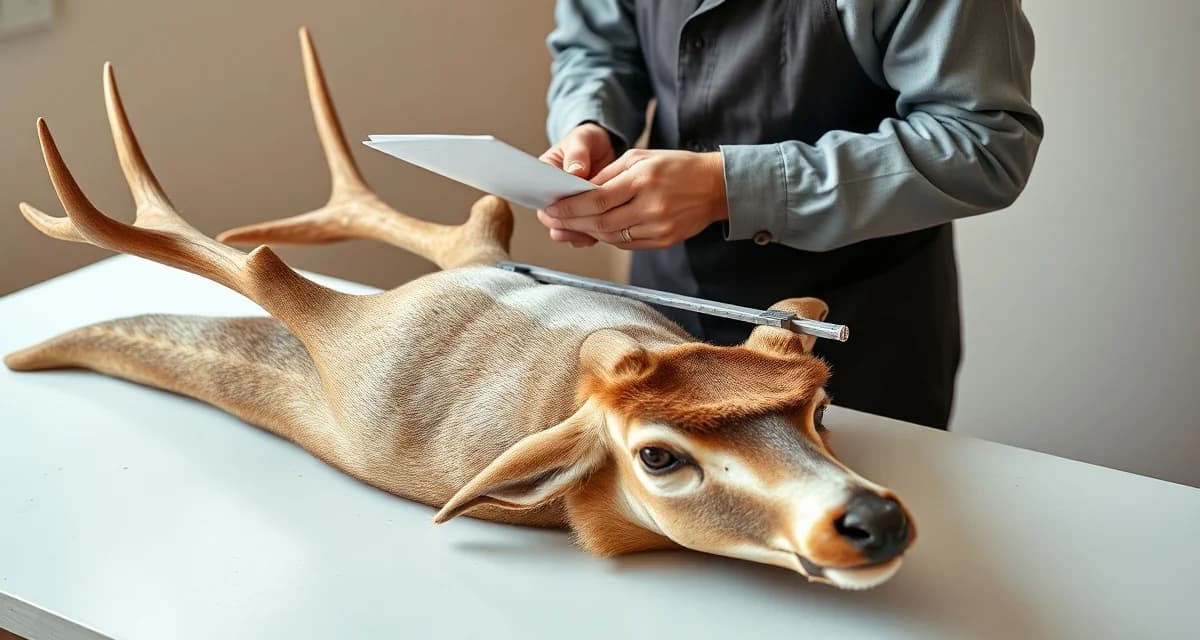
Deer Taxidermy Intake Best Practices: 10 Rules Every Shop Should Follow
The first five minutes of intake determine 90 percent of the downstream outcome for any job. Get it right and the rest follows. Get it wrong (skip a measurement, skip a photo, skip the tag number) and you're setting up a problem that arrives six months later at the worst possible time.
Shops following structured intake protocols have 80 percent lower specimen error rates. Here's the protocol.
TL;DR
- Shops following structured intake protocols have 80 percent lower specimen error rates.
- The first five minutes of intake determine 90 percent of the downstream outcome for any deer job.
- Specific turnaround estimates at intake prevent most customer disputes about timeline expectations.
- Photographing every specimen at intake before any other work is the most important single intake habit.
- QR tags applied before the specimen moves anywhere eliminate virtually all specimen mix-up risk.
- Digital intake records cannot be lost to water, fire, or illegibility the way paper records can.
Rule 1: Get the Harvest Tag Number Before Anything Else
The harvest tag number is your compliance anchor. It's the record that connects the physical deer to the legal harvest, and it's the first thing a wildlife officer looks for during an inspection.
Make it the first field on your intake form. Don't proceed without it. If the customer says they'll bring it next time, don't open the intake ticket.
If a hunter doesn't have their tag number at drop-off, they can call with it. Leave the intake ticket in draft status. Never close an intake without a tag number in the record.
Rule 2: Take Cape Condition Photos Before the Customer Leaves
The photos taken at intake are your documentation baseline. If there's slippage on the ear tip, a small area of freezer burn on the shoulder, or a tear from field handling. It needs to be in the intake record before you accept the cape.
Six months later, when a customer says the slippage on the ear must have happened during tannery, your intake photos either show it was already there or they don't. Without them, you have no defense.
Take photos of:
- Both sides of the cape
- The face (showing ears, lips, nose)
- Any pre-existing condition issues
Minimum: 4 to 6 photos per intake. Takes 60 seconds. Worth every second.
Rule 3: Confirm and Write Down the Mount Style and Pose
"Straight neck" means something different to different people. So does "looking to the right." So does "semi-sneak."
Confirm the mount style in explicit terms. Use your form catalog or a reference guide if needed. Once the customer confirms the pose, write it on the intake form. Have them sign acknowledging the confirmed pose.
Mount style disputes at pickup are almost always traceable to a pose that was discussed but not documented. If it's not on the form, it didn't happen.
Rule 4: Measure the Cape
Cape circumference at the base of the neck determines form size. Skip this and you're guessing when you order forms weeks later.
Measure girth at intake, every time. It takes 30 seconds. A tape measure should be at the intake area, not on a shelf across the room.
For out-of-season capes coming in frozen: note that the measurement is an estimate and confirm at thaw. But take the best measurement you can at intake regardless.
Rule 5: Apply the QR Tag Before the Cape Leaves Your Hands
The QR tag goes on the cape at intake, before the customer walks out. Not when you get to it later. Not after you process the intake form.
Once the cape is in the freezer without a tag, you're trusting your memory to connect it to the right intake record. With 40 deer in your freezer during November, trust your documentation, not your memory.
Tag at intake. Every time. Without exception.
Rule 6: Collect the Deposit Before the Intake Closes
A deposit not collected at intake becomes a deposit collected awkwardly at a follow-up call, or not collected at all.
Your intake process should not be completable without deposit collection. Whether that's a physical card swipe at the intake counter or a payment link sent to the customer's phone during intake, the deposit is collected during intake. Not after.
50 percent is the standard. Get it.
Rule 7: Confirm the Customer's Preferred Communication Method
Some customers want text updates. Some want email. Some want the portal. Some older hunters genuinely prefer a phone call.
Ask at intake: "How would you like us to reach you when there are updates on your mount?" Note the preference in the intake record. Then use that preference.
Customers who feel communicated with the way they prefer are your repeat customers.
Rule 8: Read Back the Key Information
Before the customer leaves, read back the critical information:
- "Your mount is a straight-neck shoulder mount with a left look"
- "Your harvest tag number is [X]"
- "Your deposit was [amount]"
- "Your estimated completion is [timeframe]"
This takes 30 seconds and catches any discrepancies while the customer is still standing in front of you. It's also a professional touch that customers notice.
Rule 9: Set Realistic Timeline Expectations
The most common source of negative reviews and customer complaints isn't quality, it's timeline. A customer told "spring" who doesn't get their mount until September is an unhappy customer even if the mount is excellent.
Be specific and conservative with timelines. "Our current estimated completion for deer shoulder mounts is 8 to 10 months from intake" is more useful than "sometime next spring."
Build in buffer. If you think 7 months, say 8 to 9. Under-promise and over-deliver. Being done early generates a 5-star review. Being done late generates the opposite.
Rule 10: Verify Your Compliance Documentation for the Species
This applies to deer, but especially to other species that share your intake counter:
For deer, you need the harvest tag number. For migratory birds, you need the federal permit. For bear, you need the skull sealing confirmation. For exotics, you may need CITES documentation.
Use your intake system's species-specific required fields to enforce this. If the system won't let you close an intake without the compliance documentation, you can't accidentally skip it on a busy day.
The rule: compliance documentation is never optional. Busy season doesn't suspend federal requirements.
Frequently Asked Questions
What are the most important things to capture at deer intake?
The harvest tag number (compliance essential), cape condition photos (dispute protection), mount style and pose confirmed in writing (quality assurance), cape girth measurement (form selection), and deposit collection (abandonment prevention). These five elements together create a complete intake record that protects the taxidermist and sets the customer's expectations accurately.
How do I make deer intake faster without sacrificing accuracy?
AI-powered intake guided by required fields reduces per-deer intake time to 4 to 5 minutes without sacrificing completeness. Required fields that can't be skipped mean you're not making decisions about what to capture under time pressure. The system decides for you, and everything required gets captured. The speed comes from the guided workflow, not from cutting corners on documentation.
What intake practice prevents the most disputes down the line?
Condition photos at intake, without question. Every dispute about whether damage occurred before or during production comes down to documentation of the cape's condition when it arrived. Photos taken at intake that clearly show the cape's state (including any pre-existing issues) are objective evidence that protects you in any dispute. The absence of intake photos puts you on the losing side of any damage disagreement.
How does this apply to solo taxidermy shops?
The principles in this guide apply to solo shops just as they do to larger operations, though the scale differs. A single-person shop may have lower absolute volume but faces the same documentation, compliance, and customer communication requirements. The practical advice here scales down to any shop size.
What is the most common mistake taxidermists make with deer taxidermy intake best practices?
The most common mistake is treating deer taxidermy intake best practices as an afterthought rather than building it into the standard workflow from the start. Shops that encounter problems in this area typically did not establish clear processes before season, which means every situation becomes a one-off decision rather than a standard response.
Related Articles
- Fish Taxidermy Intake Best Practices: 6 Rules for Accurate Results
- What Should a Taxidermy Shop Intake Station Look Like?
- Taxidermy Shop Best Practices in 2026: Operational Standards
- Measuring Deer Antlers at Intake: B&C Scoring Basics for Taxidermists
Try These Free Tools
Put these insights into practice with our free calculators and planners:
Sources
- National Taxidermists Association (NTA)
- US Fish & Wildlife Service
- Breakthrough Magazine
- State wildlife agencies
- Small Business Administration (SBA)
Get Started with MountChief
Taxidermy shops that track specimens, manage customer communication, and handle compliance in one system spend less time on admin and more time on quality work. That is what MountChief was built for.