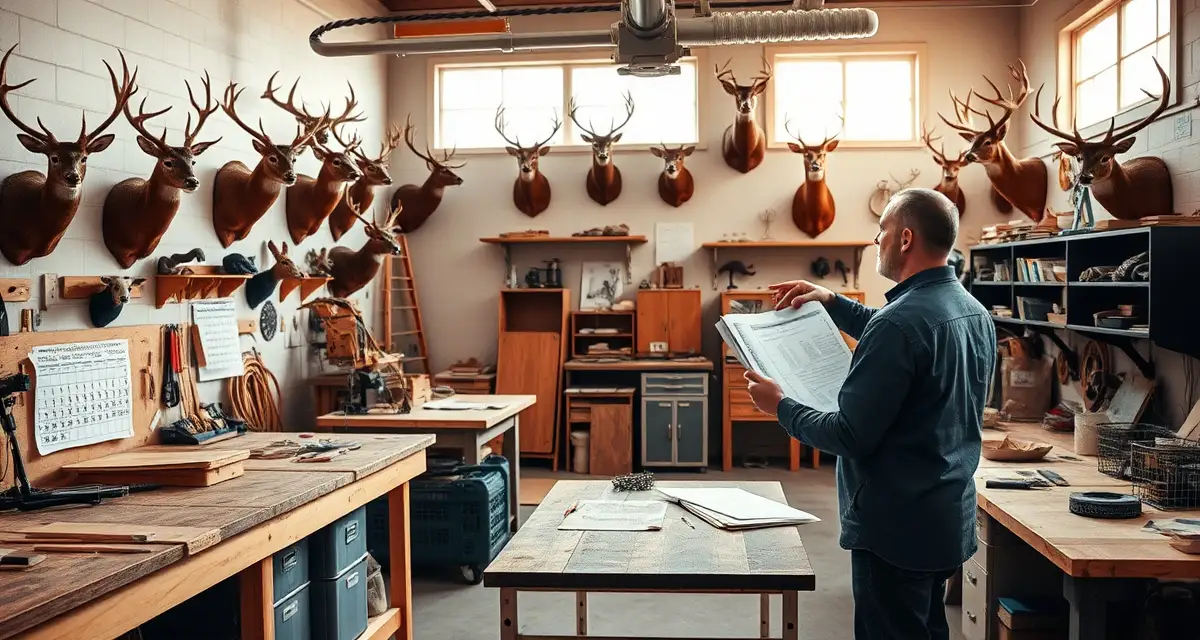
Off-Season Taxidermy Workflow: January Through August
The taxidermists who enter deer season the most prepared aren't the ones who scramble hardest in October. They're the ones who used January through August intentionally. Shops with structured off-season plans enter deer season around 40 percent more prepared than shops that run reactive all year.
This is the month-by-month plan for off-season operations. From backlog clearance in January through final pre-season readiness in September.
TL;DR
- Shops with structured off-season plans enter deer season around 40 percent more prepared than shops that run reactive all year.
- - Is your intake person trained on your current system or do they need updated training?
- - Are there responsibilities that weren't clear during last season that need to be defined before the next one?
- Species-specific intake, care, and documentation requirements all need to be understood before intake starts, not during it.
- If the gap has narrowed, your prices need to go up.
- simple post in August, "We're opening bookings for deer season 2026, here's our process and expected timeline", sets the stage for every intake that follows.
January: Backlog Clearance and System Assessment
January is when your deer season rush is winding down and your production backlog is at its highest point of the year. This month has one primary job: get current.
Clear Your Production Backlog
Every job that's been waiting in queue gets moved in January. This isn't the time for new project intake (though you may take a few off-season pieces). It's the time to close out every cape that's been sitting, finish the mounts that have been waiting for finish work, and clear your shop floor.
Your goal by the end of January: every job that came in before Thanksgiving is either finished, actively in production, or has a clear written status and estimated date communicated to the customer. No job should be sitting with no current status.
Assess Your Systems
January is also the natural moment to evaluate what broke during deer season.
Where did your intake process create problems? What information was missing at pickup that should have been captured at intake? What customer communication gaps led to phone calls you shouldn't have needed to take?
Write this down while it's fresh. The specific things that caused you stress during October and November are your roadmap for what to fix before next season.
Software evaluation. If you're still managing intake on paper, January is the time to start your research into shop management software. The January to March window is ideal for system transitions because your volume is lower and you have time to learn without the pressure of peak season incoming.
February: System Upgrades and Staff Evaluation
If your January system assessment identified gaps, February is when you act on them.
Software Transition Window
If you've decided to move from paper to software, or from one software platform to another, February is the best time to do it. Here's why:
- Your volume is low, so the learning curve doesn't cost you productivity during a critical period
- You have time to run your new system in parallel with your old system for a few weeks to verify you're capturing everything correctly
- You have six to seven months before deer season to develop habits and work out any issues
Starting a software transition in August or September (when deer season deposits are already coming in) means you're learning while simultaneously handling your busiest intake period. February gives you room.
Staff Review
If you have employees or regular helpers, February is the time for performance review and role clarification.
- Who's handling intake next season?
- Is your intake person trained on your current system or do they need updated training?
- Are there responsibilities that weren't clear during last season that need to be defined before the next one?
Document any role changes and confirm new expectations in writing. "We talked about it" is not a training plan.
March: Training and Process Documentation
By March, you should be running on any new systems you adopted in February. This month's focus is training and documentation.
Document Your Intake Protocol
If your intake process isn't written down, write it down this month. A one-page intake checklist covering:
- Required customer information
- Required documentation (license, tag numbers, permit numbers)
- Photos required by species
- Measurements required by species
- What gets written where
This document exists for two reasons: training new staff and enforcing consistency when you're busy. A verbal intake process runs as well as whoever remembers it on a given day. A written checklist runs the same way every time.
Species-Specific Training
If you or your staff will be handling any new species next season (a Mountain West elk shop that's adding fish, a whitetail shop that's starting birds) March is when the training happens. Species-specific intake, care, and documentation requirements all need to be understood before intake starts, not during it.
Compliance Review
Review the wildlife regulations for your state and any states where your out-of-state customers hunt. CWD zone maps update annually. State license and record-keeping requirements change periodically. Verify that your intake documentation meets current requirements, don't rely on last year's understanding of the rules without a current verification.
April: Financial Review and Pricing Update
Spring is the time to look at your numbers from the previous season and adjust your pricing for the coming one.
Cost-of-Production Review
Material costs change. Supply prices for forms, eyes, finishing materials, and shipping have all shifted over the past few years. Before you set your prices for next season, verify that your costs haven't changed enough to erode your margins.
A simple calculation: what did it actually cost you to produce a standard whitetail shoulder mount last season, including your labor time at a fair hourly rate? Compare that number to what you charged. If the gap has narrowed, your prices need to go up.
Update Your Price List
If your pricing hasn't been reviewed in more than a year, April is the time to do it. Price increases are easier to absorb when they're announced well before season opens. Hunters who see your price list in May have time to plan for fall deposits. Hunters who see a price increase in September when they're bringing in their first buck are caught off guard.
Communicate price changes on your website, social media, and any signage or promotional materials you use for hunter outreach.
Tax Preparation
If you haven't filed or finalized your previous year's taxes, April's deadline is the natural forcing function. Use this process to review your income by category (deposits, final payments, shipping fees) and your expenses by category. This financial picture informs both your pricing decisions and your staffing decisions for next season.
May and June: Marketing and Pre-Season Outreach
Spring is your marketing window for the fall season. Hunters are wrapping up turkey season, thinking about summer scouting, and starting to plan for fall. This is when you reach them.
Google Business Profile Update
Verify that your Google Business Profile has current hours, current pricing (or a link to your pricing page), recent photos of finished mounts, and your current contact information. Most hunters who find a new taxidermist find them through Google. Your profile is your primary first impression.
Social Media Content
In May and June, post finished work from the previous season. A steady stream of quality finished mount photos (shoulder mounts, life-size, birds, fish) is the most effective organic marketing a taxidermist can do. Let the work speak.
Post species that are seasonally relevant. Turkey mounts in May. Early summer fish photos. Bear and predator work as those seasons approach. Deer mount content starting in August as archery season draws near.
Customer Outreach
Your existing customers are your most likely repeat customers. May or June is a good time to send a brief communication (email, social media post, or a simple postcard) reminding your existing customer base that you're booking for the coming season and that deposits are available.
Early bookers tend to be your best customers. Give them a reason to commit early.
July: Equipment Maintenance and Supply Ordering
July is logistics month. The fall season is two to three months away, and this is when you make sure you're physically ready.
Equipment Maintenance
Every piece of equipment in your shop should be checked and serviced in July:
- Airbrushes cleaned and tested
- Reference and finishing tools in good condition
- Freezer and refrigeration units operating correctly
- Any equipment that needs repair or replacement identified and addressed before peak season
An equipment failure during deer season costs you time, money, and customer confidence. A July maintenance check catches problems while you have time to fix them.
Supply Ordering
Order your bulk supply needs in July and early August. Forms, glass eyes, finishing materials, reference materials, packaging supplies. Supply chain delays have been a real issue in recent years. Ordering ahead gives you buffer.
Calculate your order based on last season's volume, adjusted for any growth you're expecting. Running out of a form size or finishing material in November is avoidable.
Tannery Coordination
Contact your tannery in July to confirm fall season logistics:
- Their current turnaround time and any changes to their schedule
- Their peak season capacity, are there limits on weekly shipment volume?
- Any changes to their pricing or requirements
If you're planning to test a new tannery this season, July is too late to start fresh. August at the latest if you want test results before the main season. If July is your first conversation with a new tannery, plan to use them for smaller or off-season pieces, not your main deer season volume.
August: Pre-Season Readiness and Booking
By August, preparation should be shifting into final readiness. Archery season opens in many states in September, your intake window opens before most people realize it.
Pre-Season Social Media Push
August is when deer hunting content starts to perform well online. Begin posting reminders about your services, your pricing, and how to get on your intake schedule. Use this month to generate pre-season contacts.
Key messages for August:
- What to do at the harvest to preserve your cape for mounting
- How to reach you during season
- Any early-booking incentives you're offering
- Your current wait time estimate for the coming season
Intake System Readiness Check
By the end of August, your intake system should be fully ready:
- All customer records from last season closed out
- New season's intake forms, digital records, or software system ready to receive incoming jobs
- Any staff trained and tested on the intake process
- Photo documentation protocol reviewed and ready
Set Customer Expectations Early
Post your expected wait time, your deposit requirements, and your intake procedures where hunters can find them before season opens. Hunters who know what to expect have smoother intake interactions and fewer complaints later.
A simple post in August, "We're opening bookings for deer season 2026, here's our process and expected timeline", sets the stage for every intake that follows.
The Off-Season Mindset
The best taxidermists treat the off-season as a different kind of work, not as downtime. The production pressure is lower, but the decisions you make between January and August are the ones that determine how your next deer season runs.
Shops that enter October with clear systems, trained staff, current pricing, stocked supplies, and a full marketing funnel have a fundamentally different season than shops that are still catching up from last year.
Use the slow months. They're the only window you get to work on your business instead of just in it.
Frequently Asked Questions
What should a taxidermy shop be doing in January and February?
January is for clearing your production backlog and assessing what broke during deer season. Every job from the fall should have a current status by the end of January. February is the time to act on what you found. If you're switching software, February gives you the best transition window before the next season. Staff training, role clarification, and intake process documentation also belong in this window.
When is the best time to train new staff for taxidermy shop operations?
March is the best month for formal training. By then, any new systems you adopted in February are running, and you have six months before deer season to develop habits and work out issues. Species-specific intake training should happen in March, along with documentation and compliance reviews. Training someone in September (when you're already getting early archery intake) means they're learning under pressure, which produces inconsistent results.
How do I use the off-season to prepare for a record deer season?
Start with a January backlog clearance so you're not carrying old work into a new season. Upgrade or fix your systems in February. Train staff and document your intake protocol in March. Review your pricing and finances in April. Run marketing from May through August. Do equipment maintenance and supply ordering in July. By August, your intake system should be fully ready and your pre-season marketing should be generating early contacts. Shops that follow this cycle enter deer season prepared rather than reactive.
How does this apply to solo taxidermy shops?
The principles in this guide apply to solo shops just as they do to larger operations, though the scale differs. A single-person shop may have lower absolute volume but faces the same documentation, compliance, and customer communication requirements. The practical advice here scales down to any shop size.
What is the most common mistake taxidermists make with taxidermy shop offseason workflow?
The most common mistake is treating taxidermy shop offseason workflow as an afterthought rather than building it into the standard workflow from the start. Shops that encounter problems in this area typically did not establish clear processes before season, which means every situation becomes a one-off decision rather than a standard response.
Related Articles
- Tips for the First Day of Deer Season at Your Taxidermy Shop
- What Should a First-Year Taxidermy Shop Expect During Deer Season?
- Top Tips for Surviving Taxidermy Peak Season
- What Do Taxidermy Shops Do in the Quiet Season?
Try These Free Tools
Put these insights into practice with our free calculators and planners:
Sources
- National Taxidermists Association (NTA)
- US Fish & Wildlife Service
- Small Business Administration (SBA)
Get Started with MountChief
Pre-season preparation is what separates shops that handle peak volume smoothly from those that fall behind on day one. MountChief's intake, tracking, and communication tools are designed to handle the pace of your busiest weeks. Try MountChief before your next season opener.