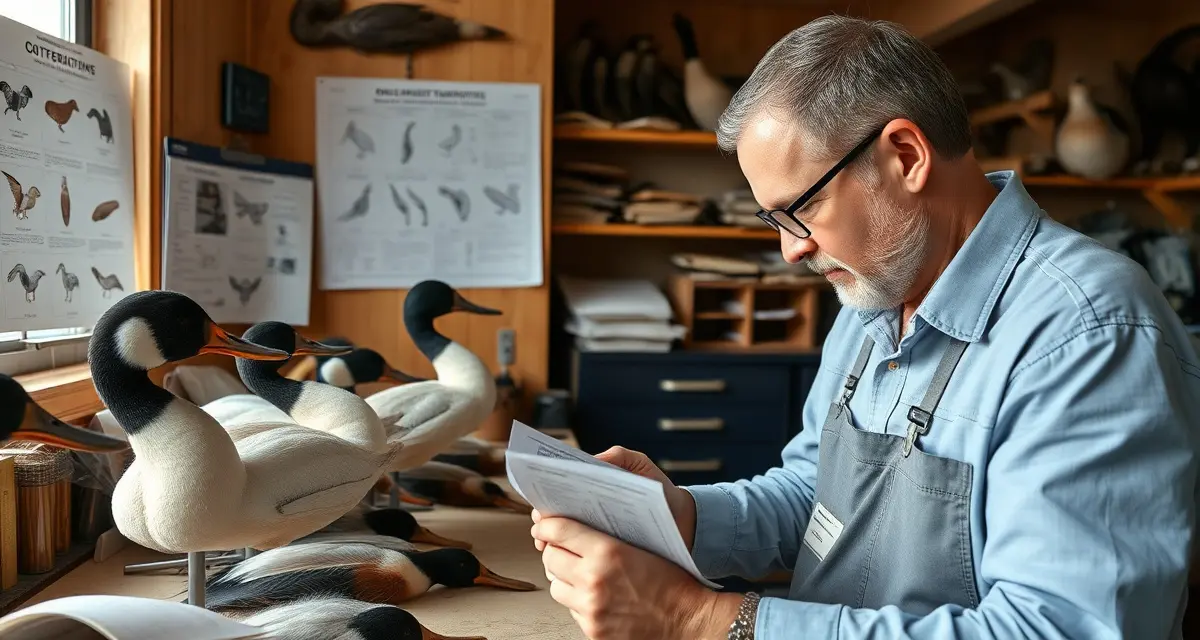
Waterfowl Season Preparation for California Taxidermy Shops
California's central valley is one of the most important waterfowl migration corridors in North America. When hundreds of thousands of ducks and geese funnel through the Sacramento and San Joaquin valleys each fall, California taxidermy shops with the right compliance systems are ready to serve the hunters who harvest them.
CDFW species limits for waterfowl are some of the most complex in the country. And verifying legal harvest documentation for species-specific limits is a federal compliance requirement on top of California's state regulations.
TL;DR
- Species identification (critical for limit compliance)
- "duck" is not sufficient documentation when some species have limits of 1 per day.
- These species have their own specific limits (sometimes as low as 1 bird per day) that hunters must comply with.
- Those birds need individual species documentation at intake, not just "3 ducks."
- "duck" is not sufficient documentation when some species have limits of 1 per day.
- A taxidermist accepting a California waterfowl mount must verify:
- What CDFW documentation must California shops be ready with for waterfowl season?
Why California Waterfowl Compliance Is Complex
California operates under federal migratory bird frameworks (Duck Stamp, federal limits, protected species) plus state CDFW regulations that add additional restrictions, zone-specific rules, and species-specific limits.
California's waterfowl zone system divides the state into Northern California zone, Southern California zone, and Colorado River zone, each with potentially different season dates and limits.
Species diversity in California waterfowl:
The Pacific Flyway brings an extraordinary diversity of waterfowl through California. Pintail, canvasback, redhead, scaup, and several duck species that other flyways see in smaller numbers pass through California in significant numbers. These species have their own specific limits (sometimes as low as 1 bird per day) that hunters must comply with.
A taxidermist accepting a California waterfowl mount must verify:
- Federal Duck Stamp for the year of harvest
- Valid California hunting license
- California Upland Game Bird Stamp (if applicable for certain species)
- Species identification (critical for limit compliance)
- Zone of harvest documentation
CDFW Documentation at Waterfowl Intake
For every California waterfowl intake:
- Hunter's name and contact information
- California hunting license number
- Federal Duck Stamp year of harvest
- Species identification, specific species, not just "duck"
- Zone of harvest
- Date of harvest
- Date received at shop
- Your California taxidermist license information
Species identification is particularly important in California because the complex species-specific limits mean a taxidermist who accepts birds without confirming species is potentially accepting illegally harvested birds.
Federal Migratory Bird Permit: Non-Negotiable
Every California waterfowl intake requires verification of the hunter's federal permit documentation. This is not a California-only requirement. It's the Migratory Bird Treaty Act federal requirement that applies in all states.
Federal permit verification must be a required field at waterfowl intake. In California's complex species environment, skipping this step creates compliance risk.
California Taxidermist License for Waterfowl
California CDFW requires a state taxidermist license. Working on migratory birds additionally requires a Federal Taxidermist Permit from USFWS. Both must be current before California waterfowl season opens in October.
Preparing for Multiple Species Simultaneously
California duck hunters often harvest multiple species in a single hunt. A successful morning might yield mallards, teal, and pintail from the same blind. Those birds need individual species documentation at intake, not just "3 ducks."
Intake that handles multiple birds from one hunter:
Create separate intake line items for each bird or each species group. Document species for every bird. This is more detailed than most deer or elk intake, but it's required by the complexity of California's species-specific limits.
Frequently Asked Questions
How do California taxidermists prepare for waterfowl season?
Both California taxidermist license and Federal Taxidermist Permit must be current before October opener. Intake forms must capture species identification, zone of harvest, and federal permit documentation as required fields. The complexity of California's zone system and species-specific limits makes compliance documentation more detailed than most other states, preparation must account for that complexity.
How do CA shops handle complex CDFW species limits at intake?
Species identification at intake is required for every bird. "duck" is not sufficient documentation when some species have limits of 1 per day. Train intake processes to identify species at acceptance and document each species separately in the intake record. If a hunter can't identify the species of their bird, that's a compliance conversation that needs to happen before acceptance.
What CDFW documentation must California shops be ready with for waterfowl season?
California taxidermist license and Federal Taxidermist Permit current before October opener, intake forms capturing species identification, zone of harvest, federal Duck Stamp year, and hunter license information as required fields. CDFW's zone-based regulations and species-specific limits create one of the most documentation-intensive waterfowl intake environments in the country, systems that enforce complete documentation are essential.
How does this apply to solo taxidermy shops?
The principles in this guide apply to solo shops just as they do to larger operations, though the scale differs. A single-person shop may have lower absolute volume but faces the same documentation, compliance, and customer communication requirements. The practical advice here scales down to any shop size.
What is the most common mistake taxidermists make with waterfowl season prep california?
The most common mistake is treating waterfowl season prep california as an afterthought rather than building it into the standard workflow from the start. Shops that encounter problems in this area typically did not establish clear processes before season, which means every situation becomes a one-off decision rather than a standard response.
Related Articles
- Bear Season Preparation for Maine Taxidermy Shops
- Bear Season Preparation for Wisconsin Taxidermy Shops
- Deer Season Preparation for Arkansas Taxidermy Shops
- The Complete Deer Season Preparation Guide for Taxidermy Shops
Try These Free Tools
Put these insights into practice with our free calculators and planners:
Sources
- National Taxidermists Association (NTA)
- US Fish & Wildlife Service
- Ducks Unlimited
Get Started with MountChief
Fish and waterfowl jobs require the same organized intake and tracking as big-game work. MountChief handles every species type with the same efficient intake system, customer portal, and production tracking. Try MountChief to manage all your species types in one organized platform.