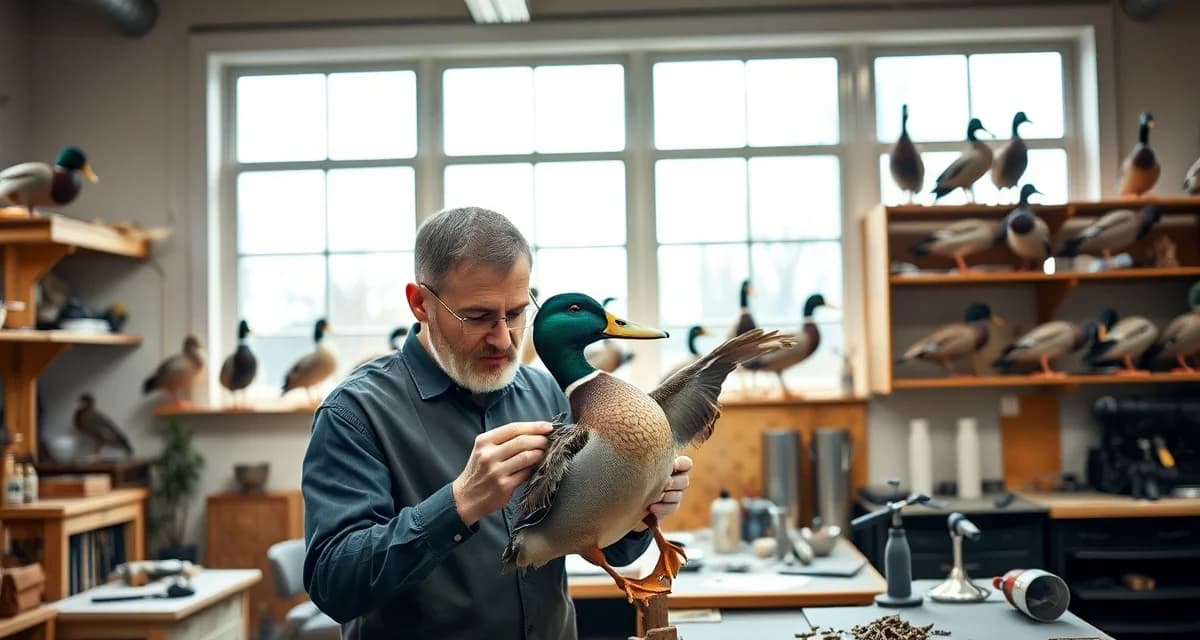
Waterfowl Season Preparation for Louisiana Taxidermy Shops
Louisiana's coastal marshes host the largest concentration of wintering ducks in North America. When the Mississippi Flyway delivers millions of birds to Louisiana's coastal marsh and agricultural zones, the state becomes one of the premier waterfowl hunting destinations in the world.
For Louisiana taxidermists, that means waterfowl intake runs concurrent with late deer season, dual species management requiring different documentation protocols simultaneously. Federal migratory bird salvage permit verification is required for every duck and goose intake, no exceptions.
TL;DR
- What LDWF and federal documentation must Louisiana shops be ready with for waterfowl?
- This is the non-negotiable: federal salvage permit verification must occur at every waterfowl intake.
- December in Louisiana is the most complex month for taxidermy shop compliance management.
- During December and January, a Louisiana taxidermy shop might take in deer capes on Monday, duck mounts on Tuesday, and both on the same afternoon.
- How do Louisiana shops handle simultaneous deer and duck season intake?
- The principles in this guide apply to solo shops just as they do to larger operations, though the scale differs.
Louisiana's Waterfowl Season Context
Louisiana's duck season typically runs in two splits, an early season (late November into December) and a late season (January into early February). The timing creates overlap with the tail end of Louisiana's deer season.
During December and January, a Louisiana taxidermy shop might take in deer capes on Monday, duck mounts on Tuesday, and both on the same afternoon. Each species requires completely different documentation.
Why dual-season simultaneous intake is the challenge:
- Deer intake requires LDWF license and kill tag documentation
- Waterfowl intake requires federal permit verification, species identification, and Duck Stamp documentation
- Your intake process must apply the right requirements to the right species automatically
Paper intake has no way to enforce this distinction. Digital intake with species-specific required fields applies the correct documentation checklist based on what species is entered. Preventing the compliance gaps that come from treating a duck intake like a deer intake.
Federal Migratory Bird Permit: Required for Every Louisiana Duck Intake
This is the non-negotiable: federal salvage permit verification must occur at every waterfowl intake. No duck, goose, or other migratory bird enters your shop without verification of the hunter's federal documentation.
What to verify at Louisiana waterfowl intake:
- Federal Duck Stamp from the year of harvest
- Valid Louisiana hunting license
- Louisiana waterfowl license/tag if applicable
- Species documentation, Louisiana has species-specific federal limits
- Zone of harvest documentation
Your intake system must include a required field for federal permit information. Without it, a bird can be accepted without the verification that the federal program requires.
Louisiana LDWF Waterfowl Documentation
Louisiana LDWF adds state requirements on top of federal:
- Louisiana hunting license number
- Any state waterfowl-specific license or stamp required for the season
- Date of harvest and date of receipt
LDWF and federal documentation both apply, your intake record must satisfy both layers simultaneously.
Handling the Deer-Duck Overlap
December in Louisiana is the most complex month for taxidermy shop compliance management. Deer season and early duck season run concurrently.
Practical intake management:
- Species-specific intake workflows that apply different required fields automatically
- Clear physical separation in your shop of mammal and bird intake areas
- Staff who understand the different documentation requirements for each species
- QR tagging that identifies each specimen uniquely regardless of species
If you have intake help during peak periods, that person needs to understand both deer and duck documentation requirements.
Louisiana Taxidermist License and Federal Permit
Louisiana requires a state taxidermist license and you must also hold a Federal Taxidermist Permit to accept migratory birds. Both must be current before waterfowl season opens. Louisiana LDWF can verify state license currency during field operations.
Frequently Asked Questions
How do Louisiana taxidermists prepare for waterfowl season?
Federal Taxidermist Permit and Louisiana state taxidermist license both current before waterfowl opener, intake forms configured with federal permit verification as a required field for all migratory birds, and dual-species documentation protocols ready for the deer-duck overlap window. The concurrent season creates a compliance complexity that requires preparation before December, not during it.
How do Louisiana shops handle simultaneous deer and duck season intake?
Species-specific intake workflows that automatically apply different required fields based on species entered. When a duck comes in the same day as a deer, the system requires federal permit documentation for the duck and harvest tag documentation for the deer without the taxidermist having to remember which applies to which. QR tags label each specimen at intake before any species-specific processing occurs.
What LDWF and federal documentation must Louisiana shops be ready with for waterfowl?
Federal Duck Stamp verification, federal salvage permit documentation, and Louisiana hunting license information as required fields for every waterfowl intake. Your Federal Taxidermist Permit and Louisiana taxidermist license must both be current before waterfowl season opens. Federal requirements don't accommodate documentation gaps regardless of how busy the concurrent deer season makes the shop.
How does this apply to solo taxidermy shops?
The principles in this guide apply to solo shops just as they do to larger operations, though the scale differs. A single-person shop may have lower absolute volume but faces the same documentation, compliance, and customer communication requirements. The practical advice here scales down to any shop size.
What is the most common mistake taxidermists make with waterfowl season prep louisiana?
The most common mistake is treating waterfowl season prep louisiana as an afterthought rather than building it into the standard workflow from the start. Shops that encounter problems in this area typically did not establish clear processes before season, which means every situation becomes a one-off decision rather than a standard response.
Related Articles
- Waterfowl Season Preparation for Texas Taxidermy Shops
- Bear Season Preparation for Maine Taxidermy Shops
- Bear Season Preparation for Wisconsin Taxidermy Shops
- Deer Season Preparation for Arkansas Taxidermy Shops
Try These Free Tools
Put these insights into practice with our free calculators and planners:
Sources
- National Taxidermists Association (NTA)
- US Fish & Wildlife Service
- Ducks Unlimited
Get Started with MountChief
Fish and waterfowl jobs require the same organized intake and tracking as big-game work. MountChief handles every species type with the same efficient intake system, customer portal, and production tracking. Try MountChief to manage all your species types in one organized platform.