How Does AI Intake Work for Taxidermy Shops?
Taxidermy intake has always been the bottleneck. A hunter walks in with a deer, and you spend 15-20 minutes writing information on forms, tagging the specimen, documenting condition, and logging the job. Multiply that by 30 animals in a morning and you see the problem.
AI intake changes that math. Here's how it actually works.
TL;DR
- AI intake in taxidermy uses photos and simple prompts to automatically generate a complete job record in roughly 3 minutes.
- Traditional paper intake takes 15-20 minutes per job; AI intake cuts this by 80% or more.
- The AI recognizes species from photos, pre-fills condition notes, and suggests standard mount types and pricing.
- The taxidermist reviews and confirms the record rather than typing every field from scratch.
- At 200 deer intakes per season, AI intake saves roughly 40+ hours compared to paper.
- Customer portal activation happens automatically at intake, with no separate setup step.
The Process from Start to Finish
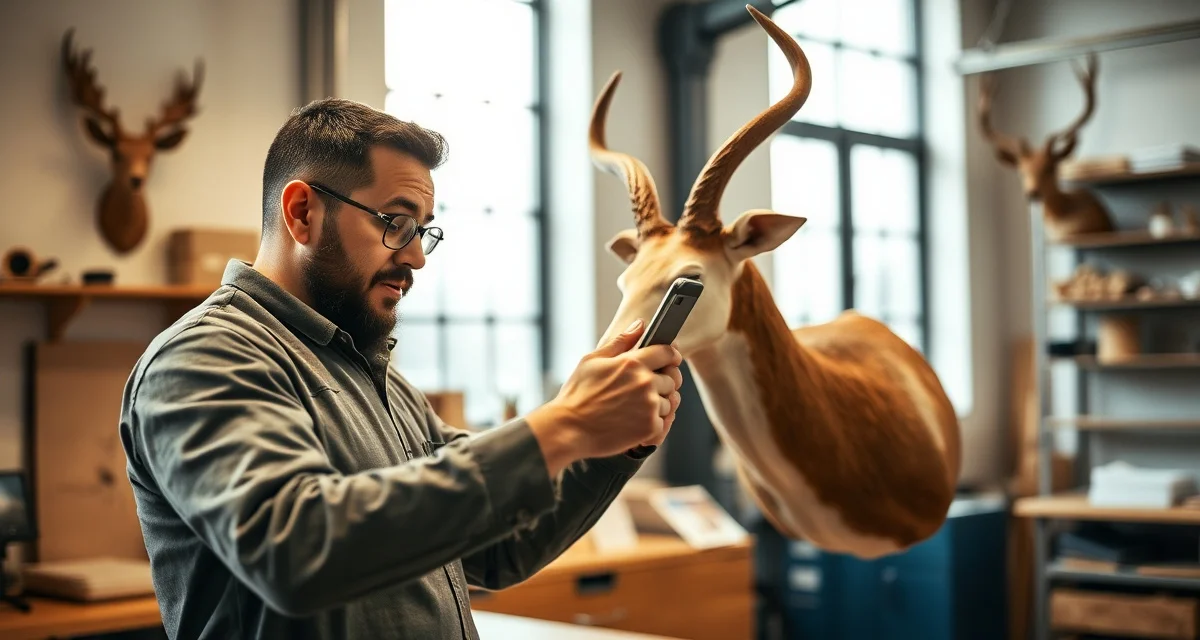
When a customer brings in a specimen, you take a series of photos with your phone or tablet, for a deer cape, that's typically five shots covering the face, profile, full cape spread, damage documentation, and the hunter's tag. The whole photo session takes about 90 seconds.
You upload those photos through the MountChief app. The AI analyzes the images immediately. Within seconds, it returns a pre-filled intake record including species identification, approximate condition rating, and visible damage notes.
You review what the AI populated. If everything looks right, you confirm. If something needs adjustment (a measurement that's off or a condition note to add) you edit before confirming. Total time from photos to confirmed record: about three minutes.
The system also automatically generates a QR tag for the specimen, sends the customer an intake confirmation, and adds the job to your queue.
What the AI Actually Reads in the Photos
The AI is looking for specific visual information in each shot type:
Face and head shot: Facial structure, antler configuration, species-confirming features. This is the primary identification shot. For deer, it distinguishes species (whitetail, mule deer, blacktail, coues), approximate age class, and antler character.
Cape spread shot: Overall hide size, any cuts or holes, bullet damage locations, hair slip indicators, general condition rating.
Damage close-ups: The AI specifically looks for skinning errors, bullet channel damage, hide defects, and areas that may require repair.
Accuracy on common North American big game species exceeds 96% in normal field conditions. Unusual lighting, very early-season velvet antlers, or non-standard photo angles can reduce accuracy, which is why the protocol matters.
What AI Intake Does NOT Capture (Human Required)
The AI handles the visual documentation layer well. It doesn't know things that only the hunter can tell you.
Hunter license information: Name, address, license number, harvest location, and date of harvest all come from the hunter verbally or from their paperwork. These get entered manually or scanned.
Mount type and style preference: Shoulder mount vs. European vs. life-size, pedestal preference, form selection. Customer choice, not AI assessment.
Special requests: Horn cap style, eye color preferences, habitat base requests. All manual.
Pricing and deposit collection: The system can pre-calculate based on species and mount type, but you confirm pricing with the customer.
The AI handles the tedious, error-prone identification and documentation layer. You still handle the conversation, the customer relationship, and the preferences.
Accuracy in Real-World Conditions
Field conditions aren't perfect. Animals come in wet, bloody, and in varying light. Based on real shop usage, AI species identification accuracy holds above 96% for common white-tailed deer in typical intake conditions. It drops slightly with unusual specimens or poor photo conditions.
When the AI is uncertain, it flags the record for human review rather than guessing. You review, confirm or correct, and move on. The system learns from corrections over time.
The photo intake protocol guide covers exactly how to photograph specimens to maximize accuracy. It's worth spending 20 minutes training any staff who'll be handling intake on the protocol.
Time Savings Per Season
The math on three-minute AI intake versus 20-minute manual intake:
- 200 mounts per season: 170 hours saved
- 400 mounts per season: 340 hours saved
- 600 mounts per season: 510 hours saved
For a solo taxidermist at 200 mounts, that's more than four full work weeks recovered. For a larger shop, it's the difference between hiring additional intake staff and not needing to.
Related Articles
- When Does Taxidermy Season Start for Shops?
- How Long Does Taxidermy Take? Complete Timeline Guide
- How Many Hours Per Week Does a Full-Time Taxidermist Work?
FAQ
What does AI photo intake capture for a deer or elk?
AI intake analyzes photos to identify species, assess hide condition, flag visible damage (cuts, bullet holes, hair slippage), estimate approximate size, and pre-fill the job record. For a deer cape, the five-shot protocol captures everything the system needs for species confirmation and condition documentation.
How accurate is AI species identification in taxidermy intake?
For common North American big game species under normal intake conditions, accuracy exceeds 96%. When the system is uncertain, it flags the record for human review rather than making a confident incorrect guess. Accuracy is highest when the photo protocol is followed correctly. Proper lighting, correct angles, and filling the frame.
What information does AI NOT capture that humans still enter?
The AI doesn't capture hunter license information, harvest location data, mount style preferences, special artistic requests, or pricing. These come from the customer conversation and the hunter's documentation. The AI handles visual identification and condition documentation; you handle the customer relationship and all paperwork that requires human-supplied information.
Does AI intake work for all species, or just deer?
MountChief's AI intake is trained on a broad range of North American game species including deer, elk, bear, turkey, waterfowl, and fish. It handles the most common species reliably and continues to improve with use. For unusual or exotic species, the taxidermist can confirm or correct the AI suggestion. The speed benefit applies across all species.
How accurate is AI species identification during intake?
Accuracy is high for common North American game species, particularly with clear photos taken in good lighting. The AI's identification is always presented as a suggestion that the taxidermist confirms, so any misidentification is caught before the record is saved. The identification step takes seconds regardless of whether confirmation or correction is needed.
What happens if the AI intake makes an error?
Every AI-generated record is reviewed by the taxidermist before it is saved. Errors are corrected at the review step rather than discovered later. This review-and-confirm workflow means AI intake is at least as accurate as manual entry, and typically faster, since the taxidermist is correcting fields rather than typing them from scratch.
Try These Free Tools
Put these insights into practice with our free calculators and planners:
Sources
- National Taxidermists Association (NTA)
- Breakthrough Magazine
- McKinsey & Company, AI in Small Business Operations
Get Started with MountChief
AI intake is the biggest operational improvement available to taxidermists right now, and MountChief is the only platform that brings it to your shop at a straightforward monthly price. Try MountChief during your next intake day and see the difference 3-minute jobs make.