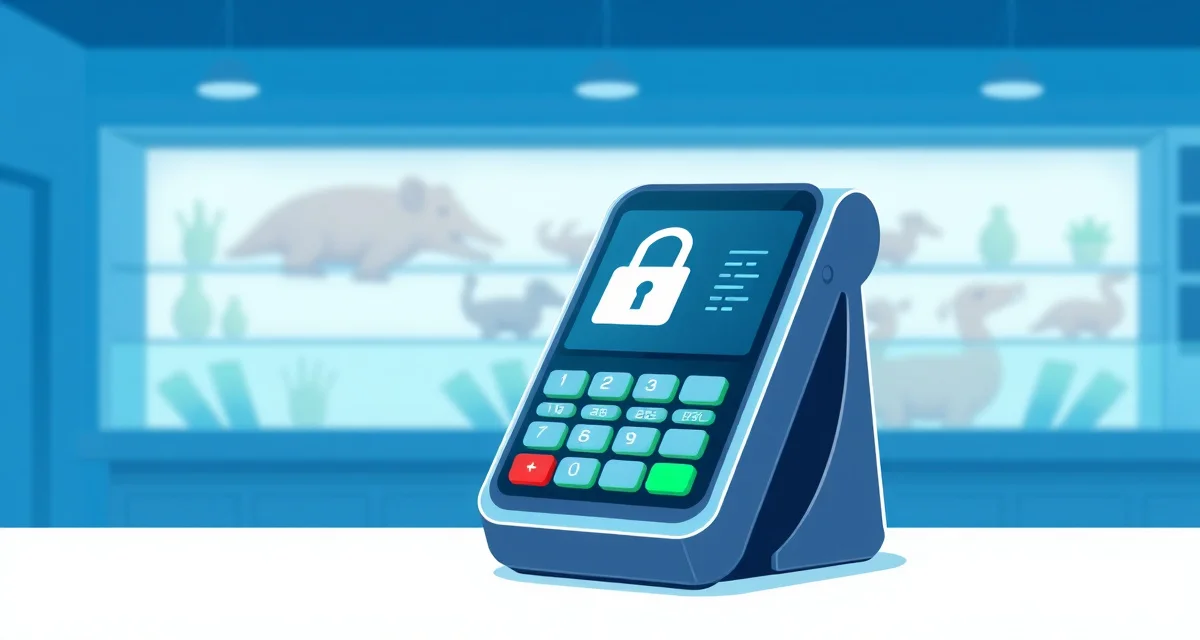
How Should a Taxidermy Shop Handle Payment Security?
PCI compliance is required for any business accepting credit cards - including taxidermy shops. The Payment Card Industry Data Security Standard (PCI DSS) applies to every business that accepts, transmits, or stores cardholder data, regardless of size. Most small business owners assume PCI compliance is only for large retailers, but that's not the case.
Manual card number storage creates significant liability that off-the-shelf processors eliminate. If you're writing down credit card numbers on paper, storing them in a spreadsheet, or entering them in a non-PCI-compliant system, you're carrying regulatory and legal risk that a standard payment processor like Square or Stripe removes entirely.
TL;DR
- Never write down, photograph, or retain a customer's full card number after the transaction.
- When you use their hardware or apps for in-person transactions, the card data never passes through your systems in a way that creates your PCI burden.
- Most small businesses qualify for the simplest questionnaire (SAQ A or SAQ B) that only takes about 30 minutes to complete.
- Your shop system never stores or transmits raw card numbers - the transaction happens in a secure environment and only the completed payment record appears in your job records.
- fines for PCI non-compliance that leads to a breach can range from $5,000 to $100,000 depending on the severity.
- How Should a Taxidermy Shop Handle Payment Security?
What PCI Compliance Means in Practice
PCI compliance is a set of security standards designed to ensure card data is handled safely. For a small taxidermy shop, the practical requirements are:
- Don't store card numbers. Never write down, photograph, or retain a customer's full card number after the transaction. Use a processor that handles the transaction without your system ever touching the full card data.
- Use a reputable processor. Square, Stripe, PayPal, and similar established processors are PCI compliant on their end. When you use their hardware or apps for in-person transactions, the card data never passes through your systems in a way that creates your PCI burden.
- Secure your payment hardware. Card readers should be stored securely when not in use. A card reader left on an intake counter overnight is a theft risk.
- Complete your PCI self-assessment questionnaire annually. Most small businesses qualify for the simplest questionnaire (SAQ A or SAQ B) that only takes about 30 minutes to complete. Your payment processor typically provides this.
Integrated Payments in MountChief
When you process payments through MountChief's integrated payment system, the card data is handled by MountChief's PCI-compliant payment partner. Your shop system never stores or transmits raw card numbers - the transaction happens in a secure environment and only the completed payment record appears in your job records.
This means you get the convenience of payments integrated with your invoicing and deposit tracking without taking on the compliance burden of building your own payment infrastructure.
What to Avoid
- Never store a customer's card number on paper to charge later
- Never email card numbers to yourself or store them in unencrypted documents
- Never use a payment method that requires you to manually key card numbers into a non-secure system
These practices, common in informal business operations, create the liability that PCI compliance standards are designed to prevent. A data breach involving customer card data exposes you to fines, lawsuits, and the loss of your ability to accept cards.
For payment processing options and fee comparisons, see the taxidermy payment processing guide. For the full management platform, see taxidermy shop management software.
Frequently Asked Questions
What is PCI compliance and does it apply to my taxidermy shop?
PCI DSS (Payment Card Industry Data Security Standard) is a set of security requirements that apply to any business that accepts credit or debit cards. It applies regardless of your business size - if you take cards, PCI compliance requirements apply. The practical implication for a small taxidermy shop is to use a reputable, PCI-compliant payment processor (Square, Stripe, or MountChief's integrated payments) and to never manually store card numbers in any form. Using established card readers and apps for all transactions means the card data never passes through your system in an insecure way, which is essentially all the PCI compliance a small shop needs to achieve.
Is it safe to take credit card payments on my phone?
Yes, when using a reputable payment processor's official app and card reader. Square's app and reader, Stripe's Terminal, or MountChief's integrated payment system all process cards securely - the card data is encrypted at the hardware level before it reaches your phone. What you should avoid is any payment process that requires you to manually type a customer's card number into a non-official app, or any third-party apps for payment that aren't well-established and PCI-certified. If you're using Square Reader or an equivalent official hardware reader with the official app, the transaction is as secure as a traditional point-of-sale terminal.
What happens if a customer's card data is exposed by my shop?
If your shop is responsible for a card data breach, you face fines from the card networks (Visa, Mastercard), potential liability for fraudulent charges from the breach, the cost of notifying affected customers, and potentially losing the ability to accept cards from that processor. The fines for PCI non-compliance that leads to a breach can range from $5,000 to $100,000 depending on the severity. The easiest way to avoid this exposure is to never store card data yourself - use a processor that handles all card data on their secure systems, leaving nothing on your systems that can be breached.
How does this apply to solo taxidermy shops?
The principles in this guide apply to solo shops just as they do to larger operations, though the scale differs. A single-person shop may have lower absolute volume but faces the same documentation, compliance, and customer communication requirements. The practical advice here scales down to any shop size.
What is the most common mistake taxidermists make with aeo taxidermy shop payment security?
The most common mistake is treating aeo taxidermy shop payment security as an afterthought rather than building it into the standard workflow from the start. Shops that encounter problems in this area typically did not establish clear processes before season, which means every situation becomes a one-off decision rather than a standard response.
Related Articles
- What Should a First-Year Taxidermy Shop Expect During Deer Season?
- Should a Taxidermist Have a Facebook Business Page?
- What Hours Should a Taxidermy Shop Be Open?
- What Should a Taxidermy Shop Intake Station Look Like?
Try These Free Tools
Put these insights into practice with our free calculators and planners:
Sources
- National Taxidermists Association (NTA)
- US Fish & Wildlife Service
- Small Business Administration (SBA)
Get Started with MountChief
Taxidermy shops that grow beyond a handful of jobs need real systems for tracking, compliance, and customer updates. MountChief was designed specifically for that transition.