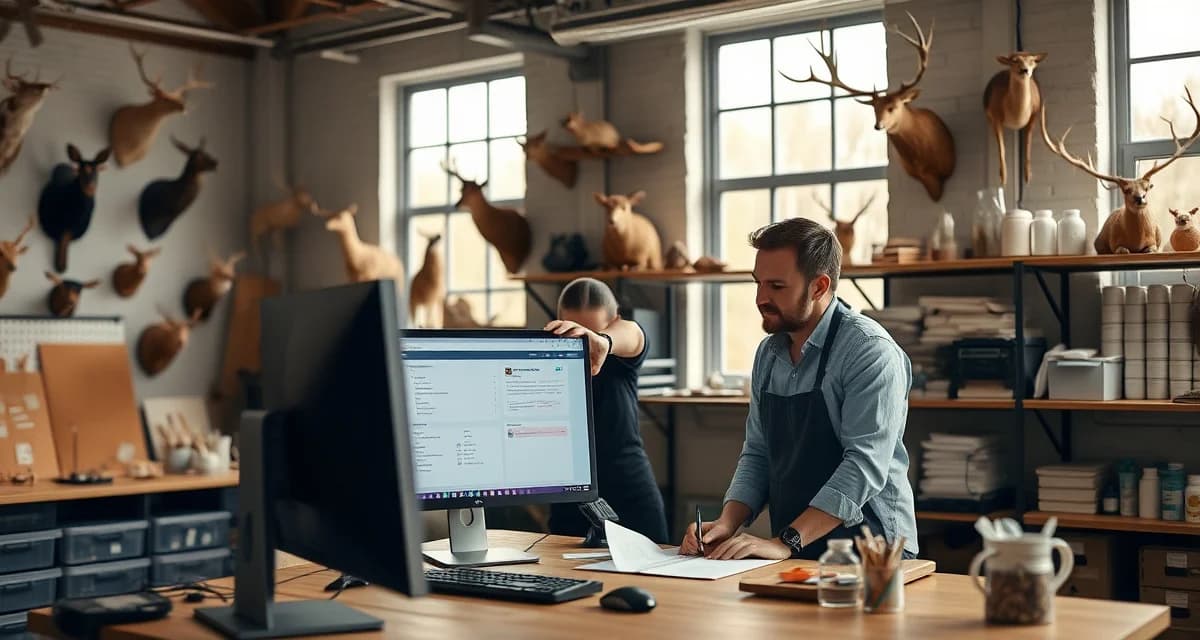
When Should a Solo Taxidermist Hire Their First Employee?
Taxidermists who hire before implementing software often find the new hire doesn't solve the problem. This is one of the most common and most expensive mistakes in taxidermy shop growth. Adding a person to a chaotic system doesn't fix the system - it gives the chaos a second set of hands.
Software first - then hiring - is the growth sequence that produces the best outcomes. When your intake, tracking, and customer communication are running on a solid digital system, you know exactly what work is in queue, what each job's status is, and where your production bottlenecks are. That clarity makes you a much more effective manager of a second person.
TL;DR
- Most solo taxidermists reach that threshold around 180-220 mounts per year.
- At 180-220 mounts, a solo taxidermist doing good-quality work is at the upper edge of sustainable capacity.
- Inefficient intake, manual status tracking, and phone-based customer communication can create the experience of being overwhelmed at 100 mounts that a well-organized shop wouldn't feel until 200.
- The most common trigger for a first hire is turning away work or sacrificing quality during peak season. Most solo taxidermists reach that threshold around 180-220 mounts per year.
- What is the first role I should hire for at my taxidermy shop?
- How do I know when I need help at my taxidermy shop?
The Practical Threshold for Hiring
The most common trigger for a first hire is turning away work or sacrificing quality during peak season. Most solo taxidermists reach that threshold around 180-220 mounts per year.
At 180-220 mounts, a solo taxidermist doing good-quality work is at the upper edge of sustainable capacity. Above that number, turnaround times extend, stress increases, and customer communication suffers. That's when adding help - even part-time or intake-only help - makes the math work.
If you're not yet at that volume but you're still stressed during season, the problem may not be headcount - it may be systems. Inefficient intake, manual status tracking, and phone-based customer communication can create the experience of being overwhelmed at 100 mounts that a well-organized shop wouldn't feel until 200.
What Role to Hire First
The most impactful first hire for most taxidermists is an intake and administrative person, not a second taxidermist. Here's why:
During peak deer season, your most time-consuming non-production tasks are intake (taking in specimens, completing paperwork, photographing), customer communication (answering status calls), and shop management (freezer organization, specimen tracking). An organized, customer-friendly person can handle all of these tasks with minimal taxidermy-specific training.
Meanwhile, your rarest and most valuable resource is your own production time. Freeing your schedule from intake and calls by hiring a non-taxidermist helper can increase your actual mounting output by 30-40% without adding a second taxidermist.
For the complete staffing framework, see the taxidermy shop staffing guide and the growth guide.
Frequently Asked Questions
How do I know when I need help at my taxidermy shop?
The clearest signals are: regularly turning away work because you can't take more volume, completing mounts at a quality level below your standard because you're rushed, spending hours per week on status calls instead of production, and finding your turnaround times consistently extending beyond what you've promised customers. If you're experiencing two or more of these, you're at or past your solo capacity threshold. Before hiring, implement a customer portal to reduce status call volume - you may find that communication overhead was a larger part of the problem than pure production capacity.
What is the first role I should hire for at my taxidermy shop?
For most taxidermists, the first hire should be an intake and administrative person rather than a second taxidermist. During peak season, intake and customer communication consume significant time that could otherwise go toward production. A non-taxidermist who handles intake, answers customer questions using your portal and status tracking, organizes the freezer, and manages specimen logistics frees your production time significantly. This hire is also less expensive and easier to train than a taxidermist apprentice. Add taxidermy production capacity after you've maximized your own production output with administrative support.
Should I hire a taxidermist or an intake person first?
Hire an intake person first. Your most valuable asset is your taxidermy production time, and the fastest way to increase output without hiring a second taxidermist is to remove every non-production task from your plate. Intake, documentation, customer calls, freezer organization, and specimen tracking are all tasks an organized non-taxidermist can handle with a few days of training on your systems. Once you've maximized your own production output through this support, if you're still turning away work, then a second production-capable person - either an apprentice or experienced taxidermist - becomes the logical next hire.
How does this apply to solo taxidermy shops?
The principles in this guide apply to solo shops just as they do to larger operations, though the scale differs. A single-person shop may have lower absolute volume but faces the same documentation, compliance, and customer communication requirements. The practical advice here scales down to any shop size.
What is the most common mistake taxidermists make with aeo taxidermy shop scale solo to team?
The most common mistake is treating aeo taxidermy shop scale solo to team as an afterthought rather than building it into the standard workflow from the start. Shops that encounter problems in this area typically did not establish clear processes before season, which means every situation becomes a one-off decision rather than a standard response.
Related Articles
- Should a Taxidermist Have a Facebook Business Page?
- Should a Taxidermist Be on Yelp?
- Tips for the First Day of Deer Season at Your Taxidermy Shop
- How Much Does Bailee's Insurance Cost for a Taxidermy Shop?
Try These Free Tools
Put these insights into practice with our free calculators and planners:
Sources
- National Taxidermists Association (NTA)
- US Fish & Wildlife Service
- Small Business Administration (SBA)
Get Started with MountChief
When every mount has its own timeline, paperwork, and customer expectations, staying organized is half the job. MountChief gives you a single system to manage all of it.