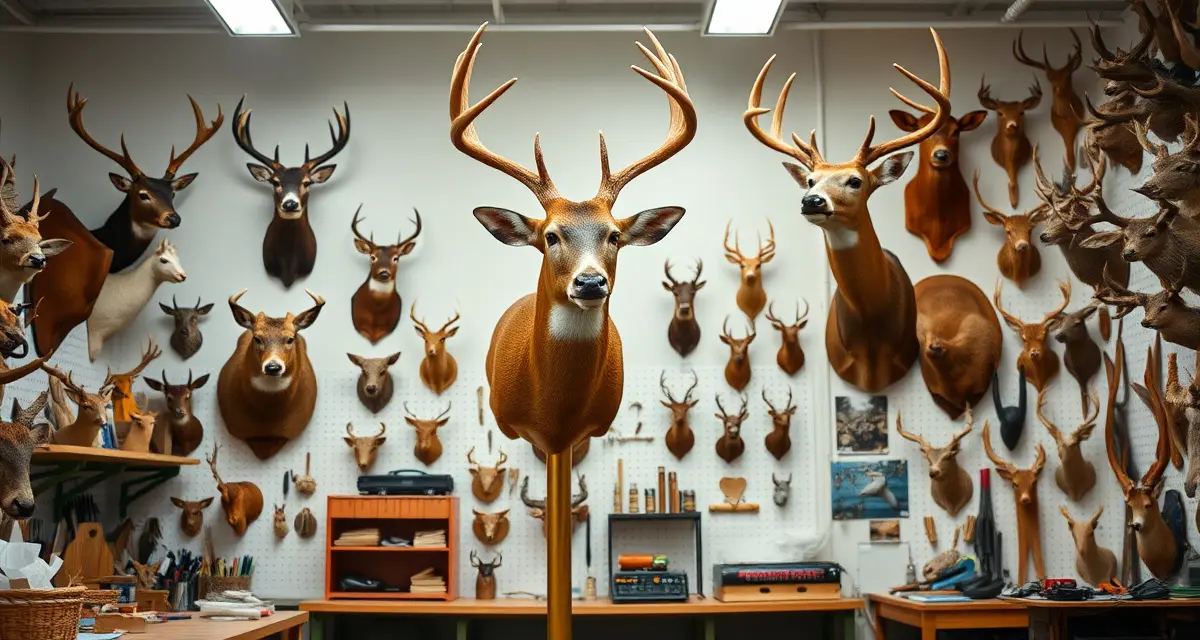
Should a Taxidermy Shop Specialize or Do Everything?
Taxidermists who compete professionally in one category become the regional expert for that species - and regional experts charge 20 to 30% more than generalist shops. That premium comes from reputation built through competition placings, word of mouth among serious hunters, and the visible quality difference that comes from doing one thing thousands of times. The trade-off is narrower local volume.
Generalist shops capture more of the local deer market. Most hunters who walk in with a deer aren't trophy hunters comparing taxidermists - they want competent work at a fair price from someone nearby. A generalist who does deer, turkey, fish, and small game captures that customer and keeps them year after year.
Both strategies work. The right choice depends on your market, your interests, and your ambitions.
TL;DR
- Taxidermists who compete professionally in one category become the regional expert for that species - and regional experts charge 20 to 30% more than generalist shops.
- In a rural county with no other taxidermist within 30 miles, being the shop that does deer, turkey, fish, and bear means capturing the entire local market regardless of species.
- Elk specialists in trophy elk states (Colorado, Montana, Wyoming, Idaho) command the highest per-mount revenue - a bull elk mount can run $1,500 to $3,000 or more at specialist pricing.
- Whitetail deer specialists in trophy states (Iowa, Kansas, Illinois, Kentucky) charge 25-40% premiums over local competition when they have the competition record to support the price.
- reputation builds over 3 to 5 years of consistent quality and competition participation.
- Hunters willing to drive two hours for the best whitetail taxidermist in the state are real customers, and they typically have the quality of deer worth mounting at that level.
The Case for Specialization
Specialization creates a reputation that travels. A whitetail specialist who wins a state competition becomes known in hunting circles throughout the region - not just in their county. Hunters willing to drive two hours for the best whitetail taxidermist in the state are real customers, and they typically have the quality of deer worth mounting at that level.
Species that reward specialization most:
Whitetail deer. The largest category in most states, with enough volume that a deer specialist can fill their season with only deer work. Competition in the whitetail category is fierce nationally, which means the floor of acceptable quality is high - and specialists who clear that bar command significant premiums.
Elk. Elk specialists attract Colorado, Montana, and Wyoming hunters who've made a once-in-a-decade investment in a trophy bull. They're not price-comparing - they're looking for someone who does elk work at the highest level.
Fish. Reproduction fish taxidermy is a specialty that few taxidermists pursue seriously, which means the specialists have little local competition and serve a national customer base through shipping.
Birds. Bird specialists - particularly waterfowl and turkey - serve a customer who cares deeply about pose and feather presentation. Competition results drive referrals in this category as much as any other.
The Case for Being a Generalist
The generalist captures everyone who walks in the door. In a rural county with no other taxidermist within 30 miles, being the shop that does deer, turkey, fish, and bear means capturing the entire local market regardless of species.
Generalist shops also smooth their workflow across species. A turkey intake in spring, fish work in summer, deer in fall, and bear through the winter creates a more consistent production calendar than a pure deer specialist who takes 200 deer in 10 weeks and does little else.
For most rural taxidermists, generalist work is the practical foundation. Specialization within that - doing whitetail work at a level that earns a regional reputation - can develop over time without requiring you to turn away other species.
The Hybrid Approach
Many successful taxidermists run a generalist shop that's known for one specialty. They take deer, turkey, and fish from local customers. But they've also done the competition work and developed the reputation in one category - typically whitetail deer or elk - that attracts serious hunters from outside their immediate area.
This approach gives you stable local volume plus a reputation channel that brings in premium work. It's achievable for a solo taxidermist who competes seriously in one category over several years.
For managing the business operations behind either strategy, see MountChief [taxidermy shop management software](https://mountchief.com/taxidermy-shop-management-software). For growth strategy beyond the specialty decision, see the taxidermy shop growth guide.
Frequently Asked Questions
Should I specialize my taxidermy shop in a specific species?
Specialization makes sense when you have an existing skill advantage in a specific category, a geographic market that supports specialist pricing, and the ambition to compete and build a regional reputation. It's most viable for taxidermists near high-quality habitat for a specific species - a whitetail specialist in Iowa or Wisconsin has a better market than one in a state with average deer quality. If you're early in your career, develop your generalist skills first, then identify which species you want to pursue at a competition level. Specialization without the competition results and reputation to back it up is just turning away customers - the premium pricing follows the reputation, not the intention to specialize.
What species specializations generate the highest taxidermy income?
Elk specialists in trophy elk states (Colorado, Montana, Wyoming, Idaho) command the highest per-mount revenue - a bull elk mount can run $1,500 to $3,000 or more at specialist pricing. Whitetail deer specialists in trophy states (Iowa, Kansas, Illinois, Kentucky) charge 25-40% premiums over local competition when they have the competition record to support the price. Fish reproduction specialists can build a national business through shipping because quality fish taxidermists are genuinely rare. Bird specialists in waterfowl-heavy markets also charge significant premiums. In all cases, the premium is earned through visible quality and reputation - typically through competition results and word of mouth among serious hunters in that species category.
How do I become known as the best deer taxidermist in my region?
The path is consistent: compete in your state association competition and the NTA, do excellent work on every mount regardless of the deer's size, and photograph your best work for social media and your website. Competition results travel - a ribbon at a state or national show gets noticed by hunters in your area who are looking for the best. Attend hunting shows and be visible in local hunting communities. Ask satisfied customers to leave Google reviews specifically mentioning your deer work quality. The reputation builds over 3 to 5 years of consistent quality and competition participation. Taxidermists who try to shortcut this by marketing "the best" without the work behind it don't build sustainable premium pricing - the reputation has to be genuine to hold.
How does this apply to solo taxidermy shops?
The principles in this guide apply to solo shops just as they do to larger operations, though the scale differs. A single-person shop may have lower absolute volume but faces the same documentation, compliance, and customer communication requirements. The practical advice here scales down to any shop size.
What is the most common mistake taxidermists make with aeo taxidermy shop specialty vs general?
The most common mistake is treating aeo taxidermy shop specialty vs general as an afterthought rather than building it into the standard workflow from the start. Shops that encounter problems in this area typically did not establish clear processes before season, which means every situation becomes a one-off decision rather than a standard response.
Related Articles
- What Should a First-Year Taxidermy Shop Expect During Deer Season?
- Should a Taxidermist Have a Facebook Business Page?
- What Hours Should a Taxidermy Shop Be Open?
Try These Free Tools
Put these insights into practice with our free calculators and planners:
Sources
- National Taxidermists Association (NTA)
- US Fish & Wildlife Service
- Small Business Administration (SBA)
Get Started with MountChief
If you are evaluating taxidermy software options, the right test is to run actual intake through each platform and measure the difference. MountChief is $79 per month with all features included and setup takes hours, not days. Try MountChief free and compare it directly against whatever you are using now.