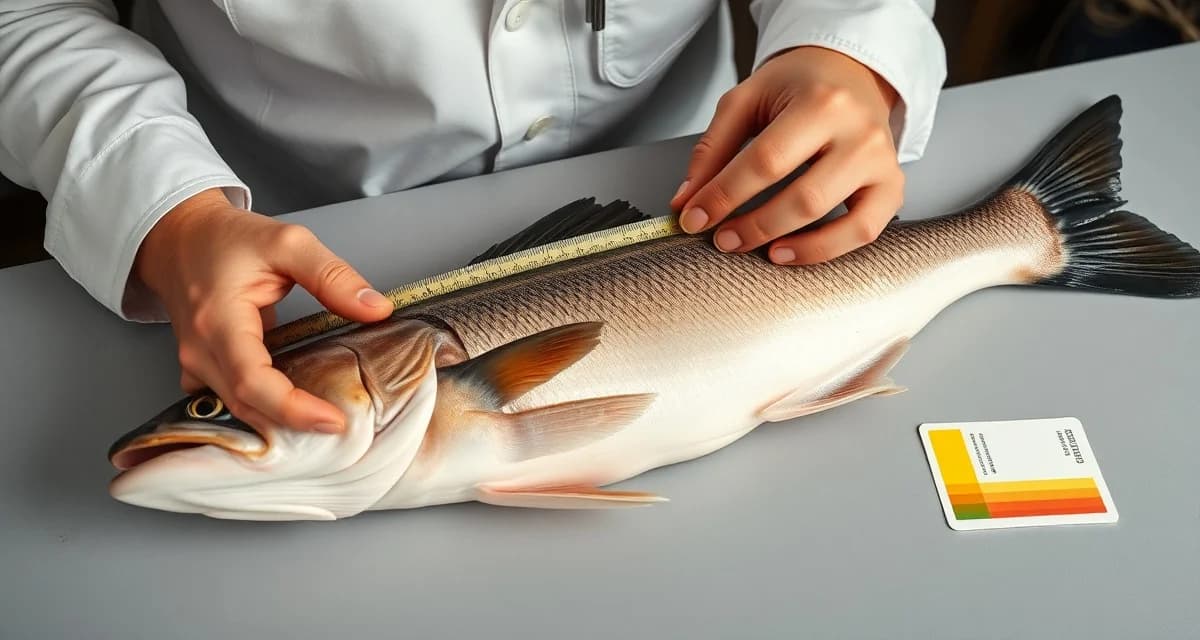
Fish Taxidermy Intake Best Practices: 6 Rules for Accurate Results
Color reference photos at intake are the single most important factor in fish mount accuracy. Missing girth measurement is the most common fish intake error causing form fit problems. Together, these two issues account for the majority of fish mount problems that could have been prevented at intake.
Here are the six rules for fish intake that produce the best results.
TL;DR
- A frozen fish that's been in a bad bag for 18 months may have scale damage that affects mount quality.
- Color reference photos at intake are the single most important factor in fish mount accuracy.
- What information do I need for a fish replica vs skin mount at intake?
- The fish itself doesn't need to be brought to the shop for a replica.
- Ask the customer for any photos they took at the water, those are more valuable than intake photos of a faded fish, and they should be attached to the intake record alongside the shop photos.
- Together, these two issues account for the majority of fish mount problems that could have been prevented at intake.
Rule 1: Get Color Photos Before the Fish Fades
If the customer is bringing a frozen fish, you've already missed the ideal photo opportunity. The moment at the water. But some color reference is better than none, and you can still salvage partial color documentation.
When the fish arrives at intake:
- Thaw the fish if it's frozen enough to be discolored from freezing
- Photograph both sides in natural light
- Ask the customer directly: "Do you have any photos you took at the water? Even phone photos are useful."
Photos taken at the water in the first minutes after harvest (even on a phone) are far more valuable than photos of a thawed, pale fish at intake. If the customer has them, get them into the intake record.
For trophy fish that will be replicas, there's no excuse for missing color documentation, the angler had the fish in hand and should have photographed it before release. If they didn't, the replica will be painted to species standard rather than individual specimen standard.
Rule 2: Measure Length and Girth. Both
Length gets measured. Girth gets forgotten. That's the pattern, and it causes form fit problems.
Fish forms are sized by length but shaped by girth. A fish that's exceptionally deep for its length won't fit a standard-proportion form without modification. A fish that's unusually slender might sit loosely on a standard form.
At every fish intake:
- Measure total length (nose to fork, or nose to tail depending on species convention)
- Measure girth at the widest point
- Note weight if known
These three measurements drive form selection. Missing girth means guessing at form shape later.
Rule 3: Confirm Skin Mount vs. Replica at Intake
A hunter drops off a frozen walleye and says "I want it mounted." Do they want a skin mount? A replica? Do they know the difference?
Explain the options if the customer isn't sure:
- Skin mount: Uses the actual fish skin over a foam form. Requires the fish. Results vary based on fish condition.
- Replica: A fiberglass or resin cast painted to match your fish. Can be done from measurements and photos, the fish doesn't need to be kept.
For catch-and-release fish where the fish was released: "I can make you a replica from your measurements and those photos from your phone: we don't need the fish."
Mount type confirmed and documented at intake. Customer signature acknowledging the choice.
Rule 4: Document Fish Condition Honestly at Intake
A frozen fish that's been in a bad bag for 18 months may have scale damage that affects mount quality. A fish that was bent during freezing may have skin cracks.
Photograph and note any condition issues at intake. If the fish has significant scale damage that will be visible in the finished mount, tell the customer now. Not at pickup.
"I want you to know there are some scales missing on the upper dorsal area from freezer storage. I can repair it, but you may be able to see where the repair was made. Would you like to proceed with a skin mount understanding this, or would you prefer a replica?"
That conversation at intake is professional and appreciated. The same conversation at pickup when the customer expected a perfect mount is a completely different experience.
Rule 5: Handle the Fish Before Freezing Instructions for Replicas
If a customer plans to catch and release their target species and wants a replica, give them specific instructions before the fishing trip:
- Take measurements immediately after landing: total length and girth
- Photograph the fish at multiple angles at the water before any color fades
- Get photos of both sides, top view, head, tail, and belly
- Keep a video if possible, it captures color from multiple angles
Most anglers who want replicas of catch-and-release fish either don't know to do this or don't do it well enough. Pre-season educational content and a printed instruction card to give to customers planning catch-and-release trophy fishing prevents the "my photos weren't good enough" problem.
Rule 6: Choose the Show Side at Intake
Fish mounts are typically displayed with one side showing. The taxidermist needs to know which side should be the primary display side.
Ask at intake: "Which side of the fish do you want facing out? Do you have a preference for left-facing or right-facing?"
If the fish has any condition issues on one side (a damaged scale area, a net mark, any imperfection) choose the better side as the show side and note it explicitly in the intake record.
Show-side selection documented at intake prevents the "you mounted it facing the wrong way" conversation at pickup.
Frequently Asked Questions
What photos should I always take at fish intake?
Both flanks (left and right), top view, bottom view, head close-up, and tail/fin area. Natural light produces better color documentation than flash. Ask the customer for any photos they took at the water, those are more valuable than intake photos of a faded fish, and they should be attached to the intake record alongside the shop photos.
How do I record fish measurements accurately at intake?
Use a measuring board for length consistency. Measure total length (nose to tail tip) and girth at the widest point. Use a flexible tape measure for girth, wraparound measurements on rounded fish bodies require a flexible tape. Record both measurements in the intake form before the fish is bagged for freezer storage. Don't rely on customer-provided measurements without confirming them yourself.
What information do I need for a fish replica vs skin mount at intake?
For skin mounts: the actual fish (condition documented), length, girth, and reference photos. For replicas: length, girth, weight if known, and multiple color reference photos, ideally taken at the water immediately after harvest. The fish itself doesn't need to be brought to the shop for a replica. If the customer has a good photo set from the water, that's all you need to start the replica order.
How does this apply to solo taxidermy shops?
The principles in this guide apply to solo shops just as they do to larger operations, though the scale differs. A single-person shop may have lower absolute volume but faces the same documentation, compliance, and customer communication requirements. The practical advice here scales down to any shop size.
What is the most common mistake taxidermists make with fish taxidermy intake best practices?
The most common mistake is treating fish taxidermy intake best practices as an afterthought rather than building it into the standard workflow from the start. Shops that encounter problems in this area typically did not establish clear processes before season, which means every situation becomes a one-off decision rather than a standard response.
Related Articles
- Deer Taxidermy Intake Best Practices: 10 Rules Every Shop Should Follow
- Elk Taxidermy Intake Best Practices: 8 Rules for High-Value Mounts
- Taxidermy Shop Best Practices in 2026: Operational Standards
Try These Free Tools
Put these insights into practice with our free calculators and planners:
Sources
- National Taxidermists Association (NTA)
- US Fish & Wildlife Service
- Bass Anglers Sportsman Society (B.A.S.S.)
- Small Business Administration (SBA)
Get Started with MountChief
Fish and waterfowl jobs require the same organized intake and tracking as big-game work. MountChief handles every species type with the same efficient intake system, customer portal, and production tracking. Try MountChief to manage all your species types in one organized platform.