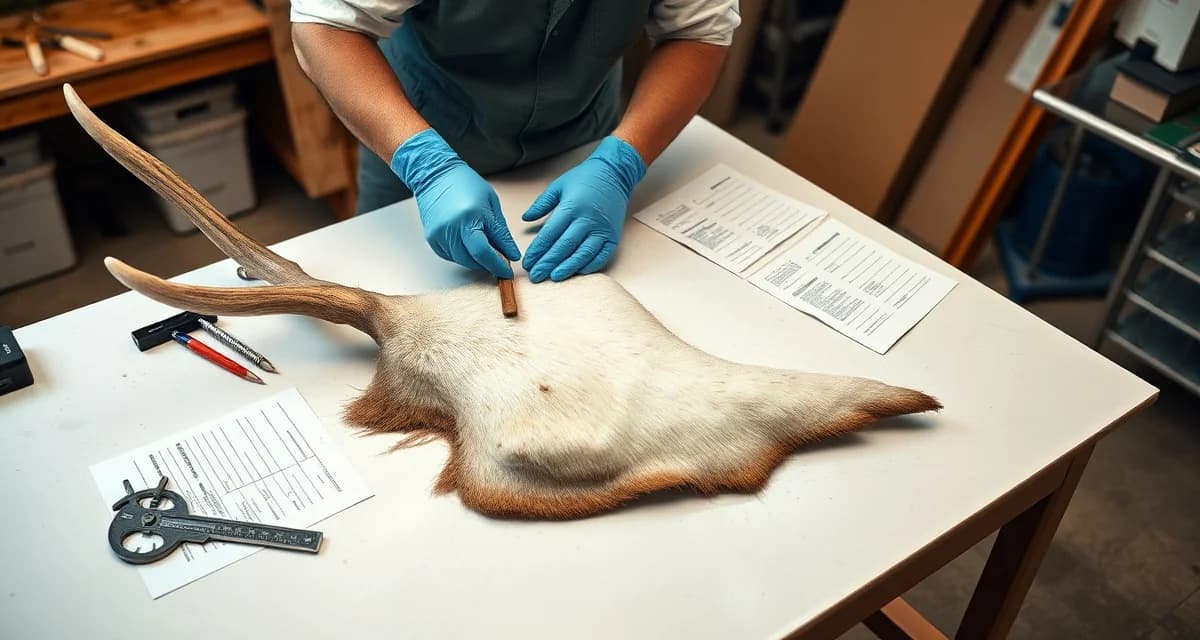
Elk Taxidermy Intake Best Practices: 8 Rules for High-Value Mounts
Elk intake errors are three times more costly than deer intake errors due to specimen value. A mistake on a $600 deer mount creates a $600 problem. A mistake on a $1,100 elk mount creates an $1,100 problem. Plus the relationship damage with a hunter who's invested thousands in their hunt.
Documentation of elk cape condition at intake is critical for tannery damage claims. Here are the eight rules for elk intake that protect high-value jobs.
TL;DR
- Timeline communication should be more explicit because elk customers are often out-of-state and will be waiting 12 to 16 months.
- cape that was in warm weather for 12 hours before being cooled is a different situation than one that went straight into ice.
- A cape that was in warm weather for 12 hours before being cooled is a different situation than one that went straight into ice.
- A mistake on a $600 deer mount creates a $600 problem.
- A mistake on a $1,100 elk mount creates an $1,100 problem.
- Out-of-state elk hunters (which describe most elk hunters, period) need remote visibility into their trophy's production status.
Rule 1: Measure Girth Before Anything Else
Elk cape fit depends on accurate girth measurement at intake. Elk necks are larger than deer necks in ways that aren't always obvious from appearance. A bull that looks like a medium form might need a large. A cow that looks like a large might fit medium.
Measure girth at intake, every elk. Not at form ordering time. Not from memory. At intake, with a tape measure, documented in the intake record.
Wrong form selection discovered during production means reordering the correct form and waiting, at minimum a delay of weeks. Wrong form selection not discovered until the cape is on the form means rework that may not be possible at all without damage.
Rule 2: Document Cape Condition Thoroughly
Elk hides come from the field through various conditions. They've been on pack animals. They've been salt-dried in warm September weather. They've been folded, rolled, and transported in ways that deer capes often aren't.
Photograph the entire cape at intake:
- Full cape spread showing overall condition
- Neck and brisket area (common area for slippage from heat exposure)
- Face and ear area
- Any specific areas of concern
Note any slippage, tears, or damage explicitly in the intake record. Write it down, photograph it, and review it with the customer before they leave.
If there's significant slippage or damage at intake, that's the conversation to have with the customer now. Not when the tannery confirms it in three months.
Rule 3: Capture the Complete Documentation Chain
Elk permits (whether Colorado draw tags, Wyoming general licenses, or Idaho unit tags) have specific documentation requirements. At intake:
- Hunter's home state license number
- State-of-harvest license number
- Permit type (OTC, limited-entry, draw tag)
- Unit number or hunt area
- Date of harvest
All of this belongs in the intake record as required fields. A wildlife officer inspecting your records on a high-value Colorado bull elk expects to see complete permit documentation. Missing fields on an elk intake are compliance vulnerabilities.
Rule 4: Confirm the Mount Style in Writing
Elk shoulder mounts have more style variation than deer shoulder mounts:
- Neck angle (upright, turned, semi-sneak)
- Head position (straight, looking left, looking right, up)
- Antler inclusion: is this a euro/form + antler piece or does the customer want a traditional cape mount?
- Form style (aggressive pose, natural pose, etc.)
The customer confirming and signing for these specifications at intake is the protection against the "I wanted a different pose" conversation at pickup.
Rule 5: Discuss Cape Options for Heavily Used Hides
Some elk capes come in rough. Early-season bulls that were badly field dressed. Capes with significant slippage from heat exposure. Hides with large tears from rough terrain.
If the cape has significant issues, you need to have the full options conversation at intake:
- Can the cape be repaired? At what cost and with what visible result?
- Is the damage severe enough that a different mount style (like a euro mount) would be recommended?
- Does the customer want to proceed understanding the limitations?
Document that conversation on the intake record, including what was discussed and what the customer chose. If a cape comes out of production with visible repair work, that conversation is your documentation that the customer was informed and agreed to proceed.
Rule 6: Note the Cape's Processing History
How was the cape processed in the field? Salt-dried? Frozen? Still wet when it arrived?
Cape processing history affects how you handle it before tannery shipment and affects your tannery's processing approach. A wet-salt cape needs different handling than a freeze-dried one. A cape that was in warm weather for 12 hours before being cooled is a different situation than one that went straight into ice.
Ask these questions at intake and note the answers. It's information that improves your tannery submission and your ability to set expectations about the final product.
Rule 7: Set Specific Timeline Expectations for Elk
Elk customers are often out-of-state hunters who won't be checking in casually. They need a specific, honest timeline at intake. Not a vague "12 months or so."
Elk completion time typically runs 10 to 16 months from intake. Give the customer a specific range based on your current queue and tannery timing. "I expect to ship to tannery in January, return in April, and complete your mount by July to September" is more useful than "sometime next year."
Elk customers who know exactly when to expect their mount are far less likely to become anxious callers during the production period.
Rule 8: Issue the Customer a Portal Link at Intake
Out-of-state elk hunters (which describe most elk hunters, period) need remote visibility into their trophy's production status. A portal link issued at intake gives them that visibility without requiring phone calls.
At the end of intake: "I'll send you a portal link where you can track your bull's progress. You'll see when it ships to the tannery, when it comes back, and when production is complete."
That sets expectations and creates the communication infrastructure that keeps out-of-state elk hunters satisfied throughout a 12 to 16 month production period.
Frequently Asked Questions
What should I document differently for elk vs deer at intake?
Girth measurement is more critical for elk because form size variation has bigger quality implications on a large cape. Cape condition documentation should be more thorough because elk hides come from more varied and challenging field conditions. Permit documentation is more specific. Unit numbers, draw-tag information, and permit types that don't apply to most deer intakes. Timeline communication should be more explicit because elk customers are often out-of-state and will be waiting 12 to 16 months.
How do I protect myself from elk cape damage disputes?
Thorough condition documentation at intake is the primary protection. Multiple photos showing cape condition from all angles, written condition notes in the intake record, and customer acknowledgment of any pre-existing issues all create the baseline documentation that protects you if condition questions arise after tannery processing. Without intake documentation, any damage found at tannery becomes your word against the customer's.
What measurements should I capture at every elk intake?
At minimum: neck girth circumference (for form selection), neck length (nose to base), and cape length. For elk specifically, record whether the measurement was taken on a fresh/thawed cape or estimated from a frozen one. Frozen measurements can be slightly off. Confirm your measurements against your form catalog before ordering to catch any discrepancy before it becomes a production problem.
How does this apply to solo taxidermy shops?
The principles in this guide apply to solo shops just as they do to larger operations, though the scale differs. A single-person shop may have lower absolute volume but faces the same documentation, compliance, and customer communication requirements. The practical advice here scales down to any shop size.
What is the most common mistake taxidermists make with elk taxidermy intake best practices?
The most common mistake is treating elk taxidermy intake best practices as an afterthought rather than building it into the standard workflow from the start. Shops that encounter problems in this area typically did not establish clear processes before season, which means every situation becomes a one-off decision rather than a standard response.
Related Articles
- Fish Taxidermy Intake Best Practices: 6 Rules for Accurate Results
- Bear Taxidermy Job Tracking: Manage High-Risk High-Value Specimens
- Best Taxidermy Software for Bird Mount Shops in 2026
- Best Taxidermy Software for High-Volume Shops in 2026
Try These Free Tools
Put these insights into practice with our free calculators and planners:
Sources
- National Taxidermists Association (NTA)
- US Fish & Wildlife Service
- Rocky Mountain Elk Foundation
- Breakthrough Magazine
- State wildlife agencies
Get Started with MountChief
Elk hunters invest significantly in their trophies and expect professional handling from intake through finished mount. MountChief's AI intake, tannery tracking, and customer portal give every elk customer the visibility and communication they expect during a 10-16 month process. Try MountChief before elk season opens.