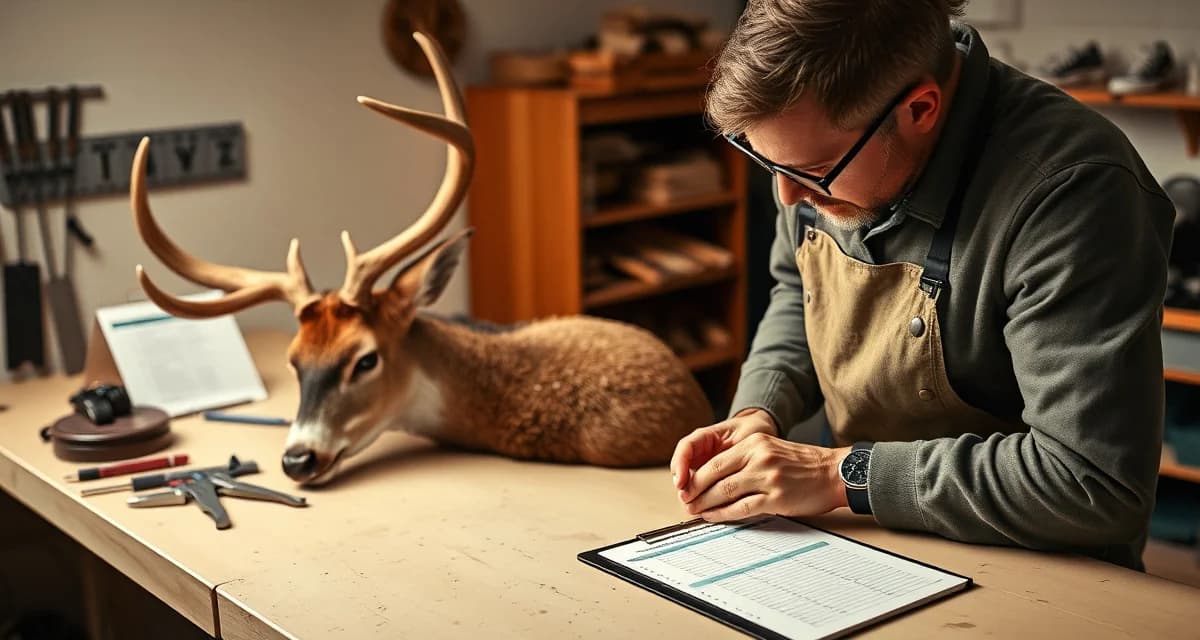
Deer Taxidermy Intake Checklist: Everything to Capture at Drop-Off
Missing intake information causes 30% of deer customer disputes during the production phase. The pose preference not captured at intake. The cape condition issue not documented with photos. The antler measurement question that comes up six months later when the customer doesn't remember what the spread was. These disputes are entirely avoidable with a complete intake process.
Capturing pose preference at intake eliminates the most common rework request. It takes 30 seconds at intake. It saves 4+ hours of rework if you have to take a mount apart and rebuild it in a different pose months later.
Here's the complete intake checklist for whitetail and mule deer shoulder mounts.
TL;DR
- Note that official B&C and P&Y scores require 60-day dry time.
- It saves 4+ hours of rework if you have to take a mount apart and rebuild it in a different pose months later.
- "6 months" during a busy November is usually not.
- "Approximately 12-14 months" is honest.
- Take a minimum of 6-8 photos at intake: full cape from both sides, close-up of face, close-up of any damage areas, antler front view, antler side view.
- Missing intake information causes 30% of deer customer disputes during the production phase.
Section 1: Hunter Information
Every intake starts with basic customer information. Capture this digitally so it's searchable and never lost.
- Full name
- Phone number (primary contact)
- Email address (for tracking link and notifications)
- Home address (for out-of-state hunters or shipping)
- Preferred contact method (text, call, or email)
Section 2: Harvest Documentation
State wildlife regulations require documentation of legally taken deer. Capture this at intake and store it with the job record.
- State of harvest
- County or unit of harvest
- Hunting license number (state license)
- Carcass tag number (from the state-issued harvest tag)
- Tag still attached? (confirm before accepting the specimen)
- Season type (archery, firearms, muzzleloader)
- Harvest date
For CWD-affected areas or zones, note the specific zone of harvest. Some states require taxidermists to document CWD zone origin and handle those specimens differently.
Section 3: Specimen Inspection and Condition
This is where your intake photos become critical. Photograph the cape from multiple angles before you do anything else. Your condition notes and photos are your only protection if tannery damage or pre-existing issues become a dispute later.
- Overall cape condition (excellent, good, fair, poor)
- Hair slippage present? (location and extent if yes)
- Any bullet or broadhead damage (location)
- Ear split already done by hunter? (yes/no)
- Ears turned? (yes/no)
- Lips split and turned? (yes/no)
- Cape still on skull? (yes/no)
- Skinned at what point below shoulders? (note if too short for mount)
- Any freezer burn? (location and extent)
- Odor indicating potential spoilage? (note clearly)
- Frozen, fresh, or in salt?
Take a minimum of 6-8 photos at intake: full cape from both sides, close-up of face, close-up of any damage areas, antler front view, antler side view.
Section 4: Antler Documentation
If the hunter wants antler documentation for record purposes or just for their own records, capture this at intake.
- Gross green score estimate (if you're certified or comfortable estimating)
- Inside spread
- Main beam lengths (both sides, approximate)
- Number of points each side
- Any broken tines or abnormal points?
- Antler condition (stained, clean, has velvet, damaged base, etc.)
- B&C or P&Y scoring interest? (refer to certified scorer)
Note that official B&C and P&Y scores require 60-day dry time. A green score at intake is an estimate only and should be communicated as such.
Section 5: Mount Specifications
This section determines what you're actually producing. Get this right at intake and you won't be calling the customer six months later to ask what they wanted.
Mount type:
- Shoulder mount (standard)
- Shoulder mount with pedestal base
- European skull mount
- Half mount (pedestal)
- Other (note specifically)
Form pose:
- Straight ahead
- Right turn, slight
- Right turn, medium
- Left turn, slight
- Left turn, medium
- Upward angle
- Sneak (ears back, lowered head)
- Other (describe or reference photo)
Eye relief:
- Alert/open
- Semi-alert
- Relaxed/soft
- Aggressive/hard set
Ear position:
- Alert (ears forward)
- Semi-alert (ears at 45 degrees)
- Relaxed (ears slightly out and down)
Nose finish:
- Wet (shiny)
- Dry (matte)
- Moist (between the two)
Antler finish:
- Natural (as-is)
- Light cleaning only
- Full cleaning and whitening
- Antler restoration (for damaged antlers)
Wall mount direction:
- Right wall
- Left wall
- Front-facing (for centered placement)
Any special requests or reference photos? (note here, attach photos to digital record)
Section 6: Production and Timeline
Tannery preference: If your shop uses multiple tanneries or gives customers a choice, note which one applies to this job.
Rush service requested? (yes/no, quote rush premium if yes)
Estimated turnaround: Give the customer a realistic estimate in months, not weeks. "Approximately 12-14 months" is honest. "6 months" during a busy November is usually not.
Estimated completion window: A target completion quarter or month, clearly marked as an estimate.
Section 7: Pricing and Payment
Mount type price: Confirm the quoted price for the selected mount type and options.
Add-ons and their prices:
- Pedestal base
- Antler whitening
- Antler restoration
- Habitat scene
- Custom plaque or nameplate
Total quoted price
Deposit amount and collection method: Collect at intake. Document the amount, method (card, cash, check), and date.
Deposit collected? (amount and transaction reference)
Balance due at pickup: Remind the customer this is due before they take the mount.
Storage fee policy: Note if your shop charges for storage after the defined pickup window. State the policy explicitly.
Section 8: Tracking and Confirmation
Tracking link sent? (yes, sent to phone/email)
Confirmation received by customer? (verbal or documented)
Job number assigned: Every job needs a unique number for reference.
Notes: Any additional information about this specific job that doesn't fit elsewhere.
Common Intake Errors to Avoid
Not taking cape condition photos. This is the single most costly intake omission. Do it every time, on every job, before you touch the cape.
Not confirming pose preference. "Whatever you think looks good" is not a pose preference. Ask specifically. Show them form catalog images if needed. Get a concrete answer.
Accepting a cape without the state tag attached. If the tag isn't attached, ask where it is. If the customer doesn't have it, discuss whether and how to proceed. Many states require the tag to be on the animal while in the taxidermist's possession.
Writing turnaround estimates on paper and not in the job record. A verbal or paper estimate that doesn't live in the digital job record creates disputes when expectations diverge.
Skipping deposit collection "this one time." Deposits protect your shop. Every job, every time, every customer.
Frequently Asked Questions
What information should I capture at deer taxidermy intake?
The complete intake covers seven categories: hunter personal information and contact preference, harvest documentation including license and tag numbers, specimen condition including photos documenting the cape's state at drop-off, antler documentation and gross measurements, mount specifications covering pose, eye relief, ear position, and all finishing preferences, pricing and payment including deposit collection, and tracking confirmation with a digital link sent to the customer before they leave. Missing any major category creates downstream problems.
How does this apply to solo taxidermy shops?
The principles in this guide apply to solo shops just as they do to larger operations, though the scale differs. A single-person shop may have lower absolute volume but faces the same documentation, compliance, and customer communication requirements. The practical advice here scales down to any shop size.
What is the most common mistake taxidermists make with deer taxidermy intake checklist?
The most common mistake is treating deer taxidermy intake checklist as an afterthought rather than building it into the standard workflow from the start. Shops that encounter problems in this area typically did not establish clear processes before season, which means every situation becomes a one-off decision rather than a standard response.
Related Articles
- Deer Taxidermy Intake Best Practices: 10 Rules Every Shop Should Follow
- How to Photograph a Deer Cape for AI Taxidermy Intake
- Measuring Deer Antlers at Intake: B&C Scoring Basics for Taxidermists
- Deer Season Intake Volume Calculator: Plan Your Capacity
Try These Free Tools
Put these insights into practice with our free calculators and planners:
Sources
- National Taxidermists Association (NTA)
- US Fish & Wildlife Service
- Breakthrough Magazine
- State wildlife agencies
- Small Business Administration (SBA)
Get Started with MountChief
Tracking dozens of active mounts across different stages is hard enough without juggling separate tools for each task. MountChief brings intake, status tracking, and customer messaging into one place.