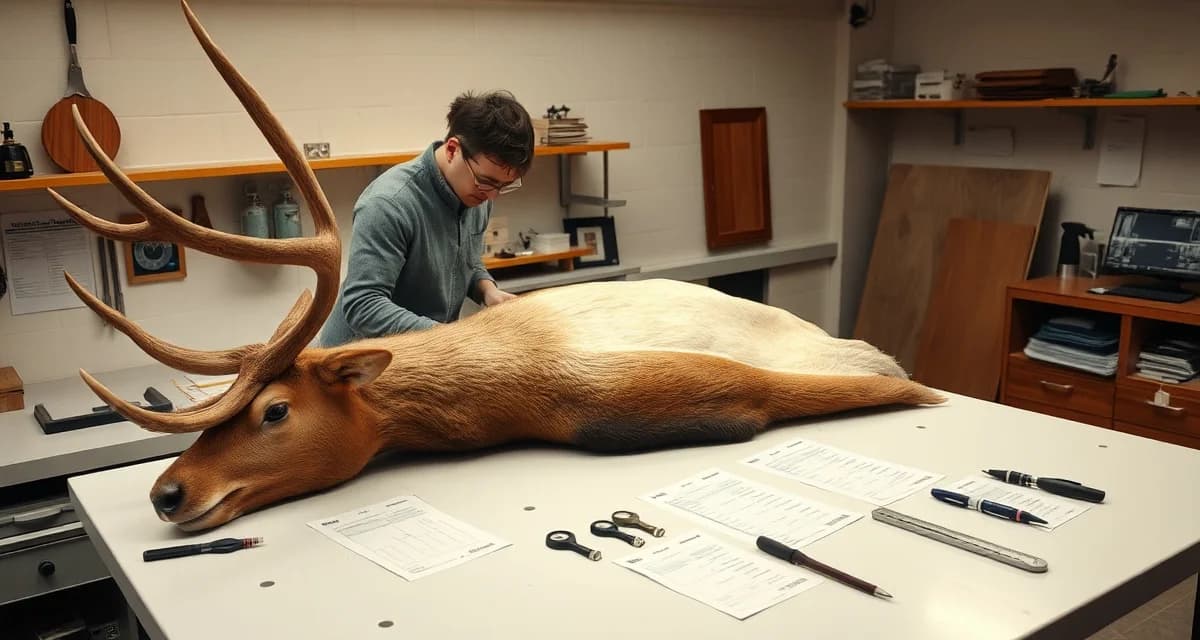
Elk Taxidermy Intake Checklist: Everything to Capture at Drop-Off
Elk intake is more complex than deer. The stakes are higher, the specimen is larger and more valuable, the tannery process takes longer, and the form costs significantly more. Missing data at intake on an elk job creates expensive rework that can cost you hundreds of dollars and damage a customer relationship that may have taken years to build.
Elk antler measurement at intake documents trophy quality before production begins. That documentation matters for the hunter's records and for your own protection if questions arise about the mount's accuracy to the original animal.
Here's the complete intake checklist for Rocky Mountain elk and Roosevelt elk shoulder mounts.
TL;DR
- If the hunter wants this, discuss the 60-day dry period and refer them to a certified scorer.
- Tannery turnaround estimate: Elk tannery typically runs 10-16 weeks vs.
- Total production timeline: Elk shoulder mounts realistically take 14-24 months at most shops.
- Hunters who drove from Texas to hunt elk in Colorado may not realize their elk will be at your shop for 18-24 months.
- Quoted price: Elk shoulder mounts typically run $800-$1,200+. Confirm your quote in writing in the intake record.
- Photograph everything. Elk intake photos are at least as important as deer intake photos, arguably more so given the higher value of the final mount.
Section 1: Hunter Information
Same foundational capture as any species, but note that many elk hunters are out-of-state clients who traveled for their hunt. Confirm contact information carefully and note the best time to reach them.
- Full name
- Primary phone number
- Email address (essential for portal link and notifications)
- Home address (out-of-state hunters particularly)
- State of residence
- Best contact method and time
Section 2: Harvest Documentation
Elk are subject to state licensing requirements in all western states. Document compliance at intake.
- State of harvest
- Hunting unit or management area
- State hunting license number
- Tag type (over-the-counter, limited entry, special draw)
- Tag or license number
- Tag still physically attached? (confirm before accepting)
- Harvest date
- Guided or self-guided hunt? (relevant for outfitter documentation)
For elk harvested through a licensed outfitter, you may receive the elk as part of a guide's service. Confirm the hunter's documentation is present, not just the outfitter's claim.
Section 3: Cape Condition Assessment
Elk capes are larger and more variable in condition than deer. Field care in western elk country can be challenging due to terrain, weather, and distance from roads. Be thorough.
- Cape condition overall (excellent, good, fair, poor)
- How long between harvest and delivery to your shop? (hours/days in field)
- Stored frozen, salted, or fresh?
- Evidence of hair slippage or spoilage?
- Bullet or broadhead entry and exit damage (location and extent)
- Neck skinned at correct length for shoulder mount? (elk capes often come in short)
- Any damage from field caping (cuts, slices, holes)?
- Facial detail complete (ears turned, lips split, eye detail clean)?
- Any bloat damage from delayed field dressing?
- Odor assessment
Photograph everything. Elk intake photos are at least as important as deer intake photos, arguably more so given the higher value of the final mount.
Section 4: Antler Documentation
Elk antlers are the centerpiece of the trophy. Document them carefully at intake.
- Antler main beam length estimate (both sides)
- Tine count by side (6x6, 5x6, 7x6, etc.)
- Inside spread
- Abnormal points noted
- G2, G3, G4 tine lengths approximate (for trophy documentation)
- Antler color and staining
- Any chipped, broken, or damaged tines?
- Velvet present? (if yes, confirm hunter's desire: preserved or removed)
- B&C scoring interest? (note 60-day dry period requirement)
- Green score estimate if applicable
Elk antlers are frequently sent for professional B&C scoring. If the hunter wants this, discuss the 60-day dry period and refer them to a certified scorer. Note the interest in the job record.
Section 5: Tannery Routing
This section matters more for elk than deer because not all tanneries handle elk well and the stakes of a tannery failure are much higher.
- Which tannery will receive this cape?
- Estimated tannery turnaround for elk (note this is typically 10-16 weeks, longer than deer)
- Any special tannery instructions for this cape (due to damage, unusual thickness, velvet preservation)?
- Estimated return date from tannery (build into your timeline quote)
If you have a tannery relationship specifically for elk, route elk capes there. A tannery that does 200 deer capes per season handles elk as an afterthought. A tannery that regularly processes elk has refined their process for the thick hide and larger scale.
Section 6: Mount Specifications
Elk shoulder mounts represent a significant investment. Get the specifications exactly right.
Mount type:
- Shoulder mount (standard)
- Shoulder mount with habitat or pedestal base
- European skull mount (elk skull is very large, confirm dimensions)
- Half mount or pedestal mount
- Life-size (rare, requires full custom form discussion)
Form pose:
- Straight ahead
- Alert right turn
- Alert left turn
- Bugling (head up, typically requires custom form or heavy alteration)
- Grazing or relaxed (head lower)
- Other (describe specifically)
Note that large elk are often displayed in dramatic poses. If a hunter wants an aggressive bugling pose, that typically requires form alteration or custom fabrication that adds to cost. Discuss this at intake.
Antler mounting position: For large 6x6 bulls, the antler spread can exceed the mount's panel width. Discuss whether the hunter wants to display the full spread or if any accommodation is needed for their space.
Eye type and relief:
- Standard glass eyes
- Bull-in-rut aggressive set
- Relaxed
- Alert
Ear position and finish
Nose finish: Elk noses run wet/darker in rut condition and drier/lighter in early season. Note reference photos if the hunter has them.
Section 7: Timeline and Pricing
Tannery turnaround estimate: Elk tannery typically runs 10-16 weeks vs. 4-10 weeks for deer. Set this expectation explicitly.
Total production timeline: Elk shoulder mounts realistically take 14-24 months at most shops. More than a deer, less than a full life-size project. Be specific.
Rush service: Available at premium if needed. Elk rush tannery is possible but adds cost.
Form selection: If you're ordering a specific form, either order it at intake or note the size specification clearly so you're not scrambling to find the right form when the hide returns.
Quoted price: Elk shoulder mounts typically run $800-$1,200+. Confirm your quote in writing in the intake record.
Deposit: Collect at minimum your tannery cost plus form cost. For elk, that's typically $400-$600. Don't leave this at intake without a deposit.
Section 8: Tracking and Communication
- Portal link sent to hunter? (especially critical for out-of-state clients)
- Contact preferences confirmed for multi-year production timeline?
- Next communication milestone discussed? (when cape ships to tannery, when it returns)
Common Elk Intake Errors
Accepting a cape without measuring the neck circumference. You need the neck measurement to order or select the right form. Take it at intake before the cape goes to the tannery.
Not asking whether the hunter wants velvet preserved. A velvet bull brought in without discussion about preservation is a missed opportunity and potentially a disappointed customer if they wanted velvet and it was stripped.
Not communicating the timeline clearly. Hunters who drove from Texas to hunt elk in Colorado may not realize their elk will be at your shop for 18-24 months. Tell them at intake.
Under-depositing. Elk intake requires a deposit that covers your tannery and form cost at minimum. These inputs are expensive and should not be your personal investment until pickup.
Frequently Asked Questions
What information should I capture at elk taxidermy intake?
Complete elk intake covers eight areas: hunter contact information, harvest documentation including state tag, cape condition with multiple photos, antler documentation including measurements and any trophy documentation interests, tannery routing for elk-specific processing, mount specifications including pose and all finish preferences, timeline and pricing with a deposit covering at minimum tannery and form costs, and tracking setup including portal link for the typically long production period.
What measurements should I take at elk intake?
At a minimum, capture the neck circumference to inform form selection, the inside antler spread for reference, and approximate main beam lengths. If the hunter is interested in B&C or P&Y scoring, capturing G-measurement approximations at intake provides a green score estimate while the hunt is fresh. For form alteration planning, photograph the body/neck dimensions from multiple angles so you have references when the cape returns from the tannery months later.
How does this apply to solo taxidermy shops?
The principles in this guide apply to solo shops just as they do to larger operations, though the scale differs. A single-person shop may have lower absolute volume but faces the same documentation, compliance, and customer communication requirements. The practical advice here scales down to any shop size.
What is the most common mistake taxidermists make with elk taxidermy intake checklist?
The most common mistake is treating elk taxidermy intake checklist as an afterthought rather than building it into the standard workflow from the start. Shops that encounter problems in this area typically did not establish clear processes before season, which means every situation becomes a one-off decision rather than a standard response.
Related Articles
- Bird Taxidermy Intake Checklist: Turkey, Duck, and Upland Bird Drop-Off
- What Causes Elk Cape Slippage and How to Prevent It?
- How Long Does an Elk Taxidermy Mount Take?
- What Records Must Colorado Taxidermists Keep for Elk?
Try These Free Tools
Put these insights into practice with our free calculators and planners:
Sources
- National Taxidermists Association (NTA)
- US Fish & Wildlife Service
- Rocky Mountain Elk Foundation
- Breakthrough Magazine
- State wildlife agencies
Get Started with MountChief
Elk hunters invest significantly in their trophies and expect professional handling from intake through finished mount. MountChief's AI intake, tannery tracking, and customer portal give every elk customer the visibility and communication they expect during a 10-16 month process. Try MountChief before elk season opens.