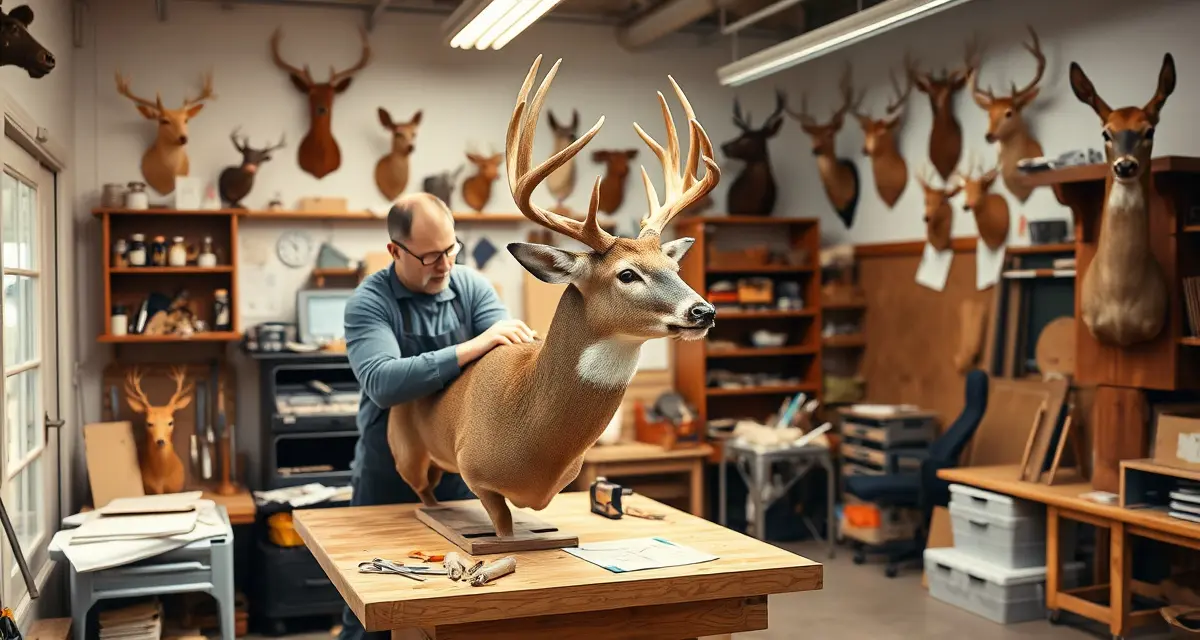
Deer Taxidermy Job Tracking: Manage Whitetail Season Volume
Whitetail deer accounts for 60 to 70% of annual mount volume at most US shops. It's the backbone of the business, the species that determines whether you have a profitable year or a rough one. And it's the species most likely to create mix-up problems, missed timeline promises, and frustrated customers if you don't have a tracking system built for the volume.
This guide covers how to track deer mounts through every stage of the process, from field intake through tannery and into the finished mount.
TL;DR
- All of those deer, similar species, similar size, similar condition, need to stay matched to their individual customers through a process that takes 6 to 12 months.
- Record retention: Most states require 2 to 3 year retention.
- At high-volume shops, you might intake 30 to 50 deer in a single week during the November firearms season push.
- Shops with large backlogs from heavy deer seasons may quote 10 to 12 months.
- Typically 4 to 8 months for most shops, with tannery processing being the largest single variable.
- Commercial tanneries process deer capes in 6 to 12 weeks.
Why Deer Tracking Is Different From Other Species
Deer season is concentrated. At high-volume shops, you might intake 30 to 50 deer in a single week during the November firearms season push. All of those deer, similar species, similar size, similar condition, need to stay matched to their individual customers through a process that takes 6 to 12 months.
The identification problem at the tannery is the critical point. You ship a batch of 40 deer capes in November. They come back in February as 40 processed hides that all look reasonably similar. Without reliable tags that survived the tanning chemical process, re-matching hides to customers becomes guesswork.
Paper tags fail in tannery chemicals. QR tags engineered for tannery environments don't.
The Deer Tracking Workflow in MountChief
At Intake
- Photograph the deer cape, face shot, condition overview, any damage
- AI identifies species and fills measurements
- Add customer information, mount style, pose preference, and deposit
- QR tag is generated and immediately attached to the cape
- Customer gets a tracking link via text
The QR tag stays with the cape. Cold storage, tannery box, tannery processing, tannery return, production floor. Every scan shows the full job record.
Tannery Shipment
When you pull capes for the tannery, scan each QR tag to add it to the shipment manifest. Log the tannery, ship date, and carrier tracking. MountChief shows which tannery has which capes and when they're due back.
Customers see "shipped to tannery, expected return [date range]" in their portal. They don't call.
Production Tracking
When a hide comes back from the tannery, scan it to confirm receipt. The job status updates. Customer portal updates. You can assign the job to a specific taxidermist and track production stage from this point.
Completion and Pickup
When the mount is complete, update the status in MountChief. The customer gets an automatic notification. They come in, you scan the QR tag one final time to confirm the right mount goes to the right customer, collect the balance, and close the job.
Deer Compliance Documentation
State deer records: Most states require hunter license number and deer tag documentation at intake. States with CWD zones require harvest location documentation to determine zone.
CWD considerations: 22 states have CWD-positive zones with varying restrictions on carcass transport and intake. Know your state's rules, MountChief flags them at intake.
Record retention: Most states require 2 to 3 year retention. Keep records longer, disputes arise more than 2 years after intake occasionally.
How Long Does a Deer Shoulder Mount Take?
Realistic timelines for whitetail shoulder mounts:
- Intake to tannery: 2 to 6 weeks (varies by shop backlog and hide condition)
- Tannery processing: 6 to 12 weeks (commercial tannery; longer during peak season)
- Mounting: 2 to 4 weeks on the bench
- Finishing and drying: 2 to 4 weeks
Total realistic range: 4 to 8 months for most shops. Shops with large backlogs from heavy deer seasons may quote 10 to 12 months.
Setting this expectation clearly at intake prevents the majority of customer complaints.
Related Articles
- Bear Taxidermy Job Tracking: Manage High-Risk High-Value Specimens
- Elk Taxidermy Job Tracking: Manage High-Value Trophy Mounts
- Deer Season Intake Volume Calculator: Plan Your Capacity
- Tips for the First Day of Deer Season at Your Taxidermy Shop
FAQ
How do I track deer mounts through the taxidermy process?
The most reliable method is QR code tracking, a durable tag attached at intake that links to the digital job record. Scan the tag at each production stage (cold storage, tannery shipment, tannery receipt, production, completion) to maintain a timestamped chain of custody. MountChief automates this process and pushes status updates to the customer portal at each stage.
How long does a deer shoulder mount take from intake to completion?
Typically 4 to 8 months for most shops, with tannery processing being the largest single variable. Commercial tanneries process deer capes in 6 to 12 weeks. High-volume shops with significant deer season backlogs may quote 10 to 12 months. The honest timeline told at intake is better for customer relationships than the optimistic timeline that gets missed.
What records must I keep for deer taxidermy?
Most states require written intake records for deer including customer name and contact, hunting license number, deer harvest tag or seal number, harvest date, and harvest state and county. CWD-affected states require harvest zone documentation. Federal records apply to out-of-state import situations. Records should be retained for a minimum of 3 years.
How does this apply to solo taxidermy shops?
The principles in this guide apply to solo shops just as they do to larger operations, though the scale differs. A single-person shop may have lower absolute volume but faces the same documentation, compliance, and customer communication requirements. The practical advice here scales down to any shop size.
What is the most common mistake taxidermists make with deer taxidermy tracking?
The most common mistake is treating deer taxidermy tracking as an afterthought rather than building it into the standard workflow from the start. Shops that encounter problems in this area typically did not establish clear processes before season, which means every situation becomes a one-off decision rather than a standard response.
Try These Free Tools
Put these insights into practice with our free calculators and planners:
Sources
- National Taxidermists Association (NTA)
- US Fish & Wildlife Service
- Breakthrough Magazine
- State wildlife agencies
- Small Business Administration (SBA)
Get Started with MountChief
A well-run taxidermy shop depends on knowing where every specimen stands, what paperwork is complete, and when to update the customer. MountChief tracks all of that automatically.