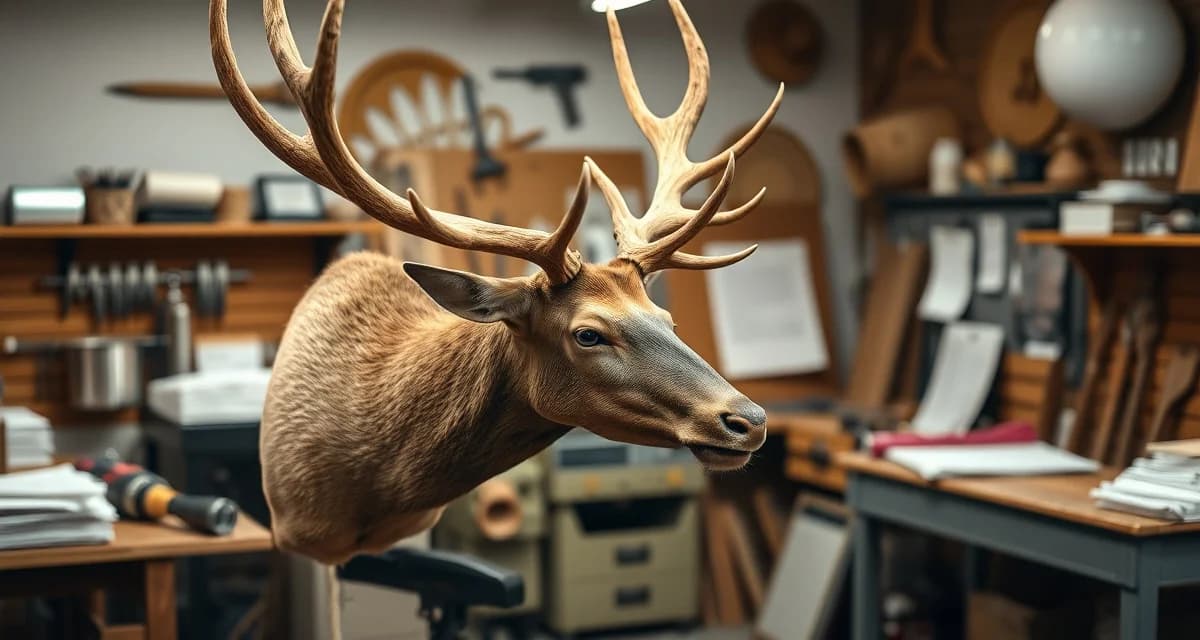
Elk Taxidermy Job Tracking: Manage High-Value Trophy Mounts
An elk shoulder mount averages $800 to $1,200. A full-body or pedestal elk mount can run $3,000 to $6,000 or more. These are your highest-value jobs, and the ones where a lost cape, a tannery mistake, or a mix-up creates the most serious liability.
Elk mounts average $800 to $1,200, and a single lost or damaged elk cape represents that amount in direct replacement liability, plus the irreplaceable sentimental value to a hunter who may have waited years for a tag.
No competitor tracks tannery status for elk hides. Given 6 to 14 month timelines, that's a critical visibility gap.
TL;DR
- Given 6 to 14 month timelines, that's a critical visibility gap.
- Commercial tanneries process them in 8 to 14 weeks, sometimes longer during peak season when the tannery is handling high deer volume alongside elk.
- This extended timeline is the primary driver of elk mount's 8 to 14 month average completion time.
- Customers who don't understand the tannery process will start calling around month 4 or 5 asking why it's taking so long.
- Out-of-state customers see "at tannery, expected return in Q2" and don't panic when month 4 arrives.
- customer portal shows tannery status throughout the 8 to 14 month process.
Why Elk Jobs Require More Care at Every Stage
Capes are large and physically demanding
An elk cape is significantly larger and heavier than a deer cape. Handling, cold storage, and tannery preparation all involve more physical work. The cape needs to be properly fleshed and salted before shipping to the tannery, substandard prep affects tanning quality and ultimately mount quality.
Tannery timelines are longer
Elk hides are thicker than deer hides. Commercial tanneries process them in 8 to 14 weeks, sometimes longer during peak season when the tannery is handling high deer volume alongside elk. This extended timeline is the primary driver of elk mount's 8 to 14 month average completion time.
Customers who don't understand the tannery process will start calling around month 4 or 5 asking why it's taking so long. A customer portal that shows "at tannery, expected return [month]" answers that question before it becomes a call.
Out-of-state customers are common
Many elk tags are drawn by hunters who traveled to hunt. A Colorado, Wyoming, or Montana elk hunter may live in Indiana, Texas, or Florida. These customers need digital communication, they can't stop by to check on their mount.
Elk Tracking Workflow in MountChief
Intake
- Photograph the cape and antlers (if applicable) before any handling
- Document cape condition, any cuts, field damage, heat damage
- AI-assisted intake fills measurements and species data
- Verify harvest documentation (state game tag, license number, harvest location)
- Attach QR tag, these survive the tannery chemical process that would destroy a standard label on elk hide
- Send customer tracking link immediately
Tannery Management
Elk capes require coordination with your tannery before shipping:
- Confirm the tannery handles elk (not all do)
- Verify timeline expectations, elk hides take longer
- Log the shipment in MountChief when you ship
MountChief tracks elk hides at the tannery with the same system as deer hides but with the longer expected timeline factored in. Out-of-state customers see "at tannery, expected return in Q2" and don't panic when month 4 arrives.
Production
Elk shoulder mounts require large forms and specific reference material. Log the form size, reference photos, and eye selection at intake so production has everything needed when the hide comes back from the tannery.
What Happens If the Tannery Damages an Elk Cape
This is where documentation pays off. An elk cape damaged at the tannery needs to be documented with:
- Intake photos showing condition at drop-off
- Tannery shipment records confirming the hide arrived in documented condition
- Return documentation showing the damage
With complete chain-of-custody records, tannery liability claims are significantly more likely to result in compensation. Without them, it becomes a dispute between your word and the tannery's.
Related Articles
- Deer Taxidermy Job Tracking: Manage Whitetail Season Volume
- Colorado Elk Shop: How AI Intake Handled 60 High-Value Mounts
- Fish Mount Job Tracking: Manage Replicas and Skin Mounts
FAQ
How do I track an elk mount through the taxidermy process?
QR code tracking from intake through tannery to completion. Each scan logs the time, location, and handler. Tannery shipment and receipt are logged as trackable events. The customer portal shows tannery status throughout the 8 to 14 month process. MountChief's tannery tracking is the only dedicated solution in any taxidermy software, no competitor tracks hides at the tannery.
How long does an elk shoulder mount take?
An elk shoulder mount typically takes 8 to 14 months from intake to completion. Tannery processing alone takes 8 to 14 weeks for elk hides. Shops should communicate realistic 10 to 14 month timelines at intake rather than optimistic estimates, particularly for out-of-state hunters who will be monitoring more closely.
What happens if the tannery damages an elk cape?
With proper documentation, intake photos, tannery shipment records, and return condition documentation, you have the evidence needed for a tannery liability claim or insurance claim. Without documentation, you have no leverage. MountChief creates an automated chain-of-custody record that makes tannery disputes resolvable. Replacement cost for a quality elk cape can run $500 to $1,500, worth protecting with documentation.
How does this apply to solo taxidermy shops?
The principles in this guide apply to solo shops just as they do to larger operations, though the scale differs. A single-person shop may have lower absolute volume but faces the same documentation, compliance, and customer communication requirements. The practical advice here scales down to any shop size.
What is the most common mistake taxidermists make with elk taxidermy tracking?
The most common mistake is treating elk taxidermy tracking as an afterthought rather than building it into the standard workflow from the start. Shops that encounter problems in this area typically did not establish clear processes before season, which means every situation becomes a one-off decision rather than a standard response.
Try These Free Tools
Put these insights into practice with our free calculators and planners:
Sources
- National Taxidermists Association (NTA)
- US Fish & Wildlife Service
- Rocky Mountain Elk Foundation
- Breakthrough Magazine
- State wildlife agencies
Get Started with MountChief
Elk hunters invest significantly in their trophies and expect professional handling from intake through finished mount. MountChief's AI intake, tannery tracking, and customer portal give every elk customer the visibility and communication they expect during a 10-16 month process. Try MountChief before elk season opens.