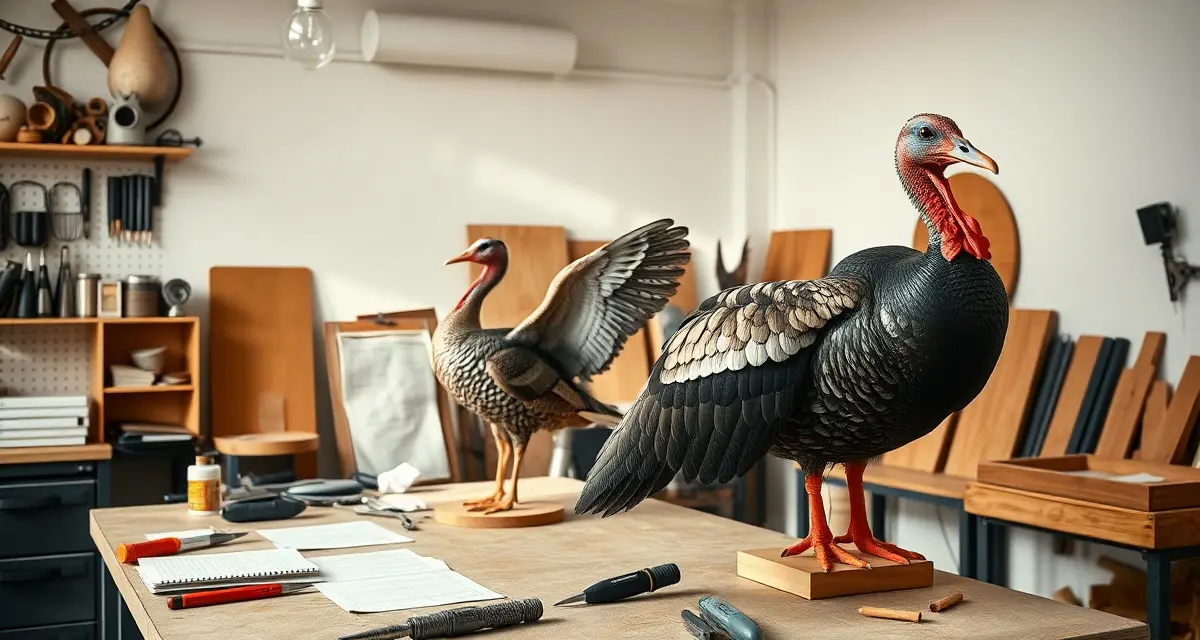
Bird Taxidermy Job Tracking: Manage Waterfowl and Turkey Mounts
Turkey and duck mounts represent 20-25% of annual volume at most full-service taxidermy shops. But they account for a disproportionate share of mix-ups, handling errors, and customer complaints. Why? Because most shops track bird mounts the same way they track deer, and they don't work the same way.
Birds have different freezing requirements, different handling timelines, different pose options, and different customer expectations than big game. A turkey fan mount looks nothing like a duck drake full body. Treating them as interchangeable in your tracking system leads to errors.
Bird taxidermy tracking that works needs to be species-specific from the moment the bird arrives at your counter.
TL;DR
- Spring turkey season is a 6-week sprint for most shops.
- Full-body strutting or standing mounts take 8-16 weeks depending on your current backlog and whether you use a bird tannery for the skin.
- Some shops in top waterfowl states do 50-100+ bird mounts per year.
- Turkey and duck mounts represent 20-25% of annual volume at most full-service taxidermy shops.
- Birds in your shop's freezer need to be tracked by job.
- Turkey fan mounts typically take 4-8 weeks.
Why Bird Mounts Are Uniquely Challenging to Track
Most taxidermy job tracking systems were designed around deer. Enter species, mount type, customer name, and you're done. That works for a shoulder mount. It doesn't work well for birds.
The Handling Difference
Birds are more fragile than deer capes. Feathers, skin condition, and freeze damage affect mountability in ways that don't apply to mammal hides. A duck that wasn't cooled quickly enough after harvest, or a turkey that was folded improperly before freezing, arrives at your shop with damage that affects what you can do with it.
Capturing feather condition, freeze quality, and handling notes at intake isn't optional for birds, it's how you protect yourself from disputes and plan your production approach.
The Pose Complexity
Bird mounts have pose options that require specific customer input at intake:
Turkey mounts:
- Fan-only display (tail fan, beard, spurs)
- Strutting pose (full body, fan displayed)
- Walking pose (standing, alert)
- Flying pose (wings extended)
- Field-dressed pose (with specific prop or habitat)
Duck and waterfowl:
- Standing/swimming pose
- Head-up alert pose
- Preening pose
- Flying pose (requires wing spread decision)
- Landing pose
Getting this information from the customer at pickup is frustrating for them and creates rework for you. Capture it at intake.
The Federal Compliance Layer
All migratory birds (which includes every duck, goose, and wild turkey) require your Federal Taxidermist Permit from USFWS before you can legally accept them for mounting. And they require specific intake documentation: customer's federal duck stamp, hunting license, and species identification.
A bird tracking system that doesn't include federal compliance fields isn't complete.
Setting Up Bird Taxidermy Tracking
Step 1: Federal Permit Confirmation
Before you accept any migratory bird, confirm your Federal Taxidermist Permit is current and on file. USFWS can inspect your records at any time. Operating without this permit is a federal offense, not just a state compliance issue.
Step 2: Species-Specific Intake Fields
Your intake form needs to change based on the bird species. MountChief's bird taxidermy tracking uses species-specific intake fields that load when you select the bird category:
For turkey:
- Subspecies (Eastern, Rio Grande, Merriam's, Osceola)
- Beard length and count
- Spur length (left and right)
- Overall feather condition (excellent/good/fair/damaged)
- Fan condition specifically (damaged feathers affect fan-only mounts)
- Pose selection
- Mounting style (fan-only, strutting, full body, other)
For waterfowl:
- Species and subspecies (drake/hen distinction matters for coloring)
- Plumage condition (breeding plumage vs. eclipse)
- Wing condition
- Pose selection
- Habitat base preferences
Capturing this at intake means you're never hunting for the customer's preference when you're ready to start the mount.
Step 3: Handling and Storage Documentation
Note the bird's condition and how it was stored before arriving at your shop. Frozen birds that thaw during transport are common. A bird that arrives soft (previously frozen, thawed) needs to be refrozen carefully. Document this on the intake record.
Step 4: Freeze Status and Storage Tracking
Birds in your shop's freezer need to be tracked by job. A turkey fan mount that gets mixed up with another customer's bird is a very expensive mistake. Label every bird with a waterproof tag linking to the job record, and track storage location in your system.
MountChief's taxidermy job tracking maintains the physical storage location as a field in each job record. When you're looking for a specific bird in a full freezer, you know exactly where it should be.
Managing Spring Turkey Season
Spring turkey season is a 6-week sprint for most shops. The concentrated intake window (typically April and May) creates a surge of bird intakes that needs to be managed proactively.
Pre-Season Preparation
Before turkey season opens:
- Confirm freezer space for the expected intake volume
- Set up your turkey-specific intake workflow in your tracking software
- Review pose and mounting style options so staff can discuss them confidently with hunters
- Set deposit and pricing for turkey work
- Communicate your intake capacity to customers (if you have limits)
Managing the Intake Surge
During peak spring turkey intake:
- Process each bird through intake immediately, don't pile them up for batch processing
- Photograph each bird at intake (fan, beard, spurs) for documentation
- Confirm mounting preference before the customer leaves
- Re-freeze birds promptly after intake documentation is complete
Waterfowl Season: September Through January
Waterfowl season creates a longer, sustained bird intake window than turkey. Duck and goose mounts come in from September opening through January late season.
For shops near productive waterfowl areas, this can represent significant annual volume. Some shops in top waterfowl states do 50-100+ bird mounts per year.
Waterfowl-Specific Tracking Considerations
Waterfowl mounts require attention to:
- Species accuracy (drake mallard vs. hen mallard have very different coloring for painting)
- Plumage stage at harvest (breeding vs. non-breeding plumage)
- Whether the mount will be displayed with or without a habitat scene
- Head position and overall pose detail
Federal duck stamp documentation is required for every customer who brings in waterfowl. Your records must include the customer's federal duck stamp and state waterfowl license information.
Feature Breakdown: MountChief Bird Tracking
Species-Specific Intake Forms
Each bird category has its own intake form with the relevant fields. Turkey intake captures beard, spurs, feather condition, and pose. Duck intake captures species, plumage condition, and wing status. You never see irrelevant fields, and you never miss relevant ones.
Pose and Style Selection at Intake
Dropdown selectors for pose and mounting style ensure customer preferences are captured clearly and attached permanently to the job record. No more "I think they wanted the strutting pose" six months later.
Federal Compliance Fields
Every bird intake includes fields for the customer's federal duck stamp or turkey permit, hunting license, and your federal permit number. These records can be filtered and exported for USFWS inspection on request.
Freezer Location Tracking
Note the storage location (Freezer 1, Shelf B, Bin 3) in the job record. When birds are ready for production, finding them in a full freezer takes seconds instead of minutes.
Automated Customer Notifications
When a turkey fan mount or full-body bird is complete, the customer gets notified automatically. No manual follow-up required, no delay between completion and customer contact.
Comparison: Bird Tracking Methods
| Method | Poses Captured | Federal Compliance Fields | Species-Specific Fields | Automated Notifications |
|---|---|---|---|---|
| Paper log | Usually not | Rarely | No | No |
| Spreadsheet | Sometimes | Manually added | No | No |
| Generic job software | Limited | Not built-in | No | Sometimes |
| MountChief bird tracking | Yes, at intake | Built-in | Yes, per species | Yes |
Related Articles
- Fish Mount Job Tracking: Manage Replicas and Skin Mounts
- Reptile Taxidermy Job Tracking: Snake, Alligator, and Lizard Mounts
- Small Mammal Taxidermy Job Tracking: Squirrel Fox and Mink Mounts
FAQ
How do I track bird mount orders?
Create a job record at intake with species-specific fields: feather condition, pose preference, mounting style, and federal compliance information. Attach photos of the bird at intake for reference and dispute protection. Tag the physical bird with a waterproof label linked to the job number, and note its freezer storage location. MountChief's bird taxidermy tracking handles all of these fields within a species-specific intake workflow.
How long does a turkey mount take to complete?
Turkey fan mounts typically take 4-8 weeks. Full-body strutting or standing mounts take 8-16 weeks depending on your current backlog and whether you use a bird tannery for the skin. Full spring turkey season intake often means some mounts are completed in June-July while others don't finish until fall. Setting clear timeline expectations at intake and providing status updates during production prevents the most common customer frustration.
What are the freeze and handling requirements for bird specimens?
Birds should be cooled immediately after harvest and frozen as soon as possible. They should not be washed before freezing, moisture leads to freezer burn and feather damage. Fold wings naturally and wrap loosely in plastic before freezing. Avoid bending tail feathers for turkeys. At intake, if a bird has been previously thawed and refrozen, note this in the condition record and adjust your production plan accordingly. Thaw-refreeze cycles damage feather quality.
How does this apply to solo taxidermy shops?
The principles in this guide apply to solo shops just as they do to larger operations, though the scale differs. A single-person shop may have lower absolute volume but faces the same documentation, compliance, and customer communication requirements. The practical advice here scales down to any shop size.
What is the most common mistake taxidermists make with bird taxidermy tracking?
The most common mistake is treating bird taxidermy tracking as an afterthought rather than building it into the standard workflow from the start. Shops that encounter problems in this area typically did not establish clear processes before season, which means every situation becomes a one-off decision rather than a standard response.
Try These Free Tools
Put these insights into practice with our free calculators and planners:
Sources
- National Taxidermists Association (NTA)
- US Fish & Wildlife Service
- Ducks Unlimited
- Small Business Administration (SBA)
Start Tracking Bird Mounts the Right Way
Bird mounts deserve the same professional tracking as deer and elk. Species-specific intake fields, federal compliance documentation, pose selection at intake, and automated customer notifications make the difference between a smooth bird season and a chaotic one.
MountChief's bird taxidermy tracking handles turkey, waterfowl, upland birds, and all other species with the same species-specific care that makes big game tracking work. One platform for your entire shop's production.
Start your free MountChief trial and set up bird tracking before spring turkey season opens.
Get Started with MountChief
Taxidermy shops that track specimens, manage customer communication, and handle compliance in one system spend less time on admin and more time on quality work. That is what MountChief was built for.