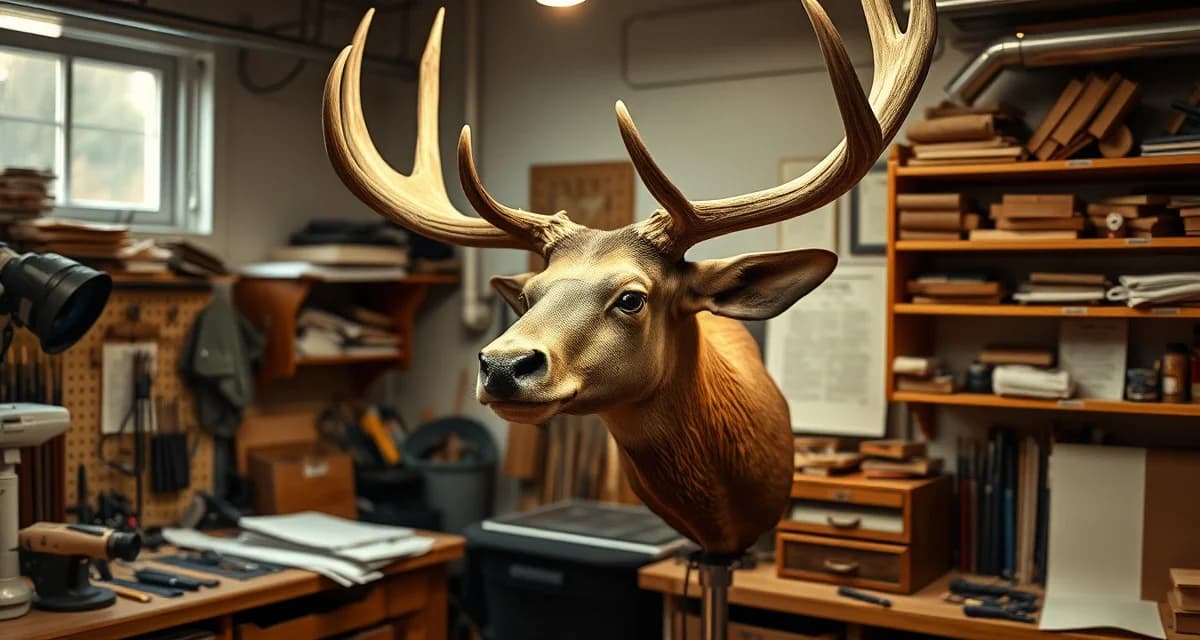
Elk Season Preparation for Utah Taxidermy Shops
Utah's limited-entry elk permits attract hunters from all 50 states to Utah taxidermists. These aren't just any elk. Utah's limited-entry units produce trophy-class bulls that represent the culmination of years of point accumulation. A hunter who's been applying for a Utah limited-entry tag for 10 years is bringing you a trophy that requires your best work and documentation.
DWR permit documentation must be captured at elk intake for all limited-entry hunts.
TL;DR
- Utah's limited-entry elk permits attract hunters from all 50 states to Utah taxidermists.
- hunter who's been applying for a Utah limited-entry tag for 10 years is bringing you a trophy that requires your best work and documentation.
- The DWR permit number is the unique identifier linking the hunter to the specific allocated elk. It must be captured at intake without exception.
- What DWR documentation must Utah shops be ready with for elk season?
- successful limited-entry elk permit in a quality Utah unit might have been accumulated over 15 to 20 years of preference point building.
- DWR permit documentation must be captured at elk intake for all limited-entry hunts.
Utah's Limited-Entry System
Utah elk hunting operates through a point system for limited-entry units, with over-the-counter archery available in general zones. The limited-entry hunts are what drive the trophy quality and the out-of-state hunter interest.
A successful limited-entry elk permit in a quality Utah unit might have been accumulated over 15 to 20 years of preference point building. The resulting hunt often involves significant investment in guides, travel, and logistics. The taxidermist who receives that bull is the final custodian of a major life investment.
Why documentation matters on limited-entry elk:
The permit itself (the specific DWR permit number, unit, season type) is the legal foundation of the harvest. Documentation at intake creates the compliance record that connects the physical trophy to the authorized harvest.
Utah DWR Documentation Requirements
Utah Division of Wildlife Resources requires permit documentation at elk intake for limited-entry hunts. At intake:
- Hunter's name and contact information
- Utah hunting license number
- Home state license number for nonresident hunters (Utah attracts hunters from all 50 states)
- Utah DWR elk permit number
- Unit number
- Season type (archery, rifle, muzzleloader)
- Date of harvest
- Date received at shop
The DWR permit number is the unique identifier linking the hunter to the specific allocated elk. It must be captured at intake without exception.
Out-of-State Hunter Communication: Utah's Primary Challenge
Utah's limited-entry elk tags attract hunters from every state in the country. That means a Utah taxidermist in September might have elk intakes from hunters who live in Texas, Florida, Colorado, Wisconsin, and California. None of whom can easily stop by the shop to check on their mount.
Portal adoption is near universal for Utah elk shops. Out-of-state hunters with high-value limited-entry elk have both the motivation and the sophistication to use a customer portal. Every limited-entry elk hunter should receive a portal link at intake. It's the minimum expected standard of communication for a customer who's invested this much in their hunt.
Proactive milestone notifications (tannery shipment, tannery return, production start, completion) keep these high-investment customers appropriately informed without requiring phone calls.
Preparing for Utah's Elk Season Timeline
Utah elk seasons typically run from late August (archery) through October and November (rifle), with muzzleloader seasons fitting within that range. The season is shorter and less concentrated than deer season in states like Wisconsin or Ohio.
Key preparation milestones for Utah elk shops:
- August: All intake systems ready for late-August archery elk. Out-of-state hunter documentation fields active.
- September to October: Peak limited-entry season. Highest value intake period.
- November: Late rifle and muzzleloader seasons.
Frequently Asked Questions
How do Utah taxidermists prepare for elk season?
DWR permit documentation fields required in intake system before August archery opener, customer portal ready for the all-50-states out-of-state hunter base, and girth measurement protocols confirmed for accurate form selection. Utah's limited-entry elk are among the highest-value intakes in North American taxidermy. Preparation reflects that value.
How do UT shops manage out-of-state limited-entry elk hunter communication?
Customer portals distributed at every intake give hunters from any state real-time access to their trophy's status. For limited-entry elk specifically (where the hunter has waited years and invested significantly) proactive milestone notifications throughout the production period are appropriate and appreciated. These hunters are engaged, informed customers who will leave excellent reviews when their communication experience matches the quality of their trophy.
What DWR documentation must Utah shops be ready with for elk season?
Utah taxidermist registration current with DWR, intake forms capturing DWR permit numbers and unit numbers as required fields, and home state license number fields active for the near-universal nonresident elk hunter population. DWR permit documentation is the compliance foundation for Utah limited-entry elk. Every intake must include it without exception.
How does this apply to solo taxidermy shops?
The principles in this guide apply to solo shops just as they do to larger operations, though the scale differs. A single-person shop may have lower absolute volume but faces the same documentation, compliance, and customer communication requirements. The practical advice here scales down to any shop size.
What is the most common mistake taxidermists make with elk season prep utah?
The most common mistake is treating elk season prep utah as an afterthought rather than building it into the standard workflow from the start. Shops that encounter problems in this area typically did not establish clear processes before season, which means every situation becomes a one-off decision rather than a standard response.
Related Articles
- Elk Season Preparation for Wyoming Taxidermy Shops
- Bear Season Preparation for Maine Taxidermy Shops
- Bear Season Preparation for Wisconsin Taxidermy Shops
- Deer Season Preparation for Arkansas Taxidermy Shops
Try These Free Tools
Put these insights into practice with our free calculators and planners:
Sources
- National Taxidermists Association (NTA)
- US Fish & Wildlife Service
- Rocky Mountain Elk Foundation
- Breakthrough Magazine
- State wildlife agencies
Get Started with MountChief
Elk hunters invest significantly in their trophies and expect professional handling from intake through finished mount. MountChief's AI intake, tannery tracking, and customer portal give every elk customer the visibility and communication they expect during a 10-16 month process. Try MountChief before elk season opens.