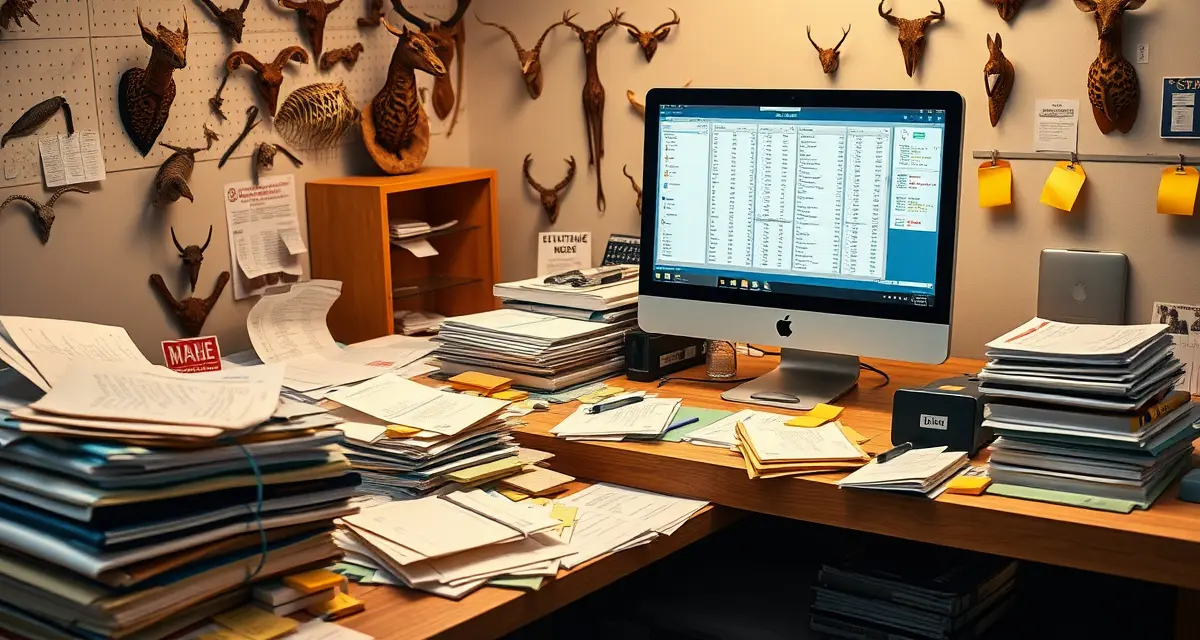
MountChief vs Paper and Binders: Why 2026 Is the Year to Switch
Paper tags in tanneries cause 60 percent of specimen mix-ups that digital records prevent. That single statistic captures why the comparison between paper systems and taxidermy management software isn't really close, and yet 6,000 or more shops are still running on binders, sticky notes, and handwritten intake forms.
The reason isn't that paper works better. It's that the switch feels hard. This comparison addresses every reason to stay on paper honestly, and shows exactly what it costs to stay there.
TL;DR
- Conservatively: 45 to 55 extra hours of your time at $30/hr is $1,350 to $1,650.
- Paper tags in tanneries cause 60 percent of specimen mix-ups that digital records prevent.
- Every paper mix-up represents $500 to $5,000 in liability, depending on species and mount type.
- When you get 30 to 50 status calls per week during peak season, each one pulls you away from production for several minutes.
- Most shops report 90 percent or more reduction in status call volume after implementing the portal.
- Status call handling: 30 calls per week × 4 minutes per call × 16 weeks of peak season = 1,920 minutes.
What You Lose by Staying on Paper
Tannery Traceability
A paper tag on a deer cape going to the tannery is optimistic thinking. Tags fall off. Tags get wet. Tags fade. A batch of deer capes in a tannery with faded or missing tags comes back as a guessing game. And that guessing game is where mix-ups happen.
Digital QR tags are waterproof and permanent. They go to the tannery with the cape and come back with it. Scanning the tag at return instantly confirms which customer the hide belongs to. No guessing. No mix-ups.
Every paper mix-up represents $500 to $5,000 in liability, depending on species and mount type. The cost of one mix-up per season exceeds MountChief's annual cost by a significant margin.
Customer Communication
Paper systems have no customer communication capability. When a customer wants to know where their deer is, their only option is to call you. When you get 30 to 50 status calls per week during peak season, each one pulls you away from production for several minutes.
MountChief's customer portal gives every customer a 24/7 window into their job status. No calls required. Most shops report 90 percent or more reduction in status call volume after implementing the portal.
Compliance Documentation
A paper intake form can be completed without filling in the permit field. There's nothing stopping a rushed taxidermist from moving a migratory bird intake forward without completing the federal permit documentation. That's how compliance violations happen, not from intent, but from busy moments that paper can't guard against.
MountChief's required fields can't be skipped. If the permit number isn't in the system, the intake doesn't close. Compliance documentation is complete because it has to be.
What Paper Does That Software Doesn't (Honestly)
Paper is familiar. There's no learning curve for a system you've used for 15 years. Paper intake can be done with a pencil in a power outage. Paper records don't have subscription fees.
These are real advantages. The question is whether they outweigh what paper costs you in time, accuracy, and compliance risk.
The Real Cost of Staying on Paper for One Deer Season
Let's build this honestly.
Time Cost
Intake time per deer: 8 to 12 minutes paper vs. 4 to 5 minutes with AI intake. At 200 deer per season: 1,600 to 2,400 minutes on paper vs. 800 to 1,000 minutes digital. That's 13 to 23 extra hours on intake alone.
Status call handling: 30 calls per week × 4 minutes per call × 16 weeks of peak season = 1,920 minutes. That's 32 hours of production time going to status calls that a portal eliminates.
Total paper time cost per season: roughly 45 to 55 extra hours versus a digital system. At $30 per hour of your labor, that's $1,350 to $1,650 per season in time value.
Risk Cost
One mix-up per season (conservative): $800 average exposure (materials, rework, relationship repair)
One compliance gap per season (conservative): USFWS administrative warning. Federal permit under scrutiny. Value of avoiding that: difficult to put a number on, but significant.
Total measurable cost of staying on paper: $2,150+ per season, not counting the value of a federal permit remaining in good standing.
MountChief costs $79 per month. $948 annually. The time value savings alone, conservatively calculated, exceed the annual cost.
How Hard Is It to Switch from Paper to MountChief?
The fear is bigger than the reality. Here's what the actual switch involves:
What you need to migrate: Only your current active jobs. Historical completed records stay in your paper files, no need to digitize them.
How long it takes: Setting up MountChief takes hours, not weeks. Most shops are operational within a single weekend of setup.
Learning curve: MountChief is designed for taxidermists, not software professionals. The intake workflow is guided. If you can take a photo with your phone, you can do an AI intake.
The best time to switch: January through March. You're finishing season jobs, intake is slow, and you have time to learn before the fall rush. But mid-season switches work too. Just go digital on all new intake while finishing existing paper jobs on the old system.
Side-by-Side Comparison
| Feature | Paper System | MountChief |
|---|---|---|
| Intake time per specimen | 8-12 minutes | 4-5 minutes |
| Tannery tracking | Manual or none | Automatic QR tracking |
| Customer status communication | Phone calls only | Customer portal (self-service) |
| Compliance required fields | Optional (skippable) | Required (non-skippable) |
| Mix-up protection | None | QR tag + digital records |
| Invoicing | Manual | Integrated with intake |
| Mobile access | Clipboard | Full mobile access |
| Wildlife inspection prep time | Long (manual search) | Instant (digital search) |
| Annual cost | "Free" + 45-55 hrs/season | $948/year + time savings |
The Shops That Wait
Most paper shops have been planning to switch "next off-season" for two or three years. The obstacles that seem real (learning curve, data entry, mid-season disruption) turn out to be much smaller than anticipated.
The shops that switched have not looked back. The time savings are immediate. The mix-up prevention is immediate. The customer portal adoption happens in the first season.
The transition from paper to software is one of the most high-return operational moves a taxidermy shop can make. It just requires actually doing it.
Frequently Asked Questions
What do I lose by staying on paper for my taxidermy shop?
You lose tannery traceability (paper tags fail, mix-ups happen), customer communication tools (the portal eliminates 90% of status calls), and compliance enforcement (paper fields can be skipped). You also lose approximately 45 to 55 hours of production time per season to intake overhead and status calls that digital systems handle automatically.
How hard is it to switch from paper to MountChief?
Much easier than most taxidermists expect. Setup takes hours, not weeks. You only migrate current active jobs, historical records stay in your files. The intake workflow is guided and designed for people who know taxidermy, not software. Most shops are fully operational within a weekend of setup.
What does it actually cost to stay on paper for one deer season?
Conservatively: 45 to 55 extra hours of your time at $30/hr is $1,350 to $1,650. One mix-up at $800 average exposure adds more. One compliance gap with a formal warning is harder to put a number on but significant. Total measurable cost typically exceeds MountChief's $948 annual price in the first season alone.
How does this apply to solo taxidermy shops?
The principles in this guide apply to solo shops just as they do to larger operations, though the scale differs. A single-person shop may have lower absolute volume but faces the same documentation, compliance, and customer communication requirements. The practical advice here scales down to any shop size.
What is the most common mistake taxidermists make with mountchief vs paper system?
The most common mistake is treating mountchief vs paper system as an afterthought rather than building it into the standard workflow from the start. Shops that encounter problems in this area typically did not establish clear processes before season, which means every situation becomes a one-off decision rather than a standard response.
Try These Free Tools
Put these insights into practice with our free calculators and planners:
Sources
- National Taxidermists Association (NTA)
- US Fish & Wildlife Service
Get Started with MountChief
If you are evaluating taxidermy software options, the right test is to run actual intake through each platform and measure the difference. MountChief is $79 per month with all features included and setup takes hours, not days. Try MountChief free and compare it directly against whatever you are using now.