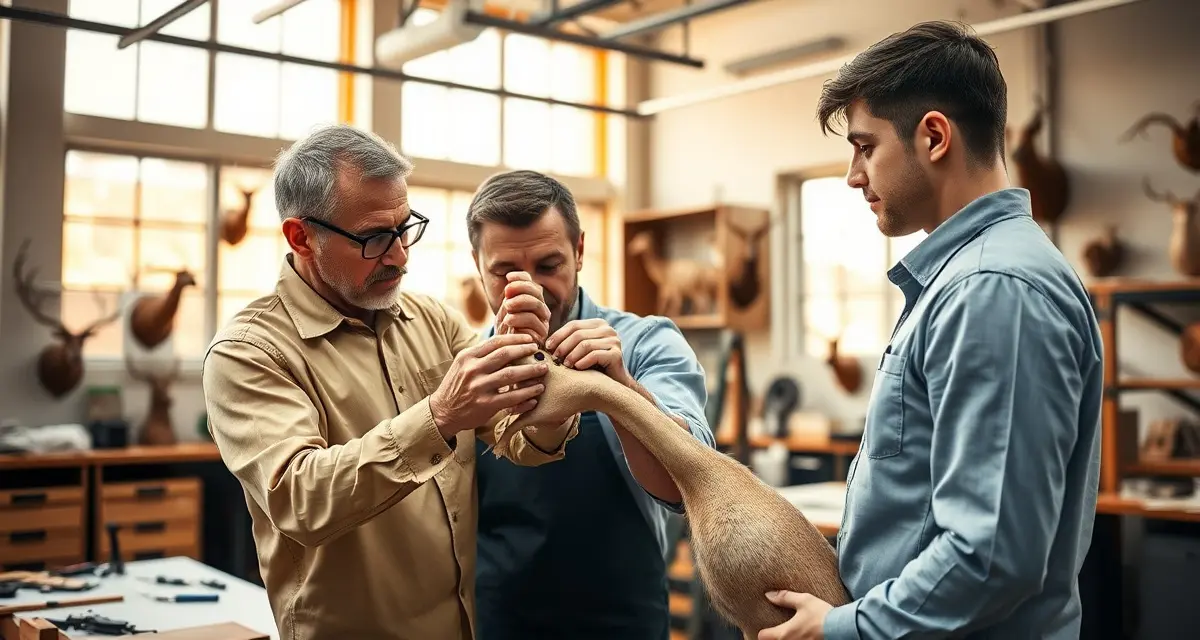
Starting a Taxidermy Apprenticeship Program: Training the Next Generation
Formal apprenticeship programs reduce training time from 2 years to 14 months on average. That acceleration comes from structure: a defined skill progression, clear milestones, regular quality reviews, and deliberate practice on the right tasks at the right time. Informal apprenticeships - "watch me and pick it up as you go" - produce slower results and more inconsistency.
Shops with structured apprentice quality review reduce rework rates by 40%. This makes intuitive sense. An apprentice who knows they'll have their work reviewed against a clear standard before it advances to the next stage is more careful than one who's working without accountability.
Starting an apprenticeship program is a serious commitment. You're trading some of your production time now for additional capacity later. The shops that do it well treat it as an investment with a defined timeline - and they plan accordingly.
TL;DR
- Formal apprenticeship programs reduce training time from 2 years to 14 months on average.
- Shops with structured apprentice quality review reduce rework rates by 40%.
- By year two of a structured program, a quality apprentice should be producing 40-60% of journeyman output.
- A structured 12-14 month program with documented milestones produces more consistent results than an informal "watch and learn" approach that can drag on for 2+ years without clear skill development.
- Phase 2: Basic specimen preparation (Months 2-4)
- Phase 3: Form preparation and form fitting (Months 4-7)
What to Teach First
Most taxidermy apprenticeship programs sequence training in a logical skills pyramid:
Phase 1: Shop operations and intake (Weeks 1-4)
Before an apprentice touches a specimen for production purposes, they should understand how your shop works. This includes your intake process, record-keeping system, specimen identification, safe handling of chemicals, shop safety, and basic customer communication. An apprentice who understands your taxidermy intake form guide and documentation process from day one is an asset during deer season even before they develop mounting skills.
Phase 2: Basic specimen preparation (Months 2-4)
Fleshing is the foundational manual skill in taxidermy. An apprentice who can flesh deer capes effectively is adding real production value. This phase also covers basic tanning or tannery preparation, specimen identification, and proper freezing and thawing procedures.
Phase 3: Form preparation and form fitting (Months 4-7)
Modifying commercial forms for individual specimen fit is a learned skill that takes practice. This phase includes alteration work, basic anatomy understanding for natural positioning, and the judgment needed to match form to specimen correctly.
Phase 4: Mounting fundamentals (Months 7-11)
The mounting phase begins with simpler species - typically small game, birds, or simpler fish - before advancing to whitetail deer. Starting apprentices on customer deer shoulder mounts too early is the most common mistake in taxidermy training. It risks customer work before the skill is ready.
Phase 5: Finishing and detail work (Months 11-14)
Paint work, finishing details, and the critical quality inspection before a mount is considered complete. Many apprentices have solid mounting mechanics but need the most work at this stage, because finishing is where the difference between an acceptable and an excellent mount is visible.
Quality Review Process
Define clear quality checkpoints at each phase transition. Before an apprentice advances from specimen preparation to form work, you review their fleshing quality on a set of practice capes. Before they advance to customer mounting, you evaluate a specified number of demonstration pieces against your shop standard.
This isn't about being harsh - it's about not advancing someone to work they're not ready for. Quality reviews that identify gaps while the stakes are low save the much more costly experience of discovering those gaps on customer work.
Keep records of apprentice quality reviews in MountChief's apprentice management tools. A documented review history shows where improvements happened and identifies persistent weak points that need additional focused practice.
Managing the Production Tension
During training, your production rate will slow somewhat. The apprentice's early work takes longer and may require correction. This is the cost of the investment.
Manage this tension by being honest about your production capacity during training periods. If you take 150 mounts per year as a solo taxidermist and you add an apprentice who adds perhaps 20% of additional productive output in year one, your effective capacity grows modestly while your training overhead also exists. By year two of a structured program, a quality apprentice should be producing 40-60% of journeyman output.
Plan your intake and pricing for the training period. Consider whether your off-season is a better time to begin formal training than the middle of deer season.
For more on staffing as your shop grows, see the taxidermy shop management software guide on managing multi-person shop operations.
Frequently Asked Questions
How do I structure a taxidermy apprenticeship program?
Structure the program as a skills pyramid with clear phases: shop operations and intake first (weeks 1-4), specimen preparation and fleshing second (months 2-4), form preparation and fitting third (months 4-7), mounting fundamentals fourth (months 7-11), and finishing work last (months 11-14). Define quality checkpoints at each phase transition that the apprentice must pass before advancing. Document every quality review and every skill milestone. Schedule regular check-ins to give and receive feedback. A structured 12-14 month program with documented milestones produces more consistent results than an informal "watch and learn" approach that can drag on for 2+ years without clear skill development.
What should a taxidermy apprentice learn first?
Shop operations come first, before any production skills. An apprentice needs to understand how your intake process works, how your records system operates, how to handle specimens safely, and how your shop's workflow is organized before they add production value. This early training in operations makes the apprentice useful during deer season even while production skills are developing - they can assist with intake, documentation, and specimen organization. Starting with production skills before operations knowledge creates an apprentice who can flesh a cape but doesn't know how to find a job record or handle a customer question.
How do I ensure apprentice work meets customer standards?
Define your quality standard explicitly and in advance, not after a problem occurs. Create or gather reference photos of finished mounts that represent your minimum acceptable quality for each species you produce. Use these as the comparison baseline for apprentice quality reviews. Before any apprentice work goes to a customer, you inspect it against your standard. If it doesn't meet the standard, it doesn't ship - instead, it becomes a teaching moment with specific feedback on what needs to improve. This review process, consistently applied, is what the 40% rework rate reduction in structured programs is built on.
How does this apply to solo taxidermy shops?
The principles in this guide apply to solo shops just as they do to larger operations, though the scale differs. A single-person shop may have lower absolute volume but faces the same documentation, compliance, and customer communication requirements. The practical advice here scales down to any shop size.
What is the most common mistake taxidermists make with taxidermy shop apprentice program?
The most common mistake is treating taxidermy shop apprentice program as an afterthought rather than building it into the standard workflow from the start. Shops that encounter problems in this area typically did not establish clear processes before season, which means every situation becomes a one-off decision rather than a standard response.
Related Articles
- Tips for the First Day of Deer Season at Your Taxidermy Shop
- How Much Does Bailee's Insurance Cost for a Taxidermy Shop?
- How Do QR Code Tags Work for Taxidermy Shop Management?
- Should I Have a Home Studio or Commercial Taxidermy Shop?
Try These Free Tools
Put these insights into practice with our free calculators and planners:
Sources
- National Taxidermists Association (NTA)
- US Fish & Wildlife Service
- Small Business Administration (SBA)
Get Started with MountChief
The busiest taxidermy shops run on systems, not memory. MountChief replaces scattered spreadsheets and sticky notes with one organized workflow from intake to pickup.