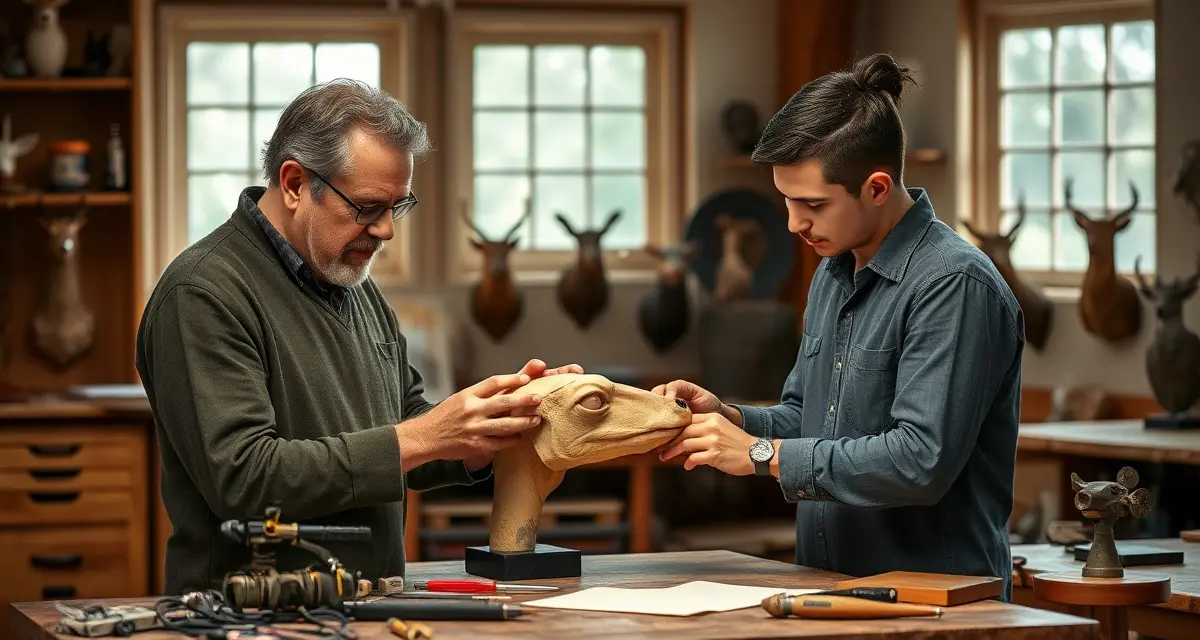
Managing Taxidermy Apprentices: Training and Quality Control
Shops with formal apprentice review systems have 40% lower rework rates. That gap makes intuitive sense: apprentice work that goes through a quality check before customer notification catches errors before they become customer complaints. Apprentice work that goes straight to pickup without review is where expensive rework happens.
Taking on an apprentice is a real investment. You're trading production capacity in the short term for expanded capacity in the long term. Managing that investment well means structuring the training, reviewing the work, and building quality habits from day one.
TL;DR
- If your standard turnaround is 12 months and an apprentice is producing at 50% of your speed, a job assigned to your apprentice may realistically need 14-16 months.
- Shops with formal apprentice review systems have 40% lower rework rates.
- "The eye alignment is off" is less useful than "the left eye is rotated about 5 degrees clockwise from where it should be.
- "When you've completed 30 deer shoulder mounts with a 95% first-pass review rate, I'll remove the mandatory quality review stage from your jobs." That kind of clear standard is motivating and fair.
- Apprentice-produced mounts should pass through an explicit quality review stage before the customer is notified.
- This assignment view gives you the workload visibility you need to manage their capacity and catch anything that's falling behind.
What Apprentice Management Actually Requires
Most taxidermists who take on apprentices do it informally. The apprentice shadows, practices, starts doing production work, and the mentor reviews when they happen to look over. That works to a degree but creates several gaps:
No systematic quality checkpoint. If quality review depends on the mentor happening to notice, some jobs will ship without adequate review, especially during busy season when the mentor is also producing.
No documented skill progression. Without tracking which techniques the apprentice has mastered, you're guessing when they're ready for more complex work.
No clear timeline expectations. Apprentices who don't know when or how they'll be allowed to work independently stay in an indefinite gray zone.
No protection for customers. When a customer's mount is assigned to an apprentice without a formal review stage, the customer has no visibility into who produced their mount or what quality control was applied.
Formalizing the apprentice structure solves all of these problems.
Building a Formal Apprentice System
Define What the Apprentice Is Authorized to Do
Be explicit about which production stages the apprentice can complete independently versus which require oversight. Early-stage apprentices might handle:
- Form preparation and alteration
- Fleshing and cleaning capes under supervision
- Mixing materials and prepping supplies
Mid-stage apprentices might independently handle:
- Caping and skinning
- Full mount production on less complex jobs
- Bird fan mounts and European skull mounts
Advanced apprentices near promotion to full taxidermist status might handle most production independently with spot-check review rather than full review.
Having these defined in writing means the apprentice knows exactly where they stand and what they're working toward.
Set Up a Quality Review Stage in Your Job Workflow
Apprentice-produced mounts should pass through an explicit quality review stage before the customer is notified. In MountChief's taxidermy job tracking system, you can add a "quality review required" stage that triggers when an apprentice-assigned job is completed. The job doesn't advance to "ready for pickup" until the mentor approves it.
This stage does a few important things:
- It makes quality review mandatory, not optional
- It prevents the apprentice from notifying customers directly on jobs that haven't been reviewed
- It creates a documented record that a quality review occurred before delivery
The taxidermy shop management software lets you set role-based permissions so apprentices can update stages up to the quality review point but can't advance past it without the mentor's approval.
Document Technique Progress
Keep a simple skill log for your apprentice. As they demonstrate consistent proficiency in each technique, note it with the date. This becomes a training record that shows:
- What the apprentice can do independently
- When each skill was signed off
- What remains before they're ready for the next level
This documentation is also useful if you ever face a question about an apprentice's work on a specific job. "This apprentice was signed off on deer caping on [date] and has done [X] jobs independently since" is a concrete answer.
How to Give Productive Feedback
Technical feedback is most effective immediately after reviewing the work, with the mount in front of both of you.
Be specific. "The eye alignment is off" is less useful than "the left eye is rotated about 5 degrees clockwise from where it should be. Here's what to look for next time."
Focus on fixable issues. During review, identify what can be fixed before the mount goes to the customer and what's a learning point for future work.
Keep a written feedback log. Note recurring issues per technique. If an apprentice consistently has trouble with ear butt detail on whitetail, that's a pattern worth addressing specifically. Random one-off feedback doesn't create lasting improvement.
Acknowledge what's going well. Apprentices who only receive corrections don't develop confidence. Note specifically what they're doing right, not just what needs work.
Managing Production When an Apprentice Is Slower
An apprentice's production is slower than a mentor's. That's expected and normal. The question is how to manage it without creating customer expectation problems.
Don't quote the same turnaround for apprentice-produced jobs as mentor-produced jobs. If your standard turnaround is 12 months and an apprentice is producing at 50% of your speed, a job assigned to your apprentice may realistically need 14-16 months.
Be transparent with customers if they ask who's producing their mount. Most customers just want a quality result. But if a customer specifically asks whether you personally are producing the mount, answer honestly.
Set an apprentice intake volume limit. Don't take more apprentice-assigned jobs than your apprentice can realistically complete. An overwhelmed apprentice produces rushed work. A sustainable workload produces learning and quality.
Building Toward Independence
Your goal with an apprentice is eventually creating a skilled taxidermist who can work independently. That transition should be deliberate, not accidental.
Set specific milestones. "When you've completed 30 deer shoulder mounts with a 95% first-pass review rate, I'll remove the mandatory quality review stage from your jobs." That kind of clear standard is motivating and fair.
Gradually reduce the scope of mandatory review. Start with full review of every job. Move to spot-check review (one in three jobs reviewed). Then to exception-based review (only when the apprentice flags it or the species is outside their normal work).
Frequently Asked Questions
How do I track which jobs my apprentice is working on?
Assign jobs explicitly to your apprentice in your shop management software so their job list is visible separately from your own. Filter the production queue by assignee to see exactly what's on your apprentice's plate, what stage each job is in, and any jobs that might be stalling. This assignment view gives you the workload visibility you need to manage their capacity and catch anything that's falling behind.
How do I prevent apprentice errors from reaching customers?
Add a mandatory "quality review" stage to the workflow for all apprentice-assigned jobs. The job cannot advance to "ready for pickup" or trigger customer notification until a mentor approves it through the review stage. This makes the review systematic rather than dependent on the mentor remembering to check. Shops that implement this kind of mandatory review stage see significantly fewer rework requests than shops relying on informal oversight.
What is the best way to train a taxidermy apprentice?
Start with clearly defined stage-by-stage authorization, specifying exactly which techniques the apprentice is ready to do independently and which still require oversight. Provide specific, written feedback immediately after reviewing each completed job. Keep a skill progression log that tracks which techniques have been signed off and when. Build toward independence with explicit milestones rather than a vague "when you're ready" standard. Pair hands-on work with formal study; NTA seminars, workshops, and study materials supplement what you're teaching directly.
How does this apply to solo taxidermy shops?
The principles in this guide apply to solo shops just as they do to larger operations, though the scale differs. A single-person shop may have lower absolute volume but faces the same documentation, compliance, and customer communication requirements. The practical advice here scales down to any shop size.
What is the most common mistake taxidermists make with taxidermy apprentice management?
The most common mistake is treating taxidermy apprentice management as an afterthought rather than building it into the standard workflow from the start. Shops that encounter problems in this area typically did not establish clear processes before season, which means every situation becomes a one-off decision rather than a standard response.
Related Articles
- 5 Ways Texas Taxidermy Shops Are Managing Deer and Exotic Season
- Mountain West Taxidermy: Managing Trophy Species and Out-of-State Hunters
Try These Free Tools
Put these insights into practice with our free calculators and planners:
Sources
- National Taxidermists Association (NTA)
- US Fish & Wildlife Service
- Small Business Administration (SBA)
Get Started with MountChief
Disorganized intake and forgotten follow-ups are the fastest way to lose repeat customers. MountChief structures every step of your taxidermy workflow so nothing gets missed.