How to File a Taxidermy Shop Insurance Claim for a Lost Specimen
Digital intake photos and QR scan logs reduce specimen loss claim settlement time by 60%. That difference comes down to documentation quality. An insurance adjuster settling a claim for a lost deer cape or a missing full-body mount needs to verify that the specimen was in your possession, that it had value, and that the loss was not the result of negligence. Without documentation, you're arguing from memory. With documentation, you're presenting evidence.
Shops with documented chain of custody receive higher insurance payouts on specimen claims. This is true not just for the speed of settlement but for the amount. An insurer assessing a claim for an undocumented specimen has to make assumptions about value. An insurer reviewing time-stamped intake photos, QR scan logs showing specimen location history, and a complete tannery shipment record has everything they need to settle at fair value.
TL;DR
- Digital intake photos and QR scan logs reduce specimen loss claim settlement time by 60%.
- Most policies require you to report losses within a specific timeframe - check your policy before you need it.
- Every shipment to your tannery should have a documented manifest: how many specimens, identification numbers, and the tannery's confirmation of receipt.
- What documentation do I need to file a taxidermy insurance claim?
- The coverage limit should reflect the maximum value of specimens you hold at any one time - during deer season, this can be substantial.
- The principles in this guide apply to solo shops just as they do to larger operations, though the scale differs.
Build Documentation Habits Before You Need Them
The worst time to discover you don't have adequate documentation is after a loss event. Build these habits into your daily workflow now:
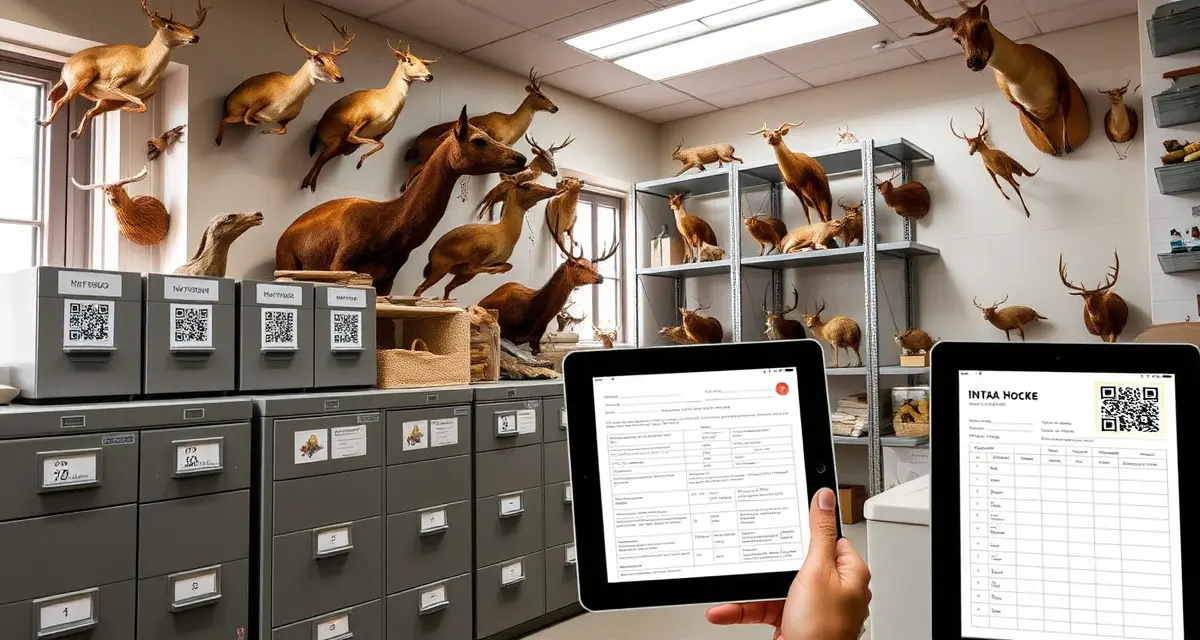
Photograph every specimen at intake. Not one quick phone photo. Multiple angles: the full specimen from several sides, close-ups of any notable features (antler configuration, unusual coloring, pre-existing damage), and the specimen with your intake tag visible in frame. These photos serve double duty: they document condition at intake for dispute prevention and they establish the value and identity of the specimen for insurance purposes.
Use QR tag scanning at every location change. When a specimen moves from intake to freezer, scan it. When it goes to the fleshing table, scan it. When it ships to the tannery, scan it. When it comes back, scan it. These time-stamped scan logs create a chain of custody that tells exactly where the specimen was and when. If a specimen disappears somewhere in that chain, you know where to look and you have evidence of where it was last accounted for.
Keep tannery shipping records. Every shipment to your tannery should have a documented manifest: how many specimens, identification numbers, and the tannery's confirmation of receipt. For valuable specimens, shipping insurance from your carrier is worth the cost.
What to Document Immediately After a Loss
When you discover a specimen is missing, do the following before filing a claim:
- Review your QR scan logs to determine the last documented location and time.
- Pull up the intake record and photos for the specific specimen.
- Check your tannery correspondence for any records related to that specimen.
- Note when you first discovered the specimen was missing.
- Document any steps you've already taken to locate it.
Your insurer will ask for all of this. Having it organized before you call saves time and creates a better impression than searching for records during the claims conversation.
Filing the Claim
Contact your taxidermy shop insurance provider promptly after discovering a loss. Delayed reporting can complicate claims. Most policies require you to report losses within a specific timeframe - check your policy before you need it.
Be prepared to provide:
- Your intake record for the lost specimen with all customer information
- Intake photos showing the specimen's condition and identity
- Any tannery correspondence related to the specimen
- Shipping records if the specimen was in transit
- Your QR scan log history for the specimen
- The agreed price for the work (from your signed intake form)
Valuation for a lost specimen typically covers the cost to produce an equivalent mount - the tannery fee, form cost, and labor you agreed to provide. In some cases it may include the customer's out-of-pocket cost to replace the trophy itself. Your policy language defines coverage - know what your policy says before a loss occurs.
Preventing the Need for a Claim
The best use of documentation tools is preventing specimen loss entirely rather than recovering from it. MountChief's specimen loss prevention includes QR tag generation, scan logging, and tannery shipment tracking. Shops with all of these systems in place experience near-zero specimen loss events.
Frequently Asked Questions
What documentation do I need to file a taxidermy insurance claim?
You need the signed intake record for the lost specimen including customer information and agreed pricing, intake photos showing the specimen from multiple angles, any tannery correspondence or shipping records for that specimen, QR scan log history showing the specimen's last known location, and a written account of when and how the loss was discovered. The more complete your documentation, the faster your claim will settle and the more accurate the valuation will be. Insurers settle well-documented claims faster and at closer to full value than claims supported by incomplete records.
How does digital record-keeping help with insurance claims?
Digital records provide time-stamped, searchable evidence that is far more credible to an insurance adjuster than handwritten logs or memory. A QR scan log shows exactly where a specimen was at every documented interaction. Digital intake photos with metadata provide evidence of what the specimen looked like and that it was in your possession on a specific date. Digital payment records confirm the agreed transaction value. When you can pull up all of this information in minutes during a phone call with an adjuster, the claim moves fast. When you have to search through paper intake books and rely on handwritten notes, the process takes longer and the outcome is less certain.
What insurance covers a lost taxidermy specimen?
Bailee insurance is the specific coverage type designed for businesses that hold customer property. A standard business property policy typically does not cover customer property in your care - you need bailee coverage to protect against claims for lost, damaged, or stolen customer specimens. Some taxidermy-specific insurance packages bundle bailee coverage with general liability and property coverage. The coverage limit should reflect the maximum value of specimens you hold at any one time - during deer season, this can be substantial. Review your policy annually and update your coverage limits as your business grows.
How does this apply to solo taxidermy shops?
The principles in this guide apply to solo shops just as they do to larger operations, though the scale differs. A single-person shop may have lower absolute volume but faces the same documentation, compliance, and customer communication requirements. The practical advice here scales down to any shop size.
What is the most common mistake taxidermists make with taxidermy shop insurance claim guide?
The most common mistake is treating taxidermy shop insurance claim guide as an afterthought rather than building it into the standard workflow from the start. Shops that encounter problems in this area typically did not establish clear processes before season, which means every situation becomes a one-off decision rather than a standard response.
Related Articles
- How Much Bailee's Insurance Is Enough for a Taxidermy Shop?
- Elk Season Taxidermy Management Guide: Western Shop Operations
- How to Prevent Specimen Mix-Ups at Your Taxidermy Shop
- How a Midwest Taxidermy Shop Ended Specimen Mix-Ups with QR Tags
Try These Free Tools
Put these insights into practice with our free calculators and planners:
Sources
- National Taxidermists Association (NTA)
- US Fish & Wildlife Service
- Taxidermy Today
- Small Business Administration (SBA)
Get Started with MountChief
A well-run taxidermy shop depends on knowing where every specimen stands, what paperwork is complete, and when to update the customer. MountChief tracks all of that automatically.