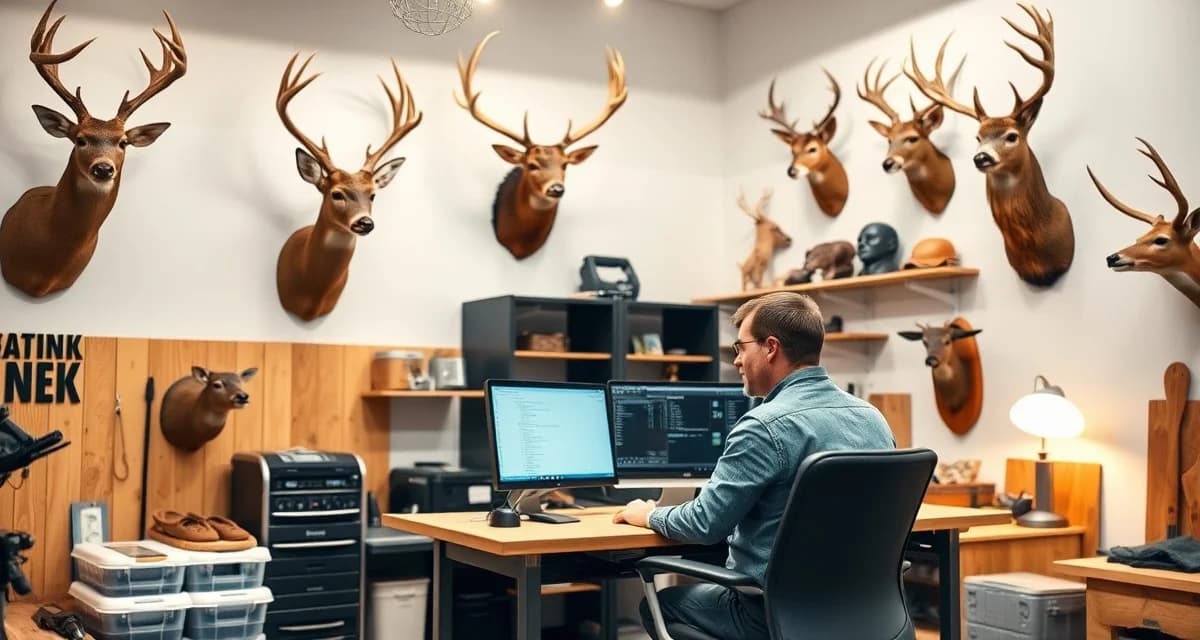
Taxidermy Shop Management Software for Georgia Shops
Georgia runs one of the longest deer seasons in the Southeast, typically October through January, a 15-week window that gives taxidermists sustained intake volume without the short-burst pressure of northern states. Georgia ranks in the top five nationally for total deer harvest annually.
TL;DR
- AI intake runs the same on week 15 as it does on week 1.
- Georgia runs one of the longest deer seasons in the Southeast, typically October through January, a 15-week window that gives taxidermists sustained intake volume without the short-burst pressure of northern states.
- The license must be maintained current and displayed in the shop.
- Digital intake with QR tracking maintains the same efficiency from October 1 through January 31.
- Turkey fans, beard mounts, and full-body turkey mounts come in from March through May, often before your deer season work is complete.
- Turkey intake fields capture the species-specific data (beard length, spur length, weight) that deer intake doesn't need.
Georgia's Season Structure
Georgia's deer season complexity is worth understanding:
- Archery season: Mid-September start in most zones
- Firearms season: Varies by zone but runs October through January
- Turkey season: Spring season March through May adds significant intake
That 15-week deer season isn't a sprint. It's a marathon that requires intake systems that hold up week after week. Paper tags and manual forms that work on the first weekend often start breaking down by week six. Digital intake with QR tracking maintains the same efficiency from October 1 through January 31.
Georgia DNR Documentation Requirements
Georgia Department of Natural Resources requires:
- State taxidermy license
- Intake records for all game species
- Hunter license number documentation
- Harvest location and date
Georgia's zone-based deer season means county or zone documentation is relevant for compliance purposes. Some zones have earlier or later seasons, and a deer harvested in a zone before that zone's legal season is a problem you need to be able to document didn't come from your hands.
Managing Turkey Alongside Deer Season
Georgia's spring turkey season is one of the state's premier hunting opportunities, and the taxidermy demand follows. Turkey fans, beard mounts, and full-body turkey mounts come in from March through May, often before your deer season work is complete.
MountChief handles species-specific workflows. Turkey intake fields capture the species-specific data (beard length, spur length, weight) that deer intake doesn't need. Both run through the same job tracking and customer communication system.
Related Articles
- Taxidermy Shop Management Software for California Shops
- Taxidermy Shop Management Software for Colorado Shops
- Taxidermy Shop Management Software for Connecticut Shops
- Taxidermy Shop Management Software for Delaware Shops
FAQ
What Georgia DNR records must taxidermists keep?
Georgia DNR requires taxidermists to maintain intake records for all game species including customer name, contact information, species, harvest date, harvest location, and hunter license number. Records must be available for DNR inspection. Specific retention periods are defined in Georgia taxidermy licensing regulations.
Is taxidermy licensed in Georgia?
Yes. Georgia requires a state taxidermy license through Georgia DNR. The license must be maintained current and displayed in the shop.
How do Georgia shops manage a 15-week deer season?
The shops that handle it best are the ones with digital systems that don't degrade over time. AI intake runs the same on week 15 as it does on week 1. Automated customer updates keep hunters informed without requiring manual outreach. Tannery tracking maintains visibility through multiple batch shipments during a long season.
How does this apply to solo taxidermy shops?
The principles in this guide apply to solo shops just as they do to larger operations, though the scale differs. A single-person shop may have lower absolute volume but faces the same documentation, compliance, and customer communication requirements. The practical advice here scales down to any shop size.
What is the most common mistake taxidermists make with taxidermy shop management georgia?
The most common mistake is treating taxidermy shop management georgia as an afterthought rather than building it into the standard workflow from the start. Shops that encounter problems in this area typically did not establish clear processes before season, which means every situation becomes a one-off decision rather than a standard response.
Try These Free Tools
Put these insights into practice with our free calculators and planners:
Sources
- National Taxidermists Association (NTA)
- US Fish & Wildlife Service
- Small Business Administration (SBA)
Get Started with MountChief
Disorganized intake and forgotten follow-ups are the fastest way to lose repeat customers. MountChief structures every step of your taxidermy workflow so nothing gets missed.