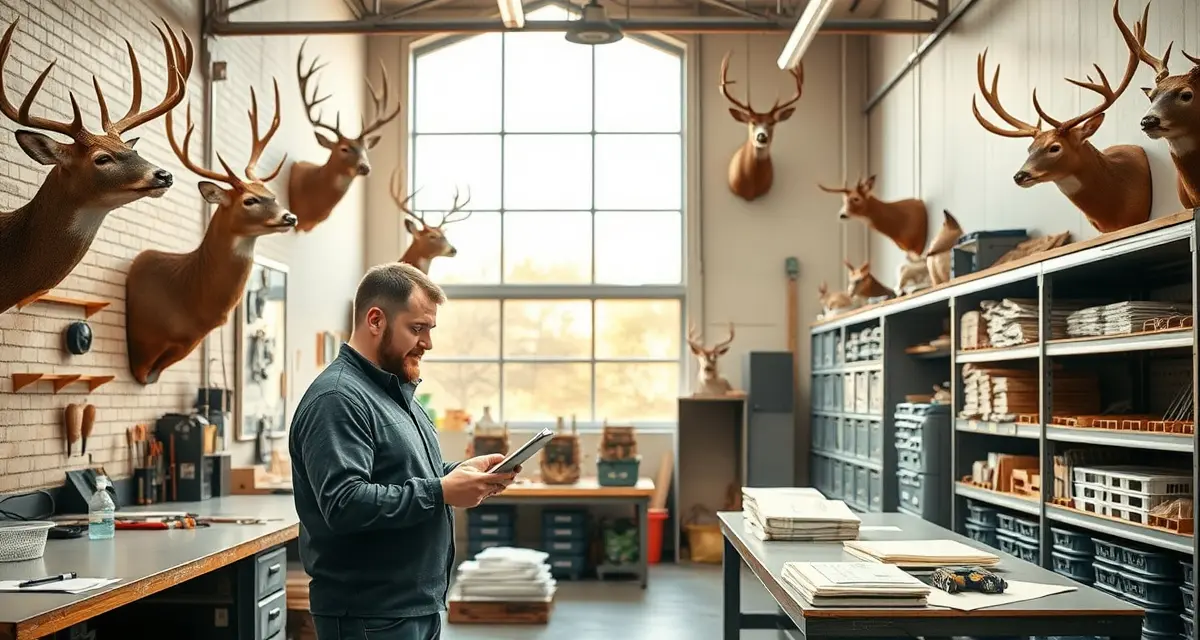
Taxidermy Shop Management Software for Pennsylvania Shops
Pennsylvania has more licensed deer hunters than any other state, over 900,000. Pennsylvania shops see the highest-volume intake days of any state during firearms season. If you're running a taxidermy shop in Pennsylvania and you're still on paper, you've already felt the problem. Scaling to software isn't optional at this volume, it's survival.
TL;DR
- Pennsylvania has more licensed deer hunters than any other state, over 900,000.
- During the two-week firearms season, the benchmark for Pennsylvania's busiest shops is 30 or more intakes per day.
- The shops that successfully run 400-plus mounts per year in Pennsylvania have been on digital systems for years.
- CWD management zones in Pennsylvania require harvest county documentation for a large share of the state's deer harvest.
- AI intake that handles each job in 3 minutes is the only practical tool for high-volume Pennsylvania firearm season intake.
- Pennsylvania Game Commission compliance inspections occur and records must be organized and retrievable in under 60 seconds.
Pennsylvania's Scale Is Unique
900,000-plus licensed deer hunters in a single state. That's not a typo. Pennsylvania's firearms deer season, two weeks in November, drives deer harvest numbers that rival entire regional states combined.
For taxidermists, this translates to intake volume that can be genuinely staggering. Shops in the northern tier counties, Potter County, the central Appalachian ridges, these shops routinely intake 400 to 600 deer in a single season. Running that volume on paper is not a management style, it's a path to exhaustion and mix-ups.
PGC Antler Restriction Documentation
Pennsylvania Game Commission's antler restriction program requires that antlered deer harvested during firearms season meet minimum antler point requirements in restricted counties. This creates a documentation requirement that other states don't have: taxidermists must record antler point count at intake for antlered deer from restricted counties.
MountChief captures antler point count as a standard field for Pennsylvania deer intake. If PGC asks about an antlered deer from a restricted county, you have the documentation.
PGC Record Requirements
Pennsylvania Game Commission requires:
- State taxidermy license
- Hunter license documentation at intake
- Antler measurements and point counts for applicable deer
- Written intake records for all game species
- Records available for PGC inspection
Handling the Pennsylvania Volume
The key to Pennsylvania deer season is systems that work under extreme pressure. During the two-week firearms season, the benchmark for the state's busiest shops is 30+ intakes per day.
At 30 intakes per day with AI intake: 90 minutes of intake work. At 30 intakes per day with manual paper: 10 hours. The math determines your life from November 27 through December 10.
Related Articles
- Taxidermy Shop Management Software for California Shops
- Taxidermy Shop Management Software for Colorado Shops
- Taxidermy Shop Management Software for Connecticut Shops
- Taxidermy Shop Management Software for Delaware Shops
FAQ
What PGC records must Pennsylvania taxidermists maintain?
Pennsylvania PGC requires written intake records for all deer. Required fields include customer information, hunting license number, harvest date, harvest county, species, and antler point count for antlered deer from antler restriction counties. Records must be available for PGC inspection.
Is taxidermy licensed in Pennsylvania?
Yes. Pennsylvania requires a state taxidermy license through PGC. The license must be current and records properly maintained.
How do Pennsylvania shops handle the highest-volume state firearms deer season?
AI intake, QR tracking from day one of season, and a customer portal deployed before firearms season opens. The shops that successfully run 400+ mounts per year in Pennsylvania have been on digital systems for years. The shops that make the switch mid-season find it hard. Make the change in the summer.
How does this apply to solo taxidermy shops?
The principles in this guide apply to solo shops just as they do to larger operations, though the scale differs. A single-person shop may have lower absolute volume but faces the same documentation, compliance, and customer communication requirements. The practical advice here scales down to any shop size.
What is the most common mistake taxidermists make with taxidermy shop management pennsylvania?
The most common mistake is treating taxidermy shop management pennsylvania as an afterthought rather than building it into the standard workflow from the start. Shops that encounter problems in this area typically did not establish clear processes before season, which means every situation becomes a one-off decision rather than a standard response.
Try These Free Tools
Put these insights into practice with our free calculators and planners:
Sources
- National Taxidermists Association (NTA)
- US Fish & Wildlife Service
- Small Business Administration (SBA)
Get Started with MountChief
Compliance mistakes and missed customer updates cost taxidermy shops real money. MountChief centralizes specimen tracking, documentation, and communication so those gaps close.