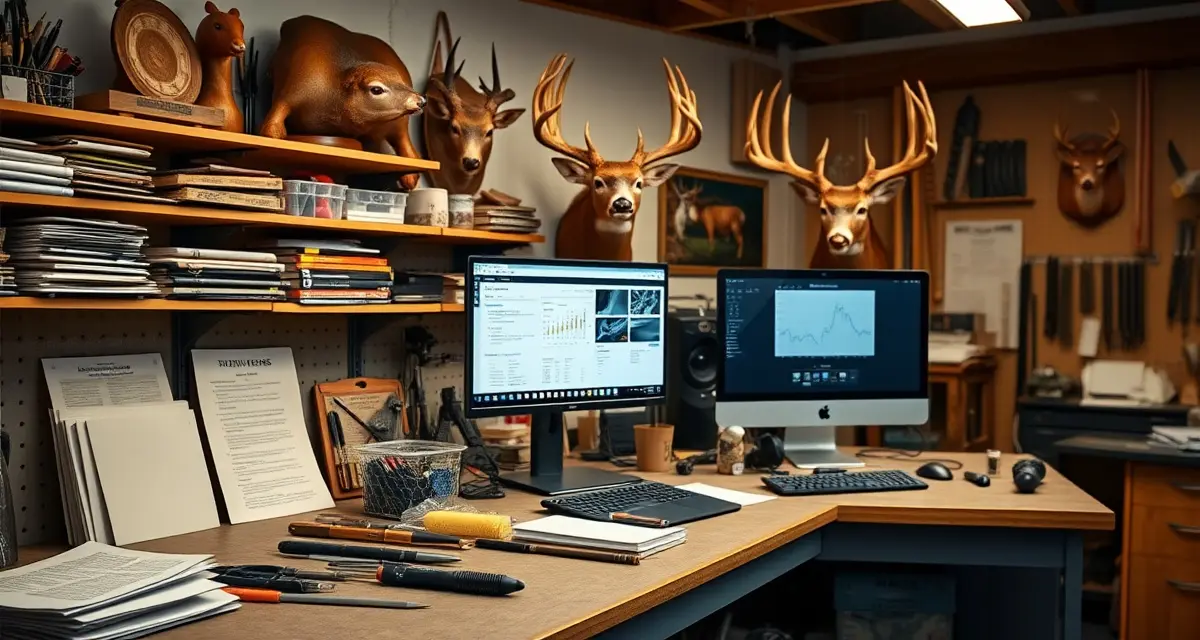
Taxidermy Shop Management Software for Wisconsin Shops
Wisconsin's 9-day gun deer season is a cultural institution. Schools close. offices go quiet. A substantial portion of the state's male population is in the woods. For taxidermists, those 9 days generate more deer intake than some shops handle in an entire year.
Wisconsin consistently ranks top five nationally in total deer harvest volume. Black bear tags are lottery-allocated, creating unpredictable but high-value intake when tags are drawn. Getting through the 9-day gun season without burning out is the central challenge of Wisconsin taxidermy.
TL;DR
- Wisconsin's 9-day gun deer season is a cultural institution.
- Getting through the 9-day gun season without burning out is the central challenge of Wisconsin taxidermy.
- For taxidermists, those 9 days generate more deer intake than some shops handle in an entire year.
- A Wisconsin shop doing 300 mounts per year might intake 200 of those deer in a 9-day window.
- At 20-minute manual intake, 200 deer over 9 days means 9 hours of paperwork per day, every day, for 9 days.
- At 3-minute AI intake, 200 deer over 9 days means 67 minutes of intake per day.
The 9-Day Math
A Wisconsin shop doing 300 mounts per year might intake 200 of those deer in a 9-day window. At 20-minute manual intake, 200 deer over 9 days means 9 hours of paperwork per day, every day, for 9 days.
At 3-minute AI intake, 200 deer over 9 days means 67 minutes of intake per day. You get your evenings back. You can still physically function by day nine.
This is the single most compelling argument for AI intake in any state in the country. Wisconsin's 9-day concentration makes the efficiency difference concrete and enormous.
Wisconsin CWD Documentation
CWD is present in Wisconsin's southern deer management zones. CWD documentation requirements add a layer to intake for deer from affected zones:
- Documentation of harvest DMZ (deer management zone)
- For carcasses from CWD zones: restrictions on which parts can be transported and possessed
- Enhanced intake records for compliance purposes
MountChief flags Wisconsin CWD zone requirements when harvest location indicates an affected zone.
Wisconsin DNR Requirements
Wisconsin Department of Natural Resources requires:
- State taxidermy license
- Hunter license documentation at intake
- Written intake records for all deer
- Records available for DNR inspection
Bear Lottery Complexity
Wisconsin bear tags are allocated by lottery. The unpredictability means shops can't forecast bear volume precisely. When a customer has a drawn tag and a bear, they need a taxidermist who can handle bear work. Being prepared with proper bear intake documentation and a known tannery relationship for bear hides makes the difference.
Related Articles
- Taxidermy Shop Management Software for California Shops
- Taxidermy Shop Management Software for Colorado Shops
- Taxidermy Shop Management Software for Connecticut Shops
- Taxidermy Shop Management Software for Delaware Shops
FAQ
What Wisconsin DNR records must taxidermists maintain?
Wisconsin DNR requires taxidermist licensing and written intake records for all deer. Required fields include customer information, hunting license number, deer carcass tag number, harvest date, and harvest DMZ. CWD-affected zone deer require additional documentation. Records must be available for DNR inspection.
Does Wisconsin require a taxidermy license?
Yes. Wisconsin requires a state taxidermy license through the DNR. Annual renewal and record-keeping requirements apply.
How do Wisconsin shops survive the 9-day gun deer season intake surge?
AI intake. It's the only way to handle that volume without destroying yourself. Configure your intake workflow in October. Have your QR tag supplies ready before gun season opens. Know your tannery plan for the post-season batch shipment. Shops that walk into the 9-day gun season with digital intake in place come out the other side functional. Shops on paper come out exhausted and behind.
How does this apply to solo taxidermy shops?
The principles in this guide apply to solo shops just as they do to larger operations, though the scale differs. A single-person shop may have lower absolute volume but faces the same documentation, compliance, and customer communication requirements. The practical advice here scales down to any shop size.
What is the most common mistake taxidermists make with taxidermy shop management wisconsin?
The most common mistake is treating taxidermy shop management wisconsin as an afterthought rather than building it into the standard workflow from the start. Shops that encounter problems in this area typically did not establish clear processes before season, which means every situation becomes a one-off decision rather than a standard response.
Try These Free Tools
Put these insights into practice with our free calculators and planners:
Sources
- National Taxidermists Association (NTA)
- US Fish & Wildlife Service
- Small Business Administration (SBA)
Get Started with MountChief
Keeping compliance records accurate, customers informed, and specimens on schedule takes more than a whiteboard. MountChief gives taxidermists the tools to manage it all digitally.