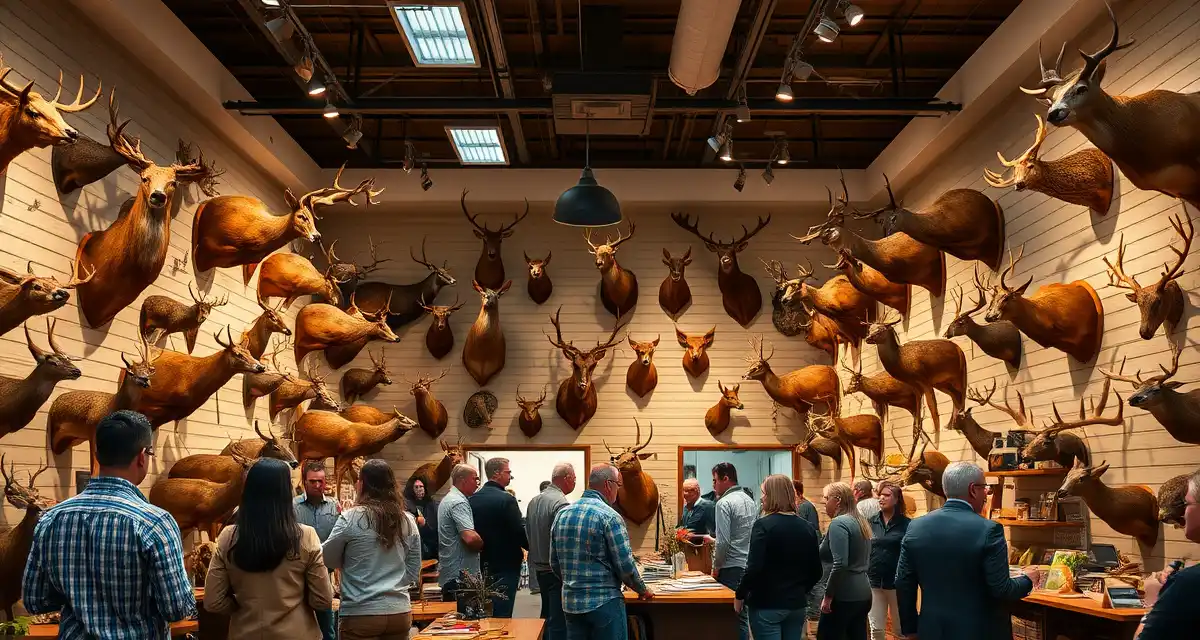
Taxidermy Shop Open House: How to Host an Event That Generates Business
Taxidermy shop open houses generate an average of 8-15 deposits per event. Pre-season open houses are the highest-converting customer acquisition event for taxidermists - higher than social media ads, higher than sport shows, higher than any passive marketing channel. The reason is simple: you're getting qualified buyers into your shop, looking at your finished work, and making a booking decision in an environment you control.
An open house converts because it gives hunters the information they need to decide: How does the work look? What does the shop feel like? Is this a professional operation? A tour of your shop and a conversation with you answers all of those questions better than any advertisement.
TL;DR
- Timing: The ideal window is 4-8 weeks before deer season opens.
- In a rural area with fewer total hunters, 10-20 is a reasonable expectation.
- An attendee who didn't book at the event but gave you their email address is a warm lead worth a follow-up message within 48 hours.
- Quality of attendees matters more than total attendance - 15 engaged hunters with deer tags are more valuable than 40 casual curious visitors.
- Taxidermy shop open houses generate an average of 8-15 deposits per event.
- An open house converts because it gives hunters the information they need to decide: How does the work look?
Planning the Event
Timing: The ideal window is 4-8 weeks before deer season opens. For most whitetail states, that means September or early October. This gives hunters enough lead time to plan, but keeps the season front of mind. Too early and they haven't started thinking about it. Too late and their decision is already made.
Duration: 2-3 hours is the right length. A Saturday morning or early afternoon window works well for most hunting audiences - hunters with families prefer weekend daytime events.
Invitations: Pull your existing customer list first. Every past customer should receive a personal invitation, either by text or email, not just a social media post. The personal invitation signals that they're valued. Your social channels and any local hunting Facebook groups can carry the broader public invitation.
Estimated attendance: A well-promoted local open house in a moderately populated area can draw 20-40 attendees. In a rural area with fewer total hunters, 10-20 is a reasonable expectation. Don't judge the event by total attendance - judge it by deposits taken and new customer relationships started.
Setting Up Your Shop
Your shop should be at its best. Clean, organized, well-lit. Finished mounts displayed prominently. Your intake and production areas can be accessible for tours, but your intake area in particular should look professional and equipped.
Display price sheets prominently. One of the main reasons hunters don't book at events is uncertainty about pricing. If pricing is visible and clear, it removes the hesitation of asking and lets the conversation move to booking rather than information-gathering.
Have a simple booking system ready - either a paper intake form they can complete on the spot with a deposit, or a digital intake link if you're using MountChief's intake system. A customer who comes to your open house, talks to you for 20 minutes, looks at finished work, and then goes home to "think about it" converts at a much lower rate than one who places a deposit before they leave.
Offer a pre-season deposit incentive. Lock in the current season's pricing for any work deposited at the event. Create a small time-limited reason to book now rather than later.
Food and Atmosphere
Keep it relaxed. A cooler of drinks and a simple food spread - chips, a veggie tray, maybe some chili if it's October - makes the event feel welcoming rather than transactional. You want hunters to stay and look at the work, not rush through and leave.
Playing hunting videos or a trail camera slide show on a TV in the background creates an atmosphere that connects with your audience without requiring conversation.
Following Up
Collect contact information from everyone who attends, even those who don't book on the spot. An attendee who didn't book at the event but gave you their email address is a warm lead worth a follow-up message within 48 hours.
For event attendees who did book, send a confirmation message immediately with their intake information and tracking link if you're using a customer portal. A professional, immediate confirmation reinforces the decision they just made and sets the tone for the customer relationship.
Build the open house into your annual marketing calendar. Shops that do them consistently see compounding growth as past customers bring friends and the event becomes a known local event in the hunting community.
For additional off-season marketing strategies, see the taxidermy shop off-season marketing guide and the deer season marketing guide.
Frequently Asked Questions
How do I plan a taxidermy shop open house?
Choose a date 4-8 weeks before deer season opens - September or early October for most whitetail states. Set a 2-3 hour window, Saturday morning or early afternoon. Invite past customers personally by text or email, and promote publicly through social media and local hunting Facebook groups. Set up your shop to look its best with finished mounts prominently displayed and pricing visible. Prepare a booking system for taking deposits at the event. Have a simple food and drink setup to keep the atmosphere welcoming. Prepare a follow-up plan for attendees who don't book on the spot but provide contact information.
Who should I invite to a taxidermy shop open house?
Start with every past customer in your database. A personal invitation to people who've already worked with you is the highest-value outreach you can do. Extend the invitation to your social media followers and to local hunting Facebook groups and forums. Consider reaching out to local hunting clubs, outfitters, or sporting goods stores that might share the event with their customers. If you've built relationships with hunting guides or deer processors in your area, they can be valuable referral sources who bring their own networks. Quality of attendees matters more than total attendance - 15 engaged hunters with deer tags are more valuable than 40 casual curious visitors.
What should happen at a taxidermy shop open house?
Greet every attendee personally and give them a tour of your shop. Show them your intake process, your storage, your production area, and most importantly your finished work. Answer questions openly and honestly. Display your pricing visibly so pricing conversations aren't awkward. Have a booking option ready so interested attendees can place a deposit before they leave - this is the primary conversion mechanism of the event. Offer a specific pre-season incentive for booking at the event, such as locked-in pricing or a small discount on a second mount. Collect contact information from everyone who attends, even those who don't book, and follow up within 48 hours.
How does this apply to solo taxidermy shops?
The principles in this guide apply to solo shops just as they do to larger operations, though the scale differs. A single-person shop may have lower absolute volume but faces the same documentation, compliance, and customer communication requirements. The practical advice here scales down to any shop size.
What is the most common mistake taxidermists make with taxidermy shop open house?
The most common mistake is treating taxidermy shop open house as an afterthought rather than building it into the standard workflow from the start. Shops that encounter problems in this area typically did not establish clear processes before season, which means every situation becomes a one-off decision rather than a standard response.
Related Articles
- How to Write Taxidermy Shop Policies That Protect Your Business
- Taxidermy Shop Business Structure: LLC vs Sole Proprietorship
- Creating a Premium Taxidermy Intake Experience That Generates Referrals
- Taxidermy Shop Google My Business: Get Found During Hunting Season
Try These Free Tools
Put these insights into practice with our free calculators and planners:
Sources
- National Taxidermists Association (NTA)
- US Fish & Wildlife Service
- Small Business Administration (SBA)
Get Started with MountChief
Whether you handle 20 mounts a year or 200, the administrative side of taxidermy scales fast. MountChief keeps intake, tracking, and communication manageable at any volume.