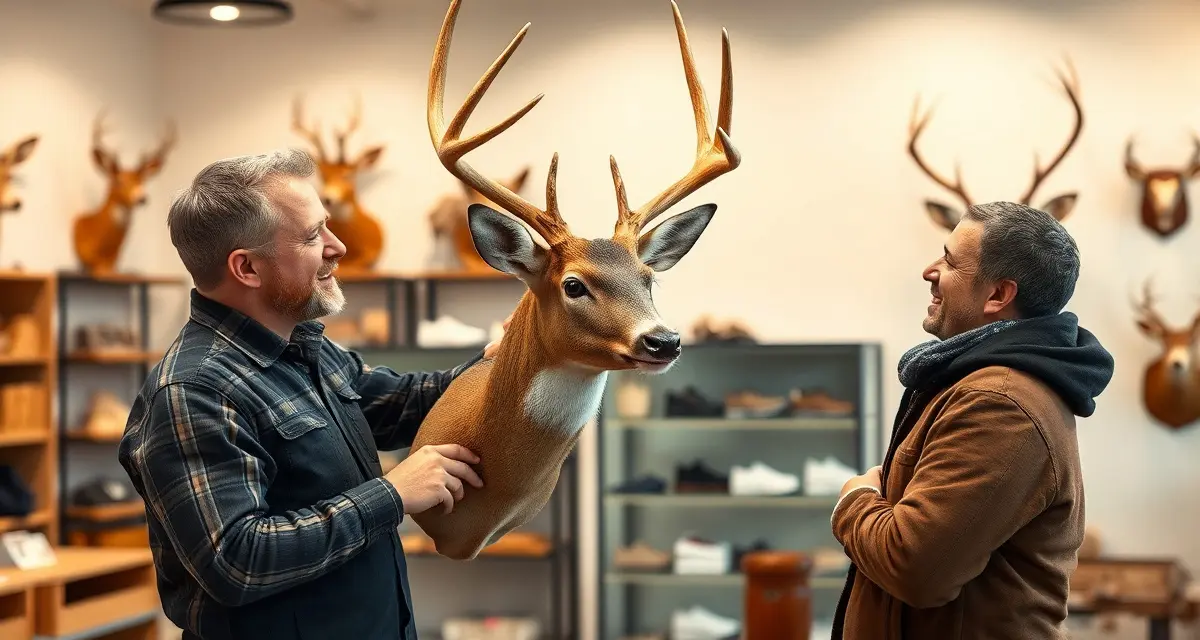
Taxidermy Shop Social Proof: Reviews, Photos, and Testimonials
85% of hunters read reviews before choosing a taxidermist. Social proof isn't optional marketing, it's the primary factor determining whether a hunter calls you or calls someone else. Taxidermists with 10+ Google reviews receive 40% more calls than those with fewer reviews.
The good news: taxidermy is one of the easiest service businesses to generate social proof for. Your customers have strong emotional reactions to finished mounts. They show them to family, photograph them, and talk about them. The challenge is channeling that enthusiasm into visible, searchable, and shareable content.
TL;DR
- This is exactly what I wanted." [John D., Whitetail shoulder mount, 2024] is more convincing than a generic quote with no attribution.
- The right moment is 2-3 weeks after pickup, when the customer has hung the mount and has a settled reaction to it.
- 85% of hunters read reviews before choosing a taxidermist.
- A shop with 24 reviews averaging 4.8 stars has a significant advantage over one with 3 reviews averaging 4.0 stars, and an overwhelming advantage over a shop with no reviews.
- The right moment: 2-3 weeks after pickup, not at pickup.
- The shops with 50+ Google reviews and extensive before-and-after libraries didn't build those assets through a one-time campaign.
The Three Types of Social Proof That Matter
1. Google Reviews (highest priority)
Google reviews appear in search results. When a hunter searches "taxidermist near me," they see a map pack with star ratings and review counts before they see your website. A shop with 24 reviews averaging 4.8 stars has a significant advantage over one with 3 reviews averaging 4.0 stars, and an overwhelming advantage over a shop with no reviews.
Reviews also drive local SEO. The algorithm weighs review count and recency when ranking local business listings. Active review generation isn't just about social proof, it directly affects how often your shop appears.
2. Before-and-after photos (strongest conversion content)
A photo of a finished deer shoulder mount is good. A before-and-after photo sequence showing the cape at intake and the completed mount is better. Before-and-after content demonstrates skill in a way that finished-product photos alone don't. The viewer understands what you started with and sees what you produced.
Before-and-after content performs exceptionally well on social media because it answers the implicit question every prospective customer has: "What will you actually do with my animal?"
3. Customer testimonials and installation photos
A testimonial is a customer saying what they think about your work. An installation photo is a customer showing the finished mount hanging in their home. Both are more credible than anything you say about yourself.
Installation photos (the mount on the wall in a real home) are the most powerful because they show the end state, the mount living in its permanent place. A deer shoulder mount in a den, framed by the hunting trophies around it, tells a story that a studio photo of the mount alone can't match.
How to Generate Google Reviews
The single most effective review generation tactic: ask at the right moment with a direct link.
The right moment: 2-3 weeks after pickup, not at pickup. Customers who've hung their mount and lived with it for a few weeks are at peak satisfaction. Customers asked at pickup haven't had that experience yet.
The right ask: Direct and personal. "Would you be willing to leave us a Google review? It helps other hunters find a shop they can trust." Not: "If you have a chance, feel free to leave a review somewhere if you want to."
The right channel: Text message with a direct link to your Google review page. Direct links remove the friction of searching for your business and finding the review button. If you make it one tap, you'll get reviews. If you make it a multi-step search process, you won't.
Template:
> Hi [First Name], hope your [species] mount looks great in its spot. If you have a minute, a Google review would really help us, it helps other hunters find a shop they can trust. [direct Google review link]. Thanks for trusting us with your trophy., [Shop Name]
How to get your direct Google review link:
Search your business name in Google. In the Knowledge Panel on the right, scroll to the "Write a review" button and copy that link. Use that link (or a shortened version) in your texts.
Building a Before-and-After Photo Library
Before-and-after photos require a process for capturing the "before."
At intake: Photograph every cape or specimen at intake. This documentation serves two purposes: it records the condition of the specimen at drop-off (protecting you in any damage dispute), and it creates the "before" for your eventual before-and-after photo set. This should become automatic habit, photo of the cape at intake, photo of the completed mount.
At completion: Photograph the finished mount before the customer picks it up. Controlled lighting in your shop produces better results than customer-taken photos in their home.
Publication: Post before-and-after pairs on Instagram, Facebook, and your website's gallery page. Caption with species, mount type, and any relevant details (hunting story elements, trophy quality, unusual circumstances). Tag customers who've given permission.
Best subjects for before-and-after content:
- High-antler-score deer (the contrast between cape and finished mount is striking)
- Damaged or poorly-handled capes that you recovered (demonstrates skill)
- Unusual poses or non-standard mounts (educational and visually interesting)
- First-time hunter's first trophy (emotional resonance)
Getting Customer Testimonials
Direct testimonials: Ask customers to share their reaction when they pick up the mount. "Mind if I write down what you just said? I'd like to share it on our website." Most customers are happy to be quoted and some will ask to review it before you publish.
Text follow-up testimonials: Two weeks after pickup: "Hi [Name], how's the mount looking in its spot? Mind sharing what you think? I'd love to feature your reaction." This produces more thoughtful responses than immediate pickup reactions.
How to display testimonials on your website:
- A dedicated testimonials page
- Quotes embedded on the home page and service pages
- Customer quotes adjacent to photos of the type of mount being discussed ("Here's what a deer shoulder mount customer said...")
Keep testimonials specific and attributed. "Absolutely amazing work, the detail on the eyes is perfect. This is exactly what I wanted." [John D., Whitetail shoulder mount, 2024] is more convincing than a generic quote with no attribution.
Installation Photos: The Best Content
How to get them:
Two to three weeks after pickup, send: "Hi [First Name], hope your mount is looking great in its new home! If you have a photo of it on the wall, we'd love to see it. Mind sharing one?"
A significant percentage of customers will send a photo. Many will have already posted one to their own social media. Ask permission to reshare the photo.
Installation photos are your best organic social media content because:
- They're real homes, not studio photos
- They show how the mount fits into a complete trophy room or den environment
- They're shareable, the customer often shares when you tag them
- They generate the "where did you get your taxidermy done?" conversation in their network
Resharing installation photos: Tag the customer's social media account when posting. This puts your post in front of their followers, all of whom are likely hunters and prospective customers.
Displaying Social Proof on Your Website
Home page: Feature 3-5 of your best review quotes prominently. Include your Google rating and review count with a link to read all reviews.
Gallery page: Before-and-after photos organized by species. Include a short caption for each.
Testimonials page: Full testimonials, attributed, with species and mount type noted.
Each species page: Include 1-2 reviews or testimonials specific to that species. A deer page should have deer customer testimonials.
Google Business Profile: Add photos regularly. Google weights active profiles higher in local rankings, and a profile with 50+ photos of finished work is more compelling than one with 5.
Building the Review and Photo Habit
The shops with 50+ Google reviews and extensive before-and-after libraries didn't build those assets through a one-time campaign. They built them by making a request at the right time for every completed mount, consistently.
The system:
- Photograph every cape at intake
- Photograph every finished mount before pickup
- Send the review request text 2-3 weeks after pickup
- Send the installation photo request simultaneously
- Post before-and-after pairs monthly on social media
At 200 mounts per season, a 20% response rate on review requests produces 40 new Google reviews. At 200 mounts, a 15% response rate on installation photo requests produces 30 new pieces of home-setting content annually.
See the taxidermy shop customer reviews guide for more advanced review generation strategies including how to respond to negative reviews.
Frequently Asked Questions
How do I get more reviews for my taxidermy shop?
Ask directly, at the right moment, with a direct link. The right moment is 2-3 weeks after pickup, when the customer has hung the mount and has a settled reaction to it. The right method is a text message with a direct link to your Google review page. Remove every friction point between the customer's intention to review and actually leaving the review. A two-tap process (open text, click link) generates far more reviews than asking verbally at pickup and hoping customers remember to search you out later. Consistency matters: send the request for every completed mount. Even a 15-20% response rate at 200 mounts per season generates 30-40 new Google reviews annually.
How do I display customer testimonials on my taxidermy website?
Display testimonials with attribution (first name and last initial, species, mount type, year) rather than anonymously. Specific, attributed testimonials are more credible than generic quotes. Place testimonials on your home page (3-5 featured quotes), a dedicated testimonials page, and on species-specific pages (deer testimonials on the deer service page). Include your Google star rating and review count on the home page with a link to Google reviews. Installation photos alongside testimonials are more powerful than text alone, the visual proof of a mounted trophy in a customer's home, combined with their words, answers the primary question prospective customers have about your work quality.
What before-and-after photos perform best on social media for taxidermists?
High-antler-score deer mounts with clear before-and-after contrast perform best because the transformation is visually striking and the trophy quality draws engagement from hunters. Second-best performers: damaged or problem capes that you successfully recovered, these demonstrate skill that trophy-quality capes sometimes obscure. Unusual poses or species not commonly seen drive curiosity-based engagement. First-time hunter first-trophy content drives emotional engagement and shares. The common thread: before-and-after pairs outperform finished-mount-only photos because they show process and skill, not just outcome. Caption with enough story to make the post shareable, species, score or size if notable, any interesting context about the hunt or the challenge.
How does this apply to solo taxidermy shops?
The principles in this guide apply to solo shops just as they do to larger operations, though the scale differs. A single-person shop may have lower absolute volume but faces the same documentation, compliance, and customer communication requirements. The practical advice here scales down to any shop size.
What is the most common mistake taxidermists make with taxidermy shop social proof guide?
The most common mistake is treating taxidermy shop social proof guide as an afterthought rather than building it into the standard workflow from the start. Shops that encounter problems in this area typically did not establish clear processes before season, which means every situation becomes a one-off decision rather than a standard response.
Related Articles
- All Species Taxidermy Shop Guide: Managing Every Animal Type
- Taxidermy Shop Bookkeeping: Simple Systems for Non-Accountants
- Taxidermy Shop Cold Storage: Chest Freezers Walk-Ins and Temperature
Try These Free Tools
Put these insights into practice with our free calculators and planners:
Sources
- National Taxidermists Association (NTA)
- US Fish & Wildlife Service
- Small Business Administration (SBA)
Get Started with MountChief
Whether you handle 20 mounts a year or 200, the administrative side of taxidermy scales fast. MountChief keeps intake, tracking, and communication manageable at any volume.