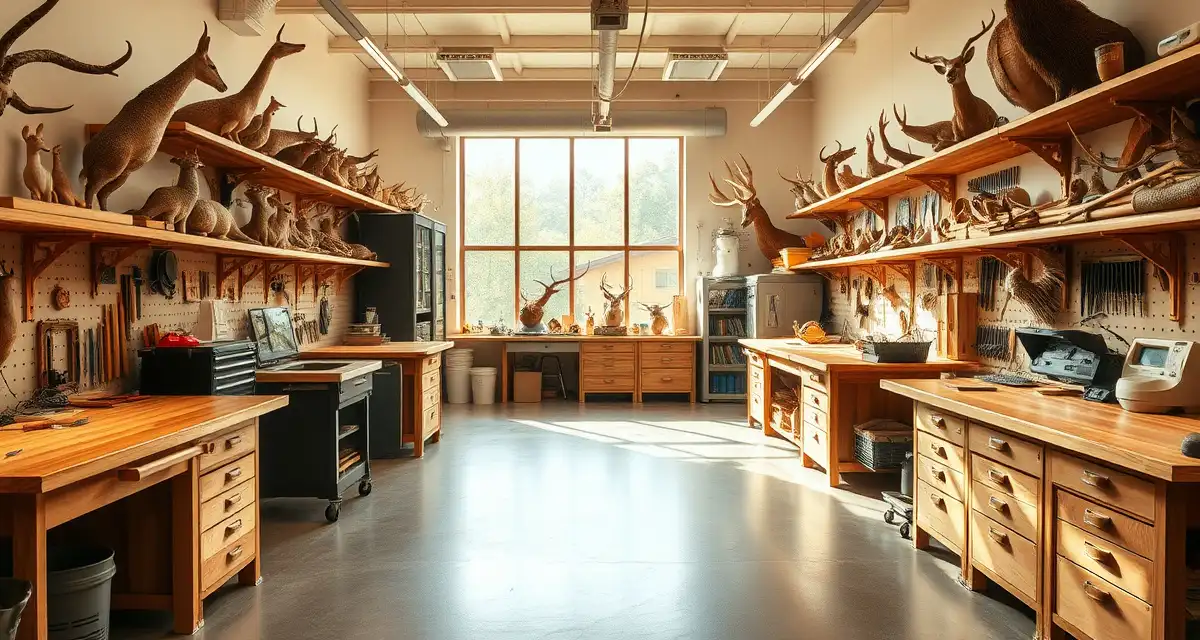
Taxidermy Shop Workspace Design: Layout for Maximum Efficiency
Poor shop layout adds 15-20 minutes of movement per mount over a full season. That number sounds small until you multiply it by 200 mounts: 50-67 hours of unnecessary movement in a single year. A layout that puts the right tools and storage in the right places recovers that time at no cost once the setup is right.
The organizing principle of a well-designed taxidermy shop is workflow. Specimens should move in one direction through your shop: intake, to storage, to preparation, to mounting, to finishing, to pickup. When your layout forces movement against that flow - when finished mounts share space with raw specimens, or when you walk past your pickup area to reach your fleshing station - you're fighting your own design.
TL;DR
- For a 100-mount-per-year operation, 600-800 square feet is workable with careful layout planning.
- What is the minimum square footage for a 200-mount per year taxidermy shop?
- For a shop processing 200 shoulder mounts per year, 1,000-1,200 square feet is the practical minimum for a functional layout with proper zone separation.
- Poor shop layout adds 15-20 minutes of movement per mount over a full season.
- That number sounds small until you multiply it by 200 mounts: 50-67 hours of unnecessary movement in a single year.
- If you do large-format mounts like elk or life-size, you need floor space for the work - calculate this before you finalize the layout.
Zone Design
Think of your shop in five zones:
Intake zone: This is where customers bring specimens and where you complete intake paperwork and photographs. It should be near your entrance door. It should have a clean, professional surface for examining specimens and a place for intake forms or a tablet for digital intake. Your intake zone should be somewhat separated from your production areas - customers shouldn't have to walk through raw specimen storage to drop off their deer.
Cold storage zone: Freezers should be close to the intake zone so specimens move from intake to frozen storage in a short path. In a larger shop, a walk-in freezer adjacent to the intake area is ideal. The shorter the path from intake to cold storage, the less chance of temperature issues with fresh specimens.
Preparation zone: Fleshing, skinning, and initial specimen work happens here. This is your messiest zone and should be positioned with drainage access and good ventilation. It should not be adjacent to your finished mount display or pickup area. Keep raw specimen work physically separated from finished work.
Dedicated intake and production zones prevent the cross-contamination of clean and raw work - this is both a hygiene issue and a quality control issue.
Mounting and production zone: Your primary workspace for form preparation, fitting, and mounting. Good bench height, adequate lighting, and access to your tool storage matter here. If you do large-format mounts like elk or life-size, you need floor space for the work - calculate this before you finalize the layout.
Finished mount and pickup zone: Where completed mounts wait for customer pickup. This should be clean, climate-controlled, and ideally visible from the intake zone so customers can see finished work when they come in. It doubles as a portfolio display for prospective customers.
Specific Layout Considerations
Lighting: Overhead fluorescent or LED lighting is not enough for production and finishing work. Add task lighting at your mounting bench. Color-accurate lighting matters for paint matching and finishing detail.
Electrical access: You need outlets near your fleshing and mounting stations. Running extension cords across the floor in a busy shop is a trip hazard. Plan for outlets at bench height near every major work area.
Bench height: The standard 36" counter height works for standing work. Many taxidermists prefer lower benches for mounting because it reduces shoulder fatigue during extended work sessions. Adjustable-height benches are worth the investment if you mount a high volume.
Floor drainage: Any area where you handle fresh specimens or do wet work should drain properly. A floor drain in the preparation area saves significant cleanup time and prevents moisture problems.
Storage for supplies: Materials - forms, glass eyes, adhesives, wire, finishing supplies - should be organized and accessible from the production zone without requiring movement across the shop. Dedicated supply shelving adjacent to or within the production area eliminates the time spent searching for materials.
Minimum Space Guidelines
For a 100-mount-per-year operation, 600-800 square feet is workable with careful layout planning. Most of that space goes to cold storage and production.
For a 200-mount-per-year operation, 1,000-1,500 square feet allows reasonable zone separation and adequate production area.
For 300+ mounts per year, 1,500-2,500 square feet allows proper zoning without the flow compromises that create inefficiency at high volume.
These numbers assume a mix of shoulder mounts. Full-body and large-format work requires additional space that should be calculated based on your specific mix.
Your taxidermy shop management software tracks job locations digitally and can help you understand your actual space utilization patterns. The taxidermy intake form guide includes a workflow diagram for the intake zone setup.
Frequently Asked Questions
How should I lay out my taxidermy shop for efficiency?
Design your layout around a one-directional workflow: intake near the entrance, cold storage adjacent to intake, preparation zone adjacent to cold storage, production in the center or main work area, and finished mount and pickup space separated from raw work. This one-directional flow means specimens always move toward completion rather than crossing back through earlier stages. Keep your intake area clean and professional - it's customer-facing. Keep your preparation zone ventilated and drained. Keep finished mounts in a clean, climate-controlled space away from chemical odors and raw biological material.
Where should my intake area be relative to my production area?
Intake should be near your entrance, customer-accessible, and should feel clean and professional. Production, especially fleshing and specimen preparation, should be physically separated from intake - ideally in a separate room or at least on the opposite side of the shop. Customers dropping off deer don't need to walk through your raw preparation area, and the smells and visual elements of production work don't create a great first impression. If space is limited, a physical barrier like a counter or partial wall between intake and production provides some separation even without a separate room.
What is the minimum square footage for a 200-mount per year taxidermy shop?
For a shop processing 200 shoulder mounts per year, 1,000-1,200 square feet is the practical minimum for a functional layout with proper zone separation. This provides enough space for adequate cold storage, a dedicated preparation area with drainage, a production zone with bench space for mounting work in progress, and a finished mount area for completed work awaiting pickup. You can operate in less space with very disciplined organization, but it requires more careful sequencing of work to compensate for the physical constraints. Shops handling large-format work - elk, moose, bear, life-size - need to add space to their baseline calculation for those specimen types.
How does this apply to solo taxidermy shops?
The principles in this guide apply to solo shops just as they do to larger operations, though the scale differs. A single-person shop may have lower absolute volume but faces the same documentation, compliance, and customer communication requirements. The practical advice here scales down to any shop size.
What is the most common mistake taxidermists make with taxidermy shop workspace design?
The most common mistake is treating taxidermy shop workspace design as an afterthought rather than building it into the standard workflow from the start. Shops that encounter problems in this area typically did not establish clear processes before season, which means every situation becomes a one-off decision rather than a standard response.
Related Articles
- Should I Have a Home Studio or Commercial Taxidermy Shop?
- What Forms Are Legally Required for a Taxidermy Shop?
- What Insurance Does a Taxidermy Shop Need?
- Should a Taxidermy Shop Accept Personal Checks?
Try These Free Tools
Put these insights into practice with our free calculators and planners:
Sources
- National Taxidermists Association (NTA)
- US Fish & Wildlife Service
- Small Business Administration (SBA)
Get Started with MountChief
The busiest taxidermy shops run on systems, not memory. MountChief replaces scattered spreadsheets and sticky notes with one organized workflow from intake to pickup.