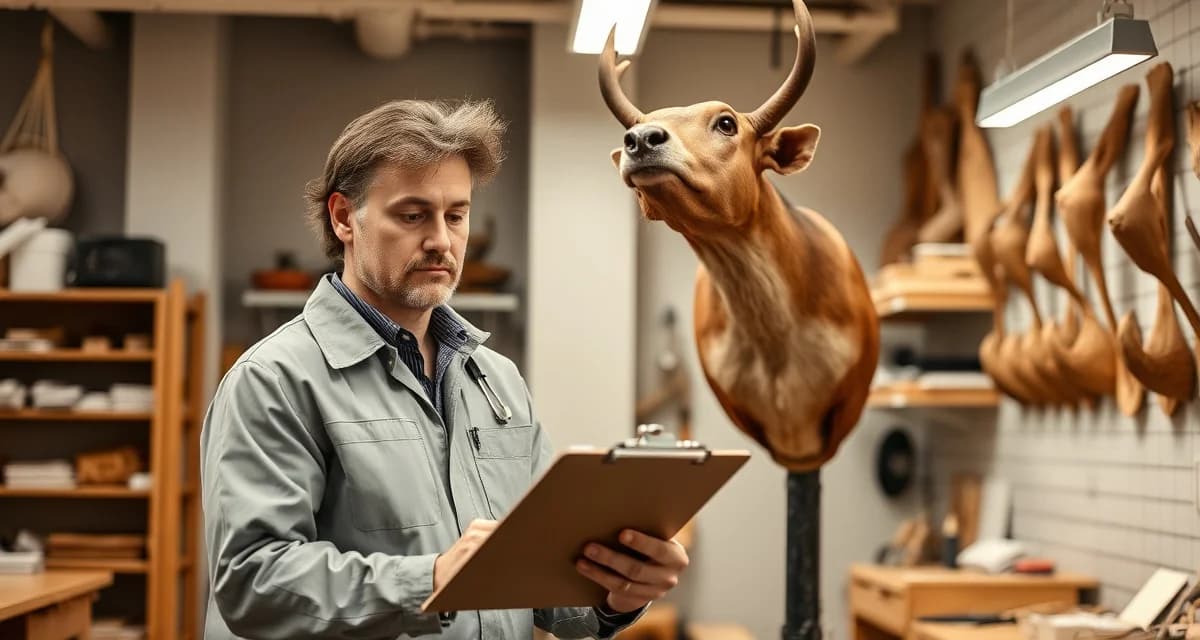
What Should a Taxidermist Do When a Customer Refuses Pickup?
A customer who won't pick up or respond to pickup notices is a problem that roughly 10 to 15 percent of mounts taken without deposits eventually become. The mount is finished. The customer has gone silent. Your shop is holding finished work (and in some cases, significant production value) with no clear resolution.
There's a legal process for this situation, and following it protects you. Skipping steps or acting without written notice can expose you to liability. Here's what to do.
TL;DR
- When a customer refuses to pick up a finished mount, you have legal options that depend on your state's lien and abandoned property laws.
- Send written notice to the customer's last known address before taking any disposal action.
- Storage fees documented in your original intake agreement give you a financial remedy for delayed pickup.
- Document all attempts to contact the customer and retain copies of every notice sent.
- Most abandoned mount situations result from customers losing contact rather than intentional avoidance.
Step 1: Document Your Notification Attempts
Before any formal legal action, you need a record of your attempts to reach the customer.
Keep a log that includes:
- Date and method of each contact attempt (phone, text, email, portal notification)
- What the contact said ("left voicemail stating mount is ready for pickup," "sent email with final invoice")
- Whether you received a response
This log is your evidence that you made good-faith efforts to notify the customer. If the situation ever becomes a legal dispute, your documentation is what distinguishes you from a shop that disposed of property without notice.
Step 2: Send a Formal Written Notice
If phone, text, and email attempts have gone unanswered for 30 or more days, send a formal written notice by certified mail with return receipt requested. This creates documented delivery.
The notice should include:
- The customer's name and address
- Description of the specimen or mount being held
- The date the mount was completed and made available for pickup
- The amount owed (if any balance remains)
- A deadline for pickup (typically 30 to 60 days from the notice date)
- A statement that after the deadline, the property may be subject to storage fees, sale, or disposal in accordance with your state's unclaimed property law
Send the notice to the last address you have on file for the customer. If the address is outdated and the notice is returned, retain the envelope showing the return. This documents your attempt.
What the Law Requires Before Disposing of the Property
Written certified mail notice is legally required before disposal in most US states. The specific waiting period and disposal rules vary by state, but the general structure is:
- Formal written notice by certified mail
- Waiting period of 30 to 90 days after notice (varies by state)
- If no response, taxidermist may be permitted to sell, donate, or dispose of the property
Some states have specific "taxidermist's lien" laws that govern this exact situation. Others handle it under general unclaimed property, bailment, or artisan's lien statutes.
Do not assume a general approach applies to your state without verifying your state's specific law. A quick consultation with an attorney familiar with your state's property law is worth the cost if you're holding significant value and planning disposal.
Can You Put a Lien on a Customer Who Refuses Pickup?
Many states allow an artisan's lien (also called a possessory lien) on property in your possession when you've done work on it and haven't been paid. A taxidermist who hasn't received full payment has a lien interest in the finished mount.
An artisan's lien gives you the right to hold the property until payment is made and, in many states, to sell the property to recover your costs after proper notice and waiting period.
The lien process varies significantly by state. In some states, you can enforce the lien by selling the property at a public sale after notice. In others, the process is more involved.
If your customer owes a significant balance and is non-responsive, consulting with a local attorney about your lien rights in your state is the right move. This is particularly worth doing if the mount has significant value. A high-end elk or bear mount that a customer abandons with a $1,500 balance is a situation where formal legal options matter.
Preventing the Problem With Deposits
The most effective protection against abandoned mounts is a meaningful deposit at intake. A 25 to 50 percent deposit at intake significantly reduces abandonment rates. Customers who have money invested in the job are much more likely to follow through.
Mounts taken without a deposit or with a very small deposit represent the large majority of eventual abandonments. Your deposit collection policy is your primary prevention tool.
What to Do With the Property After the Legal Waiting Period
If you've completed the required notice steps, the waiting period has passed, and the customer has made no contact, your state's law will govern your options. Common outcomes:
- Sell the property at a documented sale (some states require public notice or auction)
- Donate to a charitable organization
- Dispose of the property (though this is the least economically rational option for a finished mount with real value)
- Retain the mount if the mount has value to you (displaying finished work for marketing purposes, for example). Rules on this vary
Whatever you do after the waiting period, document it. Record the date, the method of disposition, and what happened to any proceeds.
Frequently Asked Questions
What legal steps must I take before disposing of a refused mount?
Send a formal written notice by certified mail to the customer's last known address. The notice should describe the property, state the amount owed, and give a specific deadline for pickup with clear language that the property may be disposed of after that date. Wait the legally required period under your state's unclaimed property or artisan's lien law, typically 30 to 90 days after the notice. Document every contact attempt throughout the process. Without these steps, disposing of customer property exposes you to conversion or property damage claims.
Can I put a lien on a taxidermy customer who refuses pickup?
Many states allow artisan's liens (possessory liens on property you've done work on) that give you the right to hold the mount until payment and, after proper notice, to sell the property to recover your costs. The specific process varies by state. If your customer owes a significant balance and is non-responsive, checking your state's artisan's lien or taxidermist's lien statute is worth doing. A local attorney can confirm your rights and the required process in your specific state.
How do I protect my shop from customers who abandon expensive mounts?
The primary protection is a meaningful deposit at intake. 25 to 50 percent of the total price. Deposits create financial commitment that significantly reduces abandonment. Get complete contact information at intake: name, address, phone, and email, verified before you accept the specimen. Use a signed intake agreement that includes your abandonment and storage fee policies in writing. When customers sign an agreement that describes your policy, you have written evidence of the terms they accepted if the situation later escalates.
How long must I store a finished mount if the customer will not pick it up?
The minimum holding period before you can consider a mount legally abandoned varies by state, typically 60 days to one year after proper notice. Your intake agreement can specify a storage fee and a pickup deadline, which strengthens your legal position. Check your state's abandoned property statutes for the specific requirements in your jurisdiction.
What is the proper notice procedure for an unclaimed mount?
Send a written notice by certified mail to the customer's address on file. The notice should state that the mount is ready, the balance due, the storage fee accruing, and a deadline after which you will pursue your legal options under state abandoned property law. Retain the certified mail receipt and a copy of the notice.
Can I charge storage fees on a mount the customer has not picked up?
Yes, if you specified storage fees in your original intake agreement. Including a storage fee clause in your intake paperwork gives you a contractual basis for charging storage after the pickup deadline passes. Without an intake agreement addressing this, your options are more limited.
Related Articles
- What Should a Hunter Do with a Bear Before the Taxidermist?
- What Should a Hunter Do with a Deer Cape Before the Taxidermist?
- How Far in Advance Should I Book My Taxidermist?
Try These Free Tools
Put these insights into practice with our free calculators and planners:
Sources
- National Taxidermists Association (NTA)
- State abandoned property statutes
- Small Business Administration (SBA)
Get Started with MountChief
Abandoned and unclaimed mounts are easier to handle when your intake paperwork establishes the terms from the start. MountChief's intake system captures customer agreements and contact information in a format you can refer back to when any dispute arises. Try MountChief to build the intake documentation that protects your shop.