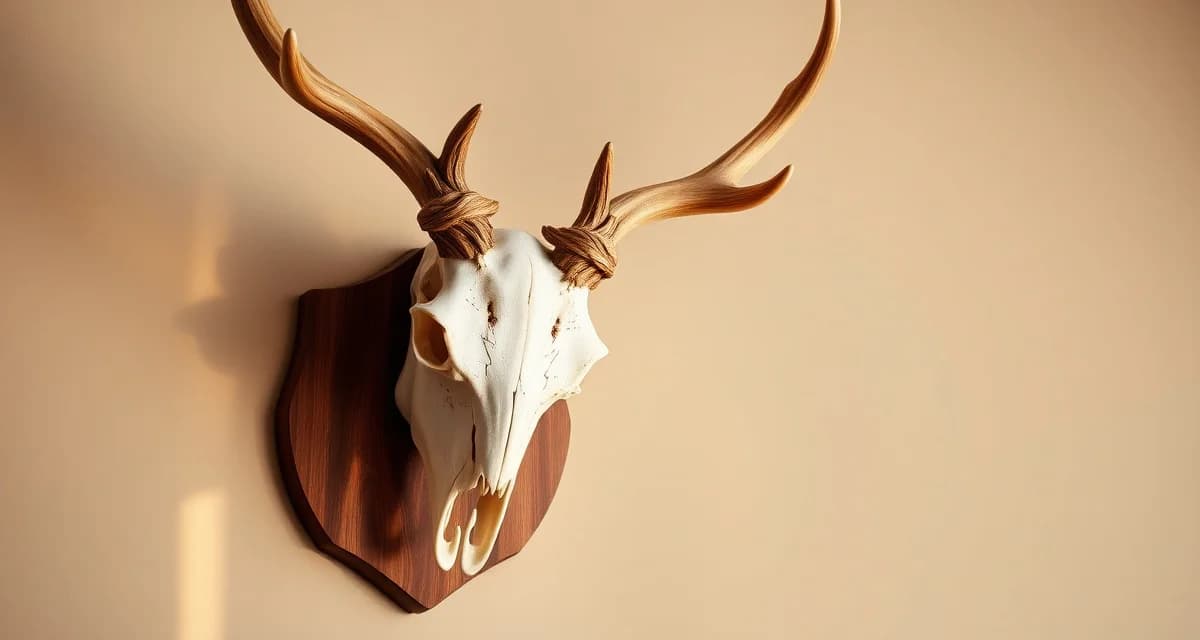
Can I Do a European Mount Myself or Should I Use a Taxidermist?
DIY European mounts are genuinely possible. They don't require the specialized skills that skin mounting does, and the basic materials (a pot, water, basic tools) are accessible to most hunters.
But DIY European mounts have real failure modes. Inadequate degreasing is the most common first-attempt problem, and the result is a skull that yellows or develops an oily surface within a few years rather than lasting for decades. Professional maceration produces cleaner, more durable results.
Here's an honest comparison to help you decide.
TL;DR
- A DIY European mount requires access to a maceration tank or a dermestid beetle colony for skull cleaning.
- Maceration takes 2-4 weeks depending on water temperature; beetle cleaning takes 1-2 weeks with an active colony.
- Whitening is done with hydrogen peroxide, not bleach, which damages the bone.
- DIY European mounts can produce professional results if done correctly, but the process involves significant odor.
- The taxidermist version will typically be cleaner and better finished than a first-time DIY attempt.
DIY European Mount Methods
Boiling
The most common DIY approach: simmer the skull in water until the tissue separates, then clean and bleach.
How it works:
- Remove as much flesh as possible before boiling
- Simmer (not hard boil) the skull in water, hard boiling can crack bone
- Remove the skull every 30 to 45 minutes and scrape off loosened tissue
- Repeat until clean
- Let dry thoroughly
- Degrease (important, skip this step and the skull yellows)
- Whiten if desired with hydrogen peroxide (not chlorine bleach, which damages bone)
Problems with DIY boiling:
- Easy to overcook, which weakens bone structure or loosens teeth
- Nasal turbinates (the delicate bone structures inside the skull) are easily damaged by rough cleaning
- Degreasing is often done inadequately, causing long-term yellowing
- Odor during the process is significant, not a project for residential neighborhoods
Beetle Maceration
Dermestid beetles eat flesh and leave bone intact. Many taxidermy shops use beetle rooms for skull cleaning. Some hunters buy beetle colonies for their own use.
Beetle maceration produces cleaner skulls than boiling, better detail preservation, no heat damage, and the beetles handle the detail work inside nasal cavities that's difficult to clean manually.
For DIY: A beetle colony is a commitment. They need to be fed, managed, and housed appropriately. This makes sense for hunters who do multiple skulls per year, less so for a one-time project.
Professional European Mount: What You Get
A professional taxidermist or dedicated European mount service:
Uses proper maceration: Either beetles or a controlled maceration process (submerging in water over time) that removes tissue completely without heat damage.
Degrease properly: This is the step most DIY attempts skip or do inadequately. Professional degreasing uses appropriate chemicals and adequate soak time to fully remove bone oils. The result is a skull that stays white for 10 or more years rather than yellowing within 3 to 5.
Whitening: Professional whitening uses hydrogen peroxide formulations and exposure times appropriate for the bone density. Not chlorine bleach, which literally erodes the bone surface over time.
Presentation: Professional European mounts on quality plaques, with proper nose and antler positioning, look measurably better than self-finished DIY attempts.
DIY European mount failures from inadequate degreasing are common in first attempts. Professional European mounts have 10+ year durability versus 3 to 5 years for poor DIY attempts that weren't properly degreased.
The Cost Comparison
DIY costs:
- Supplies for a single mount: $15 to $40 (chemicals, tools, plaque)
- Time: 3 to 8 hours spread over several sessions
- Odor management: your problem
Professional European mount costs:
- Typical range: $75 to $175 depending on shop and species
- Time: you drop it off and pick it up
- Result: more predictable, longer-lasting
For a deer, the DIY savings are $50 to $130. Whether that's worth the time, odor, and risk of a suboptimal result is a personal calculation.
For a bull elk with a trophy rack you'll look at for 30 years, professional work is almost certainly worth it.
When DIY Makes Sense
DIY European mounting is reasonable when:
- You're doing it as a learning experience
- The trophy has sentimental but not trophy-class significance
- You have the time, space, and patience for the process
- You're willing to invest in proper degreasing chemicals
When to use a professional:
- Trophy-class animals you want to last
- Any species with delicate skull structures (birds, predators)
- You're short on time and space
- You want a consistently finished result
Frequently Asked Questions
How do I do a European skull mount at home?
The basic process: remove excess flesh, simmer (not boil hard) the skull in water with regular cleaning intervals, clean remaining tissue with tools, let dry fully, degrease with a degreasing agent appropriate for bone (dish soap soak works for light cases; acetone or specialized degreaser for more thorough work), then whiten with hydrogen peroxide. The degreasing step is the most important and most commonly skipped. Don't rush it.
What are the risks of doing a European mount myself?
The main risks are heat damage from overcooking (weakens bone, loosens teeth), inadequate degreasing (causes yellowing within a few years), damage to delicate nasal turbinate structures during cleaning, and odor issues during the process. First-time DIY mounts have a meaningful failure rate. If the skull is a trophy-class animal, professional work produces a more reliable long-term result.
How much does a professional European mount cost vs DIY?
DIY material costs run $15 to $40 per skull, plus 3 to 8 hours of your time across multiple sessions. Professional European mounts typically run $75 to $175. The $50 to $130 price difference buys a more predictable result, properly degreased bone that lasts 10 or more years, and professional presentation. For high-value trophy skulls, the professional investment is almost always worth it.
What is the easiest method for a DIY European mount?
Simmering is the most accessible method for hunters without specialized equipment. Fill a large pot with water, submerge the skull, and simmer at low heat. Do not boil, which can damage the bone and loosen teeth. Simmer for 1-3 hours, then remove remaining tissue by hand. Repeat until clean. Whiten with 30-40% hydrogen peroxide, not bleach. The result will be functional though not as clean as maceration or beetles.
Why should I not use bleach to whiten a European mount?
Bleach (sodium hypochlorite) destroys the bone structure at a microscopic level, making the skull brittle and prone to cracking over time. It also produces an artificial chalk-white color rather than the natural ivory-white of properly whitened bone. Use 30-40% hydrogen peroxide, available from beauty supply stores or taxidermy suppliers, for a durable and natural-looking result.
Is DIY worth it or should I just use a taxidermist?
For hunters with patience and a good workspace for the odor and mess, DIY can produce satisfying results at low cost. For a significant trophy like a record-class buck or a long-sought bull elk, a professional taxidermist will produce a better-finished piece with less risk of damage to the skull. The cost difference between DIY and a professional European mount is often less than $100-$150, which may be worth it for an important trophy.
Related Articles
- What Should a Taxidermist Do When a Customer Refuses Pickup?
- How Far in Advance Should I Book My Taxidermist?
- Should a Taxidermist Have a Facebook Business Page?
- How Does a Taxidermist Choose the Right Form for a Mount?
Try These Free Tools
Put these insights into practice with our free calculators and planners:
Sources
- National Taxidermists Association (NTA)
- Breakthrough Magazine
- Taxidermy Today
Get Started with MountChief
If your customers ask about DIY European mounts, you can offer professional results at a competitive price. MountChief tracks European mount jobs with the same organized intake and status system as any other mount type. Try MountChief to give your European mount customers a professional experience from intake to pickup.