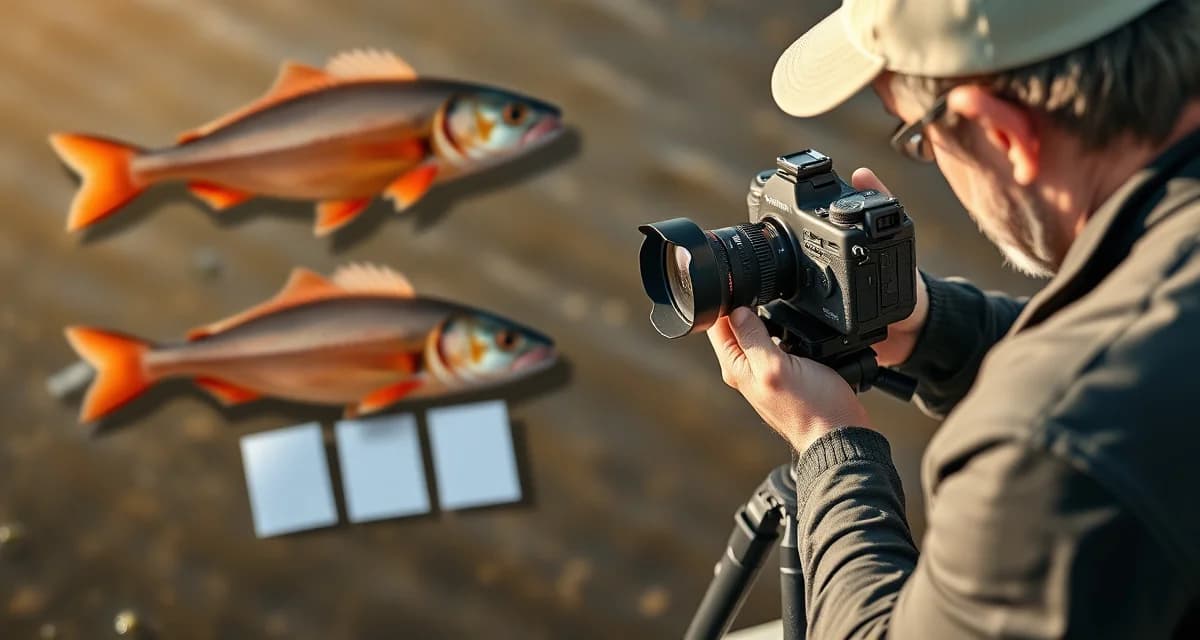
How to Photograph Fish for AI Taxidermy Intake and Reference
Fish lose 80 percent of their visible color within 30 minutes of leaving the water. Taxidermists who receive 6 or more reference angles achieve the highest customer satisfaction scores because they have the visual data to paint accurately.
This is the protocol for fish intake photography. Whether the fish is coming in fresh from the water, at the taxidermist's intake counter from frozen, or being documented by the angler for a catch-and-release replica.
TL;DR
- Fish lose 80 percent of their visible color within 30 minutes of leaving the water.
- Taxidermists who receive 6 or more reference angles consistently achieve better color accuracy on skin mounts and replicas.
- The left side of the fish is typically the primary show side used for the finished mount.
- Include a measuring tape in at least one photo to document length and girth for the replica or mount form.
- Taking photos immediately after landing, before color fades, produces significantly better reference materials.
- Photograph above, below, and both sides before releasing a catch-and-release fish intended for a replica.
Part 1: Photos at the Water (The Most Important Photos)
If you're giving instructions to customers before their fishing trip, this is what they need to know.
The ideal fish photos happen in the first moments after landing, before the fish is measured, before it's put in a cooler, before anything else. At the moment of landing, fish still have their full, vivid coloration. Every minute that passes after that, color fades.
The 6-Angle Protocol
Photo 1: Left Side (Primary Show Side)
Hold the fish horizontally, left side facing the camera. Natural light. No flash if possible.
This is typically the primary reference for skin mounts and replicas.
Photo 2: Right Side
Flip the fish and photograph the right flank. Fish often have slight pattern differences between sides.
Photo 3: Top View (Dorsal)
Hold the fish horizontally and photograph from directly above, looking down the spine. Shows dorsal fin color and back pattern.
Photo 4: Bottom View (Ventral)
Flip and photograph the belly. Shows belly coloration, often white to silver with its own subtle pattern.
Photo 5: Head Close-Up
A close shot of the head showing eye ring color, the opercula (gill covers), and any distinctive facial coloration.
Photo 6: Tail and Fins
Close-up of the caudal fin (tail) and the surrounding fins. Tail color is often distinctive. Especially on rainbow trout, walleye, and many saltwater species.
Bonus: Video
If possible, take 10 to 15 seconds of video in natural light while rotating the fish. Video captures color from multiple angles simultaneously and can be reviewed frame by frame.
Part 2: Photos at the Taxidermist Shop (Intake Photography)
When a customer brings a fish to your shop (fresh or frozen) you need to document what you actually received, regardless of what the fish looked like at the water.
Intake Photo Protocol
Before handling: Photograph the fish as it arrives. Packaging condition, any visible freezer burn, general presentation.
After thawing (if frozen): Let the fish fully thaw. Photograph both sides in natural light at the intake area. Note the current color in your record. "significant color loss present, reference photos from customer [attached/not available]."
Condition documentation: Any scale damage, fin tears, freezer damage, or other condition issues get their own close-up photos.
Measurement photos: After photographing condition, photograph the fish on a measuring board showing length.
Setting Up Intake Photography for Fish
Good fish intake photography requires a little setup investment that pays off in documentation quality.
Intake surface: A clean, neutral-colored surface (white or gray) shows fish color clearly. A dark surface creates issues with lighting. Keep a dedicated intake board or mat for fish photography.
Light source: A window with natural daylight is ideal. If your intake area doesn't have good natural light, a daylight-balanced LED panel ($30 to $80) makes a significant difference in color accuracy.
Camera settings: Phone cameras on auto settings work fine for most fish intake photography. If the fish has strong iridescence, disable flash and use available light.
Using Reference Photos in the AI Intake System
When you upload intake photos to the AI intake system:
- Reference photos taken at the water should be attached to the intake record as "color reference" photos
- Intake condition photos should be labeled as "condition documentation"
- Any customer-provided photos from the water are high-value and should be attached with a note about when they were taken
The AI uses intake photos to auto-populate certain intake fields and flag any visible condition issues. Higher-quality, consistently-taken photos produce more accurate AI processing.
For replicas specifically: the reference photos are the only physical evidence of what the fish looked like. Attach every available reference photo (phone photos at the water, photos taken by fishing partners, video stills) to the intake record.
Can I Use Video Instead of Photos?
Yes, and for fish specifically, video is often more useful than still photos for color reference. A 15-second video of the fish rotated in natural light captures color from every angle simultaneously and can be paused for still reference during painting.
The practical consideration is file size, video files are larger than photos and may need to be compressed or stored in a linked location if your intake system has file size limits.
Both are valuable. Photos are easier to refer to at a glance. Video is more complete for color reference. If the customer has both, use both.
Frequently Asked Questions
How many photos should I take of a fish for mounting reference?
Six angles at minimum: left flank, right flank, dorsal view, ventral view, head close-up, and tail close-up. More is better. Taxidermists who receive 6 or more reference angles consistently achieve better color match accuracy on both skin mounts and replicas. For replicas specifically, the reference photos are the only color data you have to work from.
What angles should I photograph a fish from before it fades?
In order of priority: both flanks, then dorsal view from above, then ventral view, then head close-up, then tail and fins. The flanks are most important because they're the primary visible surface in a finished mount. If you only have time for two photos before the fish starts to fade, both flanks are the critical shots.
Can I use video instead of photos for fish taxidermy color reference?
Yes, video of the fish in natural light, rotated to show all sides, is excellent color reference. A 15 to 30 second video clip captures more color information than most still photo sets because it covers every angle continuously. The limitation is file size. Use video when you have it, combined with still photos when possible. Both provide different but complementary reference value.
How does this apply to solo taxidermy shops?
The principles in this guide apply to solo shops just as they do to larger operations, though the scale differs. A single-person shop may have lower absolute volume but faces the same documentation, compliance, and customer communication requirements. The practical advice here scales down to any shop size.
What is the most common mistake taxidermists make with how to photograph fish for intake?
The most common mistake is treating how to photograph fish for intake as an afterthought rather than building it into the standard workflow from the start. Shops that encounter problems in this area typically did not establish clear processes before season, which means every situation becomes a one-off decision rather than a standard response.
Related Articles
- How to Photograph Bird Specimens for AI Taxidermy Intake
- How to Photograph a Deer Cape for AI Taxidermy Intake
- How to Photograph Specimens for AI Taxidermy Intake
- Can I Get a Fish Mounted from a Frozen Fish or Does It Need to Be Fresh?
Try These Free Tools
Put these insights into practice with our free calculators and planners:
Sources
- National Taxidermists Association (NTA)
- US Fish & Wildlife Service
- Bass Anglers Sportsman Society (B.A.S.S.)
Get Started with MountChief
Fish and waterfowl jobs require the same organized intake and tracking as big-game work. MountChief handles every species type with the same efficient intake system, customer portal, and production tracking. Try MountChief to manage all your species types in one organized platform.