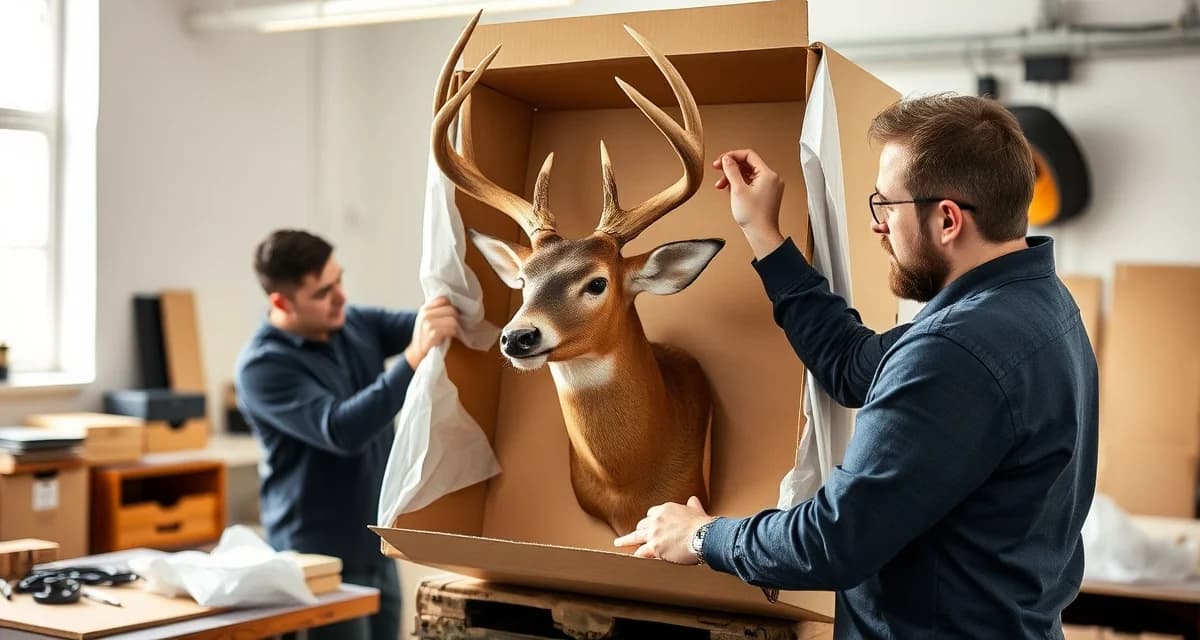
How to Handle Out-of-State Hunter Taxidermy: Shipping, Communication, and Compliance
Out-of-state hunters are some of the best customers a taxidermy shop can have. They've invested significantly in their hunt. Travel, lodging, tags, guides. They harvested a trophy that may represent a once-in-a-lifetime experience. And they're willing to pay for quality work.
But non-resident hunters also create operational demands that local customers don't. They call three times more than local customers because distance creates anxiety. They can't stop by and see that their cape is fine. Shipping a finished mount across the country requires documentation that a simple handoff at pickup doesn't. Interstate compliance has layers that in-state hunting doesn't trigger.
Here's how to manage out-of-state hunter taxidermy from intake through delivery.
TL;DR
- When every out-of-state customer leaves your shop with a portal link, they have a 24/7 window into their job's status that doesn't require anyone at your shop to pick up the phone.
- Your customer portal should show job status in plain language, not "status code 4" but "your cape is at the tannery and expected back in 6 to 8 weeks." Plain language reduces follow-up calls for clarification.
- These four touchpoints cover 90 percent of the questions out-of-state hunters have.
- These proactive touchpoints answer 90 percent of out-of-state customer questions before they have to ask them.
- Most shops that deal with significant out-of-state volume report 3 to 5 status calls per out-of-state customer over the course of a season.
- At 60 elk jobs with 70 percent out-of-state customers, that's 120 to 200 status calls over the course of a season.
The Communication Problem (and How to Fix It)
Out-of-state hunters call more. That's just the reality. When a hunter from Texas leaves an elk cape with a Colorado taxidermist and drives home, their only window into the production process is the phone. They'll use it.
Most shops that deal with significant out-of-state volume report 3 to 5 status calls per out-of-state customer over the course of a season. At 60 elk jobs with 70 percent out-of-state customers, that's 120 to 200 status calls over the course of a season. All for questions the portal would answer instantly.
The fix: a customer portal with a link provided at intake.
When every out-of-state customer leaves your shop with a portal link, they have a 24/7 window into their job's status that doesn't require anyone at your shop to pick up the phone. Portal access dramatically reduces inbound call volume from remote customers because they can answer their own questions.
Your customer portal should show job status in plain language, not "status code 4" but "your cape is at the tannery and expected back in 6 to 8 weeks." Plain language reduces follow-up calls for clarification.
Communication Best Practices for Out-of-State Hunters
Even with a portal, out-of-state hunters appreciate proactive communication at key milestones. Set up automatic notifications for:
- Intake confirmation: "Your elk cape has been received and your job number is X. Track your mount status at [portal link]."
- Tannery shipment: "Your cape shipped to the tannery today. Expected return is [date range]."
- Tannery return: "Your cape is back from the tannery and production will begin soon."
- Mount complete: "Your mount is finished! Your final invoice is [amount]. See your options for pickup or shipping."
These four touchpoints cover 90 percent of the questions out-of-state hunters have. By sending them proactively, you prevent the calls rather than just answering them.
Documentation at Intake for Out-of-State Hunters
Out-of-state hunter intake documentation is more complex than local hunter intake because you're capturing information from a different state's license and permit system.
Required fields at out-of-state deer and elk intake:
- Hunter's home state: required for record purposes and shipping documentation
- Home state license number: the license from their state of residence
- State-of-harvest license number: if different (for example, an Iowa nonresident license number for a hunter from Ohio)
- Tag or permit number: the specific tag that authorized the harvest
- State of harvest: confirmed at intake (especially important if the hunter crossed state lines during the hunt)
- Harvest date: required for timeline verification
All of this information becomes the input for the Lacey Act shipping documentation when the finished mount needs to travel back to the hunter's home state.
Don't skip this documentation because it feels like a lot of questions at a busy intake moment. Build it into your required fields so it can't be missed.
Interstate Shipping Documentation
Shipping finished mounts across state lines triggers the Lacey Act. The Lacey Act prohibits interstate transport of wildlife taken in violation of state or federal law. For taxidermists shipping legally taken mounts, compliance is straightforward. But only if the intake documentation is complete.
What interstate shipping documentation needs to include:
- Species identification (common name and scientific name)
- State and date of harvest
- Hunter's name and license/permit numbers
- Description of the mounted specimen (size, mount type)
- Taxidermist's name, address, and permit/license number
- Destination address
Your management software should generate this document from the intake record. If you captured all the required fields at intake, the shipping document is auto-populated. If you missed fields, you're making follow-up calls to out-of-state hunters trying to reconstruct information they may not have handy.
Shipping Methods and Considerations
Deer shoulder mounts and smaller: UPS, FedEx, or USPS are viable for smaller mounts if properly packaged. Custom crating for fragile pieces is worth the cost.
Elk shoulder mounts: These are typically too large for standard parcel shipping. Freight services (ABF, Estes, Old Dominion) ship larger pieces. Custom crating is required for any freight shipment.
Life-size mounts and large pieces: Custom crating by a professional crating service. Freight only.
Who pays for shipping?
This conversation needs to happen at intake, not at pickup. Establish clearly in your terms:
- Does the customer pay shipping?
- Who arranges the freight carrier?
- Is shipping cost billed separately or included in the mount price?
Many shops bill shipping as a separate line item on the invoice, with an estimated cost range communicated at intake. Get this in writing, on the intake form, acknowledged by the customer.
Payment from Out-of-State Hunters
Remote payment is the standard for out-of-state customers. You can't expect someone in Florida to mail a check to your Montana shop before you'll ship their elk mount.
Digital payment collection (credit or debit card through an online invoice) is the clean solution. The customer pays through the portal or via a payment link in the pickup notification email. Once payment is confirmed, you ship.
Never ship before payment is confirmed, regardless of how much you trust the customer. It's not about trust. It's about creating a clean, consistent process that protects you and your business.
Handling Special Species Documentation for Out-of-State Hunters
Some species harvested out of state create documentation complexity at intake that goes beyond standard deer or elk records.
Mountain lion, wolf, or bear with state-specific regulations: Confirm the hunter's home state doesn't have restrictions on the species. Some states where the animal is protected have restrictions on importing mounts of that species even from states where it's legal to hunt.
Migratory birds from out-of-state hunters: The federal migratory bird permit requirements apply regardless of where the hunter is from. Verify the federal permit at intake.
African or exotic species: CITES documentation requirements apply on import to the US and at state level in some jurisdictions. Out-of-state hunters with exotic trophies may need to provide import documentation that you need to see and record. Wildlife compliance software automates species-specific compliance flagging so nothing is missed.
Frequently Asked Questions
How do I communicate with out-of-state taxidermy customers?
Provide a customer portal link at intake so hunters can check job status without calling. Set up automatic milestone notifications for key production stages: intake confirmation, tannery shipment, tannery return, and mount completion. These proactive touchpoints answer 90 percent of out-of-state customer questions before they have to ask them. Most shops that implement this approach see out-of-state call volume drop to near zero.
What documentation do I need to ship a finished mount across state lines?
Interstate shipment of finished mounts requires Lacey Act-compliant documentation including species identification, state and date of harvest, hunter's name and license/permit numbers, taxidermist's license information, and destination address. This documentation should be generated from your intake record, which is why capturing complete harvest documentation at intake is essential, not just for compliance but for the shipping paperwork you'll need months later.
How do I handle payment from out-of-state hunters for taxidermy work?
Use digital payment processing. When the mount is complete, send the customer their final invoice through a portal notification or email with a payment link. Confirm payment before shipping. Never ship before payment confirmation. Establish your shipping cost policy at intake (either a flat rate, an estimate range, or a statement that actual shipping will be billed separately) so customers aren't surprised by a shipping charge at the end.
How does this apply to solo taxidermy shops?
The principles in this guide apply to solo shops just as they do to larger operations, though the scale differs. A single-person shop may have lower absolute volume but faces the same documentation, compliance, and customer communication requirements. The practical advice here scales down to any shop size.
What is the most common mistake taxidermists make with how to handle non resident hunter mounts?
The most common mistake is treating how to handle non resident hunter mounts as an afterthought rather than building it into the standard workflow from the start. Shops that encounter problems in this area typically did not establish clear processes before season, which means every situation becomes a one-off decision rather than a standard response.
Related Articles
- What Can a Taxidermist Do with Abandoned Mounts?
- What Should a Hunter Do with a Bear Before the Taxidermist?
Try These Free Tools
Put these insights into practice with our free calculators and planners:
Sources
- National Taxidermists Association (NTA)
- US Fish & Wildlife Service
Get Started with MountChief
The results in this article are achievable in any shop that applies the same operational approach. MountChief provides the intake speed, tannery tracking, and customer communication tools that make this kind of improvement possible. Try MountChief to see what better systems do for your operation.