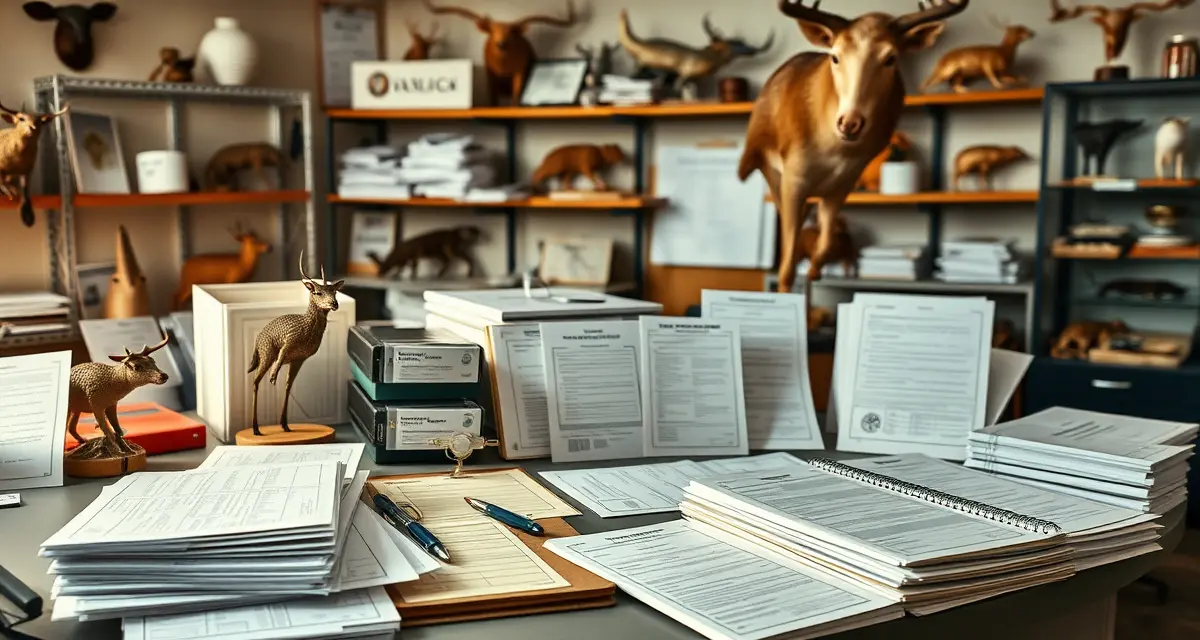
Specimen Documentation Hub for Taxidermy Shops
Specimen documentation is the most critical administrative function in a taxidermy shop. Poor specimen documentation is responsible for most specimen mix-ups and compliance violations. This hub organizes all specimen documentation resources by category so you can find what you need without searching.
TL;DR
- Specimen documentation is the most critical administrative function in a taxidermy shop.
- Record retention: 5 years minimum for federally regulated species, typically 3-5 years for state-regulated species.
- This hub organizes all specimen documentation resources by category so you can find what you need without searching.
- Compliance inspections require you to produce documentation for every specimen in your possession immediately.
- A complete chain of custody tracks every specimen from the moment it arrives through every stage until the customer picks up the finished mount.
- What documentation do I need for every specimen I receive?
Why Specimen Documentation Is the Foundation
Every other operational function in your shop depends on specimen documentation quality:
The customer portal can only show accurate status if the intake record is complete and linked correctly to the specimen.
Compliance inspections require you to produce documentation for every specimen in your possession immediately. Incomplete records are violations.
Dispute resolution depends on intake documentation. A condition dispute with no condition assessment on file is a dispute you may lose.
Tannery coordination requires knowing which hides you sent, when, and what they were linked to. Undocumented hides at the tannery have no paper trail.
Production quality benefits from accurate intake measurements and specifications captured at intake and referenced during mounting.
Intake Documentation Resources
Getting the Intake Right
- Taxidermy Intake Form Guide, Complete field reference for all species
- Taxidermy Intake Form PDF Download, Printable template, all species
- Digital vs Paper Intake Comparison, Why digital produces more complete records
- How to Speed Up Taxidermy Intake, AI intake reducing 18 minutes to 3 minutes
- Benefits of Digital Taxidermy Intake, Compliance, speed, and portal activation
- How Long Should Taxidermy Intake Take?, Time benchmarks by intake method
Intake Station Setup
- What a Taxidermy Intake Station Should Look Like, Equipment and layout
- QR Tag Setup Guide, Printer setup, tag placement by species, scan verification
- Why QR Tags Beat Paper Tags, Tannery survivability, chain of custody
- Taxidermy QR Tag System, Full QR implementation overview
Species-Specific Documentation
Deer and Elk
- Deer Cape Condition Assessment Guide, 5-point rating system with documentation procedures
- Deer Antler Measurement Guide, B&C scoring fields and measurement protocol
- Elk Cape Handling and Storage Guide, Condition documentation for large capes
- Hair Slippage Documentation, What to capture and how to get authorization
Turkey and Waterfowl
- Spring Turkey Season Guide, Federal compliance documentation requirements
- Waterfowl Season Guide, Duck and goose federal documentation requirements
- Migratory Bird Permit Guide, USFWS permit requirements
Bear
- Bear Season Guide, Skull sealing documentation and intake protocol
- Bear Taxidermy Tracking, Stage-by-stage tracking for high-value bear jobs
Fish
- Fish Skin Preparation Guide, Intake documentation including measurement fields and photo reference
- Fish Mount Tracking, Production workflow documentation
Exotics and Multi-Species
- All Species Taxidermy Guide, Species-specific intake fields for every major category
- CITES Compliance Guide, Which species trigger documentation requirements
Chain-of-Custody Documentation
A complete chain of custody tracks every specimen from the moment it arrives through every stage until the customer picks up the finished mount.
Key chain-of-custody documentation points:
At intake:
- Intake record created and linked to customer
- QR tag attached to specimen
- Condition assessment documented with photos
- Federal/state compliance documentation captured
- Customer signs intake form
At freezer:
- Job record shows "received and frozen" status
- QR tag scan logged with timestamp
At tannery:
- Tannery shipment log updated with the specimen included
- Shipment date, tannery name, and expected return recorded
At tannery return:
- Incoming count verified against shipment record
- Any damage at return documented and photographed
- QR tag scan confirms specimen identity
In production:
- Production start date logged
- Any significant notes about production (material substitutions, condition issues discovered) documented
At completion:
- QA inspection record created
- Completion date logged
- Customer notified
- Final invoice sent
At pickup:
- Customer pickup date recorded
- Final payment confirmed
- Review request sent
This complete chain is what allows you to answer any question about any specimen at any time.
Compliance Documentation
- Wildlife Compliance Software for Taxidermy, Automated compliance documentation
- Compliance Inspection Preparation Guide, What officers look for and how to be ready
- Annual Compliance Audit Template, Self-assessment before officers visit
- 5 Compliance Mistakes That Cost Licenses, The most dangerous documentation gaps
- What to Do After a Wildlife Violation Citation, Response protocol
- Wildlife Permit Tracker, Track renewal dates
Templates and Tools
- Taxidermy Intake Form PDF, Download complete template
- Tannery Shipment Checklist, Pre-shipment verification
- Tannery Shipment Log Template, Track every shipment
- Compliance Audit Template, Annual self-audit form
- Shop Policy Template, Deposit, timeline, and abandonment policy language
Frequently Asked Questions
What documentation do I need for every specimen I receive?
Every specimen requires: customer identification and contact information, species and subspecies, harvest state and county, harvest date, hunting license and tag number, a condition assessment with photographic documentation, mount specifications, agreed price and deposit collected, and a signed timeline and policy acknowledgment. For federally regulated species (migratory birds), add the customer's federal hunting license number. For bear in regulated states, add the skull seal number. For CITES-applicable exotic species, add import documentation. For deer in CWD-affected zones, add specific harvest county documentation. These fields are built into MountChief's species-specific intake workflows.
How do I create a chain of custody for taxidermy specimens?
Start with a complete intake record linked to a QR tag attached to the physical specimen. Log each stage change in your tracking system with a timestamp. Log tannery shipments in your shipment record with the specimen included. Verify count and condition at tannery return. Document any significant production notes. Create a QA inspection record before completion notification. Record the customer pickup date and final payment. The complete chain from intake to pickup, all logged in your management system, is a defensible chain of custody for any legal, insurance, or compliance purpose.
What compliance documentation is required by species?
Deer: harvest state, county, and license/tag number; CWD county documentation in regulated states. Turkey: federal migratory bird hunting license number, state turkey tag number. Waterfowl: federal Duck Stamp number, HIP registration, state waterfowl permit. Bear: skull seal number (most bear states), harvest state and method. Exotic species: CITES documentation for applicable species, import permit numbers. All species: customer hunting license number and mount disposition (what happened to each specimen in your possession). Record retention: 5 years minimum for federally regulated species, typically 3-5 years for state-regulated species.
How does this apply to solo taxidermy shops?
The principles in this guide apply to solo shops just as they do to larger operations, though the scale differs. A single-person shop may have lower absolute volume but faces the same documentation, compliance, and customer communication requirements. The practical advice here scales down to any shop size.
What is the most common mistake taxidermists make with taxidermy shop specimen documentation hub?
The most common mistake is treating taxidermy shop specimen documentation hub as an afterthought rather than building it into the standard workflow from the start. Shops that encounter problems in this area typically did not establish clear processes before season, which means every situation becomes a one-off decision rather than a standard response.
Try These Free Tools
Put these insights into practice with our free calculators and planners:
Sources
- National Taxidermists Association (NTA)
- US Fish & Wildlife Service
- Small Business Administration (SBA)
Get Started with MountChief
Between intake forms, CITES documentation, and customer follow-ups, running a taxidermy business involves a lot of moving parts. MountChief keeps them organized in one dashboard.