Taxidermy Job Tracking: Stop Losing Mounts and Status Calls
Every taxidermist has a story. The deer cape that ended up in the wrong customer's pickup. The elk hide that came back from the tannery with no tag. The phone call from an angry hunter who wants to know where his turkey is, and you can't find the intake sheet.
This is what taxidermy job tracking solves. Not just for your peace of mind, for your liability, your reputation, and the two hours a day you're currently spending on the phone.
TL;DR
- Where's My Mount is $30 per month for a client portal.
- During deer season, a shop doing 300 mounts is managing 300 separate chains of custody.
- The code is printed on a tag that's engineered to survive tanning chemicals, the same chemicals that dissolve standard paper tags in 24 to 48 hours.
- Lost or mixed specimens cost shops $500 to $5,000 per incident in direct liability.
- Shops using MountChief report 90% fewer inbound status calls.
- The phone call from an angry hunter who wants to know where his turkey is, and you can't find the intake sheet.
Why Job Tracking Matters More Than You Think
Lost or mixed specimens cost shops $500 to $5,000 per incident in direct liability. That's a settlement, a replacement specimen, or a mount you redo at no charge. And that doesn't account for the customer who tells every hunter he knows what happened.
During deer season, a shop doing 300 mounts is managing 300 separate chains of custody. Each one has multiple handoff points, intake, cold storage, tannery shipment, tannery receipt, production floor, finishing, and pickup. At any one of those points, a paper tag can fall off, get wet, or become illegible.
The numbers back this up. Shops with paper systems experience measurably higher mix-up rates than those with digital tracking. It's not a character flaw, it's a system failure waiting to happen.
How QR Code Job Tracking Works
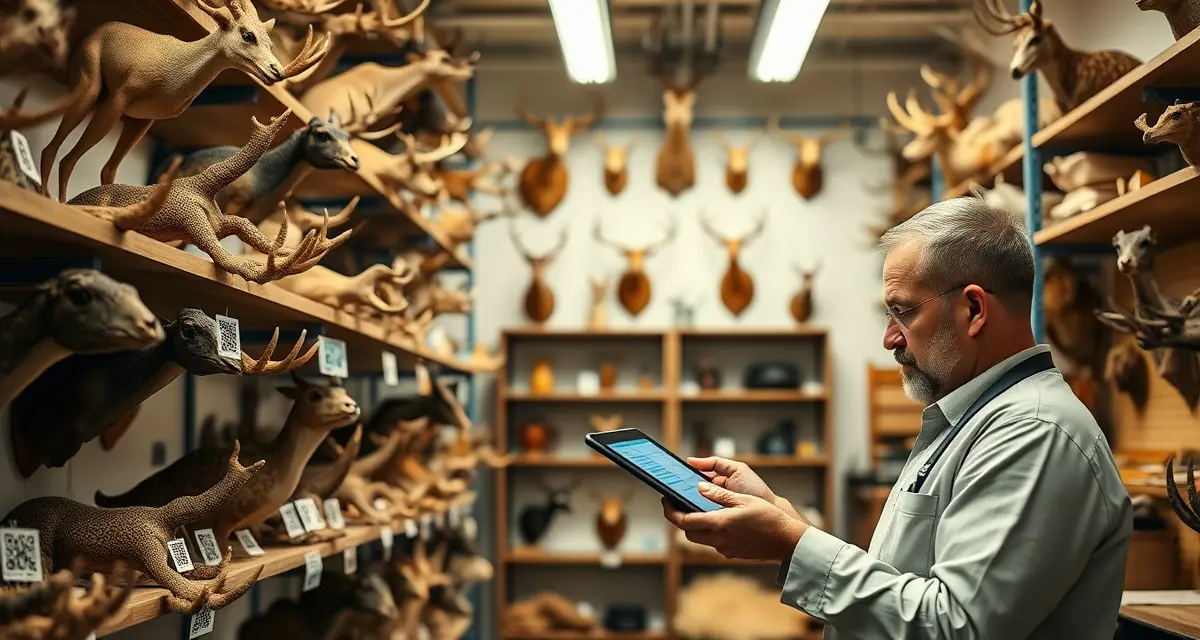
MountChief assigns every specimen a unique QR code at intake. The code is printed on a tag that's engineered to survive tanning chemicals, the same chemicals that dissolve standard paper tags in 24 to 48 hours.
Here's the workflow:
At intake: Scan or photograph the specimen. AI identifies the species and fills the form. The QR tag is generated and attached to the specimen.
In cold storage: Scan to confirm the specimen is in inventory and log its location.
At tannery shipment: Scan each hide before it goes in the box. The system logs which hides are in which shipment, which tannery they're going to, and when they're expected back.
When hides return: Scan each one to confirm receipt and update status. Any discrepancies are immediately visible.
On the production floor: Any time a taxidermist picks up a cape, a scan pulls up the complete job record, customer name, mount style, reference photos, voice notes, and any special instructions.
At pickup: Final scan confirms the right mount goes to the right customer. The job is closed.
That chain of custody is timestamped and permanently recorded. If a customer ever disputes the condition of a specimen, you have documentation at every step.
Tannery Tracking: The Biggest Blind Spot in Shop Management
Most shops have decent control over what happens in their four walls. The tannery is a different story.
You ship a batch of 40 deer capes in November. They're gone for 8 to 12 weeks. During that time, you have no visibility unless you call the tannery, which takes time, and the answer is often "we'll have to look for it and call you back."
Where's My Mount offers a client portal but zero shop management backend. There's no tannery tracking in any competing product. MountChief is the only taxidermy software that gives you real-time visibility into what's at the tannery, when it shipped, and when it's due back.
When a customer calls in January and asks about their deer shoulder mount, you can tell them exactly where their hide is without picking up the phone to call the tannery.
Customer-Facing Tracking
Every job in MountChief generates a customer tracking link. The customer gets it at intake, via text or email, and can check their status anytime.
The portal shows:
- Current production stage
- Tannery status when applicable
- Estimated completion range
- Milestone photos when added
- Pickup instructions when ready
Shops using MountChief report 90% fewer inbound status calls. That's not a rounding error, that's getting two hours of your day back.
The Difference Between a Portal and Real Job Tracking
Where's My Mount is $30 per month for a client portal. Hunters can log in and see a status. But that status has to be manually updated by someone at your shop. There's no AI intake, no QR tracking, no tannery visibility.
MountChief's portal updates automatically as jobs move through production stages. The customer sees tannery status without you having to do anything. When the hide comes back and you scan it, that updates the portal. When you mark a mount complete, the customer gets a text.
What Happens When Things Go Wrong
Even with good systems, problems happen. Tanneries lose hides occasionally. Specimens arrive damaged. A mix-up slips through.
With a paper system, your only option is your memory and whatever the tannery can dig up. With digital tracking, you have:
- Timestamped intake photos showing condition at drop-off
- QR scan history showing every handling point
- Tannery shipment records showing exactly which hides went in which box
- The tannery's own records cross-referenced against yours
That documentation changes everything when you're dealing with a liability claim or a tannery dispute.
Related Articles
- Turkey Taxidermy Job Tracking: Manage Spring Season Fan and Full-Body Mounts
- Bear Taxidermy Job Tracking: Manage High-Risk High-Value Specimens
- Deer Taxidermy Job Tracking: Manage Whitetail Season Volume
- Exotic Species Taxidermy: CITES Compliance and Job Tracking
FAQ
How do you track taxidermy jobs?
The most reliable system is QR code tags at intake linked to a digital job record. Each tag survives the tannery process and connects every physical specimen to its complete history. Software like MountChief automates this process, no manual updating required at each stage.
What happens if a specimen gets mixed up?
Without documentation, a mix-up is your word against a customer's. With digital job tracking, you have timestamped intake photos, QR scan history at each production stage, and tannery shipment records. Most disputes resolve quickly when you can show exactly what happened and when. Prevention is better, QR tracking eliminates most mix-up opportunities before they occur.
Do QR codes work in tannery conditions?
Standard QR codes on paper or standard labels don't. MountChief uses tags specifically engineered for tannery environments, they survive the chemical bath and physical handling that destroys conventional labels. Taxidermists who've tried labeling solutions not designed for the tannery consistently report tag failures.
How does this apply to solo taxidermy shops?
The principles in this guide apply to solo shops just as they do to larger operations, though the scale differs. A single-person shop may have lower absolute volume but faces the same documentation, compliance, and customer communication requirements. The practical advice here scales down to any shop size.
What is the most common mistake taxidermists make with taxidermy job tracking?
The most common mistake is treating taxidermy job tracking as an afterthought rather than building it into the standard workflow from the start. Shops that encounter problems in this area typically did not establish clear processes before season, which means every situation becomes a one-off decision rather than a standard response.
Try These Free Tools
Put these insights into practice with our free calculators and planners:
Sources
- National Taxidermists Association (NTA)
- US Fish & Wildlife Service
- Small Business Administration (SBA)
Get Started with MountChief
Compliance mistakes and missed customer updates cost taxidermy shops real money. MountChief centralizes specimen tracking, documentation, and communication so those gaps close.