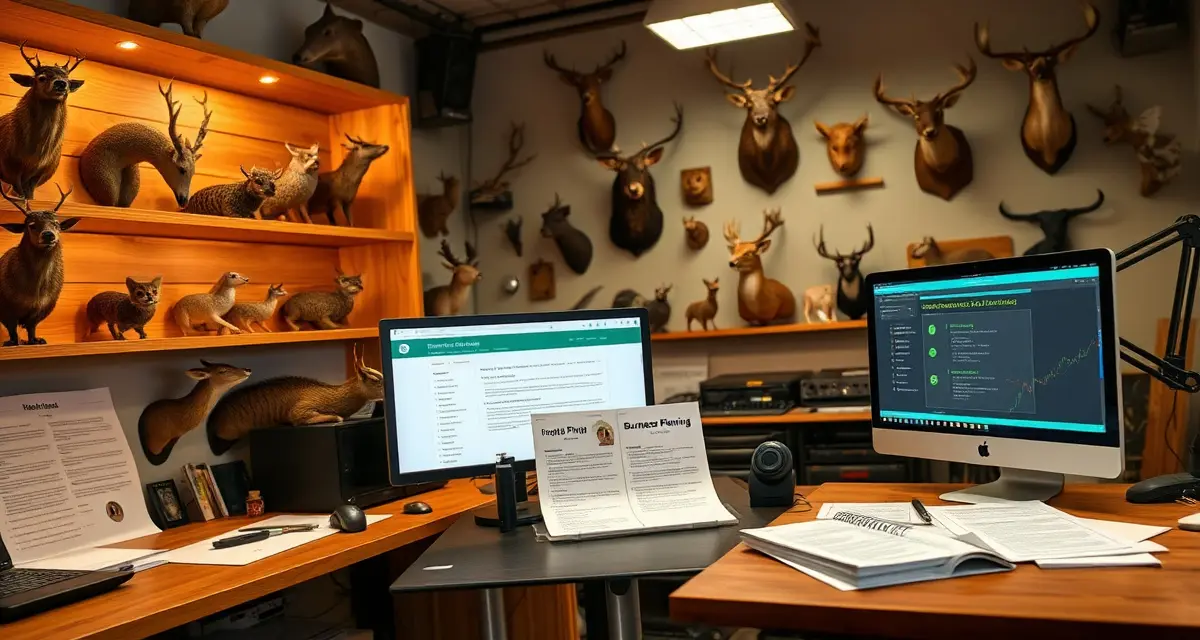
Taxidermy Shop Business Grants and Funding Resources
USDA Rural Business Development Grants cover small rural service businesses like taxidermy shops - and most taxidermists don't know they exist. These grants fund business planning, training, and operational improvements for eligible rural businesses. If your shop is in a rural area, which most taxidermy shops are, you may qualify for funding that doesn't require repayment.
Grants for taxidermy shops aren't abundant, but the funding programs that exist are underutilized. Most taxidermists simply aren't aware that programs designed for rural small businesses apply to their trade. This guide covers what's available, how to apply, and what realistic expectations look like.
TL;DR
- These are often more accessible for very small taxidermy operations that need $10,000-$25,000 for equipment or working capital.
- If your shop is in a rural area, which most taxidermy shops are, you may qualify for funding that doesn't require repayment.
- Grants range from a few thousand dollars to $50,000 depending on the program and project.
- catch is that RBDG grants are competitive and require an application with a project plan.
- SBA 7(a) Loans are the most common SBA product.
- Loan amounts range from a few thousand dollars to $5 million, though taxidermy shop loans typically fall in the $25,000-$150,000 range for equipment and facility work.
USDA Rural Business Development Grants
The USDA Rural Business Development Grant (RBDG) program funds training and technical assistance, business planning, and operational improvements for small rural businesses. Grants range from a few thousand dollars to $50,000 depending on the program and project.
Eligibility requirements:
- Business located in a rural area (typically outside cities with more than 50,000 people)
- Business with fewer than 50 employees
- Business owner with demonstrated need
Taxidermy shops typically qualify on all three criteria. The catch is that RBDG grants are competitive and require an application with a project plan. Funding for general operating expenses is rarely approved - grants typically cover specific projects: equipment purchases, training programs, or facility improvements with defined outcomes.
To find RBDG funding opportunities, contact your local USDA Rural Development office. Each state has a state office that administers rural development grants and can tell you what programs are currently funded in your area.
SBA Loan Programs
The Small Business Administration doesn't give grants to for-profit businesses in most programs - but SBA loan guarantees make it easier to get bank financing for equipment and expansion.
SBA 7(a) Loans are the most common SBA product. A taxidermist using an SBA 7(a) loan to purchase a walk-in freezer, additional forms inventory, or expand their facility gets the benefit of an SBA guarantee, which allows banks to lend to small businesses that don't qualify for conventional financing.
Loan amounts range from a few thousand dollars to $5 million, though taxidermy shop loans typically fall in the $25,000-$150,000 range for equipment and facility work.
SBA Microloans are for smaller amounts - up to $50,000 - and are administered through nonprofit intermediaries. These are often more accessible for very small taxidermy operations that need $10,000-$25,000 for equipment or working capital.
To apply for an SBA loan, contact a participating SBA lender (your local community bank or credit union often participates) or use the SBA's Lender Match tool at sba.gov.
State-Level Small Business Grants and Programs
Every state has its own small business development programs, and many states with significant hunting industries have programs specifically supporting rural businesses. These vary significantly by state and change as programs open and close, so direct research is required.
State economic development offices administer many small business grant and loan programs. Search for your state's economic development office or business development center.
Rural development authorities exist in many states and administer grants for rural businesses separate from the federal USDA program.
Agricultural business programs sometimes cover taxidermy shops as part of the agricultural service industry. This is a stretch in some states and a clear fit in others - worth asking about.
The best approach: contact your state's Small Business Development Center (SBDC). SBDCs provide free consulting and can tell you exactly what state programs you're eligible for. Find your nearest SBDC at americassbdc.org.
Equipment Financing Options
For taxidermy equipment purchases specifically - walk-in freezers, freeze-dry units, airbrush setups, form inventory - equipment financing is often more accessible than a general business loan.
Equipment financing uses the equipment itself as collateral, which reduces lender risk and typically results in better terms than unsecured financing. A taxidermist looking to purchase a $15,000 walk-in freezer can often finance it directly through an equipment lender with the freezer as collateral.
Several online lenders specialize in small business equipment financing: Currency, Balboa Capital, and National Business Capital are commonly used by small businesses for equipment under $100,000.
Microenterprise and Community Development Programs
CDFI (Community Development Financial Institution) loans are designed specifically for small businesses that don't qualify for traditional bank financing. CDFIs operate as nonprofits and have more flexible underwriting than conventional banks.
For a taxidermy shop owner with limited credit history or a newer business without extensive financial records, a CDFI loan may be more accessible than a bank loan. CDFIs typically provide loans from $1,000 to $250,000.
Find CDFIs serving your area at the CDFI Fund website (cdfifund.gov) or through your state SBDC.
Getting Ready to Apply
Grant and loan applications for small businesses require documentation that most taxidermists don't have organized. Before approaching any funding source, prepare:
- Two to three years of business tax returns
- A current profit and loss statement
- A description of what you need the money for and how it will improve the business
- Business bank statements for the past 6-12 months
If you're seeking a grant specifically, you'll also need a project narrative that describes the specific outcomes the grant will fund. "I want to grow my business" isn't a sufficient project description. "I will purchase a walk-in freezer to increase my intake capacity from 150 to 300 mounts per season, serving an underserved rural market" is the kind of specific, outcome-oriented project description that grant reviewers respond to.
For the software side of your business development, see MountChief [taxidermy shop management software](https://mountchief.com/taxidermy-shop-management-software). For a full opening and startup checklist, see the taxidermy shop opening checklist.
Frequently Asked Questions
Are there grants available for taxidermy shop owners?
Yes, though they're not abundant or easy to find. USDA Rural Business Development Grants are the most broadly applicable source of grant funding for taxidermy shops - most shops in rural areas qualify by location and size. State economic development offices and CDFIs offer additional grant and low-interest loan programs that vary by state. The key is that grant funding typically covers specific projects with defined outcomes, not general operating expenses. A taxidermist seeking a grant needs a clear project: equipment purchase, training program, or facility improvement with a stated business impact. Free consulting from your state's Small Business Development Center (SBDC) is the best first step - they know what's available in your state.
Can I get an SBA loan for taxidermy equipment?
Yes. SBA 7(a) loans and SBA Microloans are available to taxidermy shops that qualify. These aren't direct loans from the SBA - the SBA guarantees a portion of the loan, which allows participating banks to lend to small businesses that might not otherwise qualify for conventional financing. For equipment purchases specifically, equipment financing (where the equipment serves as collateral) is often more accessible and faster than an SBA loan. A $15,000-$30,000 walk-in freezer or a freeze-dry unit can typically be financed through equipment lenders with better terms than general business loans. Start with your local community bank or credit union - many participate in SBA programs and offer equipment financing.
What state funding programs support rural small businesses like taxidermy shops?
State programs vary significantly and change frequently, so direct research is necessary. Contact your state's Small Business Development Center (SBDC) - free consulting available at americassbdc.org - for current programs in your state. Most states have economic development grant programs, rural business assistance programs, and sometimes hunting industry-specific support in states with large hunting economies. States with large hunting populations (Texas, Pennsylvania, Wisconsin, Michigan, Ohio) tend to have more active small business support infrastructure in rural hunting communities. Your SBDC counselor can identify current programs, help you prepare an application, and advise on the strongest project descriptions for competitive grant applications.
How does this apply to solo taxidermy shops?
The principles in this guide apply to solo shops just as they do to larger operations, though the scale differs. A single-person shop may have lower absolute volume but faces the same documentation, compliance, and customer communication requirements. The practical advice here scales down to any shop size.
What is the most common mistake taxidermists make with taxidermy shop grant resources?
The most common mistake is treating taxidermy shop grant resources as an afterthought rather than building it into the standard workflow from the start. Shops that encounter problems in this area typically did not establish clear processes before season, which means every situation becomes a one-off decision rather than a standard response.
Related Articles
- Taxidermy Shop Google My Business: Get Found During Hunting Season
- Taxidermy Shop Management Hub: All Resources in One Place
- Taxidermy Shop Open House: How to Host an Event That Generates Business
Try These Free Tools
Put these insights into practice with our free calculators and planners:
Sources
- National Taxidermists Association (NTA)
- US Fish & Wildlife Service
- Small Business Administration (SBA)
Get Started with MountChief
When every mount has its own timeline, paperwork, and customer expectations, staying organized is half the job. MountChief gives you a single system to manage all of it.