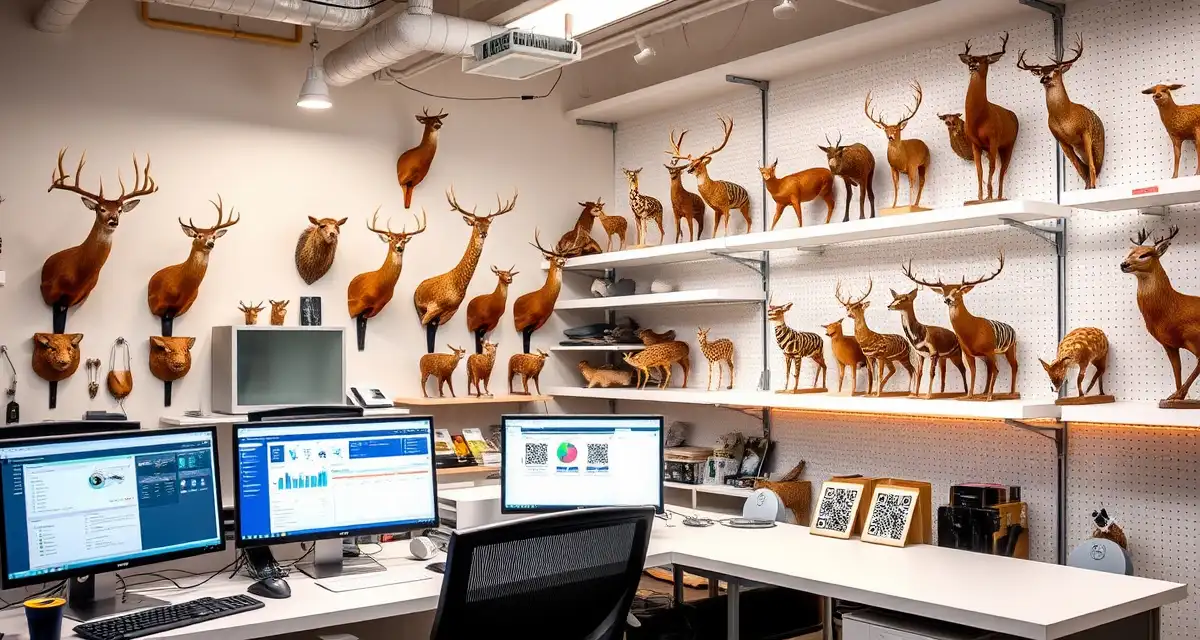
Taxidermy Shop Technology Guide: Tools Every Modern Shop Should Have
Technology adoption separates the top 20 percent of taxidermy shops from the rest. That's not a vague claim, it shows up in their customer satisfaction, their compliance record, their ability to handle volume, and their ability to grow.
The shops still running paper binders and sticky notes aren't wrong to be cautious about change. But they're carrying operational overhead that limits what they can do. And that gap between paper-based shops and software-using shops is widening every year.
Here's the complete technology picture for a modern taxidermy operation, what each tool does, why it matters, and roughly what it costs.
TL;DR
- On a busy intake day with 15 deer coming in, that time difference is several hours returned to production.
- For a shop with 50 to 200 simultaneous jobs, this visibility is what makes management possible.
- Shops with digital records pass inspections 40 percent faster than shops with paper records because the information is instantly accessible.
- Technology adoption separates the top 20 percent of taxidermy shops from the rest.
- Most shops implementing customer portals see inbound status calls drop by 80 to 95 percent.
- For a shop fielding 30 to 50 status calls per week during season, that represents several hours of reclaimed production time per week.
The Core Tech Stack
There are five technology categories a modern taxidermy shop needs. Some platforms cover all five. Others require combining separate tools. Either way, a shop missing more than one of these categories is running with a significant gap.
1. Intake Technology: AI-Powered Intake Systems
The intake moment is where everything downstream gets set up correctly or set up for failure. Traditional paper intake is slow (8 to 12 minutes per specimen), inconsistent (some fields get skipped when you're busy), and creates documentation that's hard to search or reference later.
AI-powered intake changes this in three ways:
Speed. Guided intake workflows that auto-capture photo data and pre-fill common fields reduce per-specimen intake time to 4 to 5 minutes. On a busy intake day with 15 deer coming in, that time difference is several hours returned to production.
Completeness. Required fields that can't be skipped prevent documentation gaps. If the harvest tag number isn't entered, the intake doesn't close. If the regulated species permit isn't captured, the bird doesn't get a job number.
Photo integration. Condition photos attached to the intake record at the time of intake are the best protection against disputes later. Paper intake often includes a written condition description. Photos are objective in a way that written descriptions are not.
Modern shops use AI intake as the foundation of their entire tracking system.
2. Tracking Technology: QR Tags and Job Tracking
Once a specimen is in your shop, you need to be able to locate it, identify it, and track its progress without searching through papers or relying on memory.
QR Tags: Waterproof, scannable tags applied to each specimen at intake. The QR code connects the physical hide to the digital record. Scanning it pulls up the complete intake information, customer name, mount specifications, condition photos, job stage. Tags follow specimens through tannery shipment and return, keeping the physical and digital record connected throughout.
Job tracking software shows all active jobs organized by stage, at intake, at tannery, in production, finishing, ready for pickup. For a shop with 50 to 200 simultaneous jobs, this visibility is what makes management possible.
For tannery tracking specifically: you need to know which jobs went to which tannery, when they shipped, and when they returned. A tracking system that covers this replaces the whiteboard-and-spreadsheet combination most shops currently use.
3. Customer Communication Technology: Client Portal
Before customer portals, the only way for hunters to check on their mount was to call. Status calls are time-consuming for the shop and don't give customers the real-time information they want.
A customer portal gives hunters direct access to their job status through a web link, no app required. They can see where their mount is in the production process at any time of day or night without involving shop staff.
The impact on phone volume is substantial. Most shops implementing customer portals see inbound status calls drop by 80 to 95 percent. For a shop fielding 30 to 50 status calls per week during season, that represents several hours of reclaimed production time per week.
Portals are especially valuable for out-of-state hunters, who can't stop by and have no other way to get information without calling. Shops in states with significant non-resident hunting (Colorado, Iowa, Montana, Kansas) find portals especially high-value.
4. Financial Technology: Digital Invoicing and Payment Processing
Paper invoices get lost. Writing up a paper invoice at intake and then reconciling it at pickup is an administrative process that has many failure points.
Digital invoicing tied directly to the intake record creates a clean billing trail:
- Deposit collected at intake, applied to the invoice
- Progress payments (if applicable) tracked against the same invoice
- Final invoice generated automatically when the job is marked ready
- Customer can see their balance through the portal before pickup
Payment processing integration means you're not manually entering card numbers at a separate terminal. Digital payment is faster, creates a clean record, and avoids the bad check problem that still affects shops accepting personal checks.
5. Compliance Technology: Automated Flags and Record Systems
Wildlife compliance is not optional, and the regulations are complex. Federal migratory bird permits, state deer tag requirements, CITES documentation for exotics. Each regulated species category has its own documentation requirements.
Compliance technology means your intake system knows which species require special documentation and requires that documentation to be completed before the intake closes. It's not a reminder. It's a hard stop.
Digital compliance records that are organized, searchable, and exportable are also the difference between a smooth wildlife inspection and a stressful one. Shops with digital records pass inspections 40 percent faster than shops with paper records because the information is instantly accessible.
What a Complete Technology Setup Costs
A DIY stack (separate tools for invoicing, customer communication, job tracking, and compliance) typically costs $180 to $250 per month when you add up all the subscriptions. You're also managing multiple platforms that don't talk to each other.
An integrated taxidermy shop management platform like MountChief covers all five categories in a single system. The QR tracking integrates with intake. The customer portal pulls from the job tracking database. Compliance flags are built into the intake workflow.
All-in-one pricing is typically more competitive than building the same capability from separate tools. And the integration eliminates the data management headaches of managing disconnected platforms.
Is Technology Difficult to Implement?
The fear most taxidermists have about switching to software is that implementation will be disruptive, especially if they're mid-season. That concern is understandable.
Modern taxidermy management platforms are designed for people who know taxidermy, not software. Onboarding is measured in hours, not weeks. The QR tag system is as simple as printing tags and scanning them. The underlying technology is invisible.
The best time to make the switch is the off-season. January through March gives you time to learn the system, migrate any active jobs, and be fully operational before the next deer season.
The second-best time is right now, because every season you stay on paper is another season with the operational overhead that paper creates.
Frequently Asked Questions
What technology should a modern taxidermy shop use?
At minimum: AI-powered intake, QR tag tracking, a customer portal for job status communication, digital invoicing and payment processing, and compliance flagging for regulated species. These five categories cover the core operational needs of a professional taxidermy operation. Most leading shops use an integrated platform that covers all five rather than separate tools for each.
How much does a complete taxidermy shop technology setup cost?
A DIY stack of separate tools for each function typically runs $180 to $250 per month. An integrated all-in-one platform typically costs significantly less and eliminates the integration headaches of managing separate systems. Most shops find the ROI on taxidermy management software is clear within the first season based on time savings alone.
Is technology difficult to implement in an established taxidermy shop?
Modern taxidermy management platforms are built for taxidermists, not technology professionals. Onboarding takes hours, not weeks. The best implementation window is the off-season (January through March) giving you time to learn before the next rush. Mid-season implementation is possible but requires more coordination. The short-term learning investment is consistently worth the long-term operational improvement.
How does this apply to solo taxidermy shops?
The principles in this guide apply to solo shops just as they do to larger operations, though the scale differs. A single-person shop may have lower absolute volume but faces the same documentation, compliance, and customer communication requirements. The practical advice here scales down to any shop size.
What is the most common mistake taxidermists make with taxidermy shop technology guide?
The most common mistake is treating taxidermy shop technology guide as an afterthought rather than building it into the standard workflow from the start. Shops that encounter problems in this area typically did not establish clear processes before season, which means every situation becomes a one-off decision rather than a standard response.
Related Articles
- Post-Deer-Season Review: Questions Every Taxidermist Should Answer
- Full Taxidermy Shop Pricing Guide: Every Mount Type for 2026
Try These Free Tools
Put these insights into practice with our free calculators and planners:
Sources
- National Taxidermists Association (NTA)
- US Fish & Wildlife Service
- Small Business Administration (SBA)
Get Started with MountChief
Keeping compliance records accurate, customers informed, and specimens on schedule takes more than a whiteboard. MountChief gives taxidermists the tools to manage it all digitally.