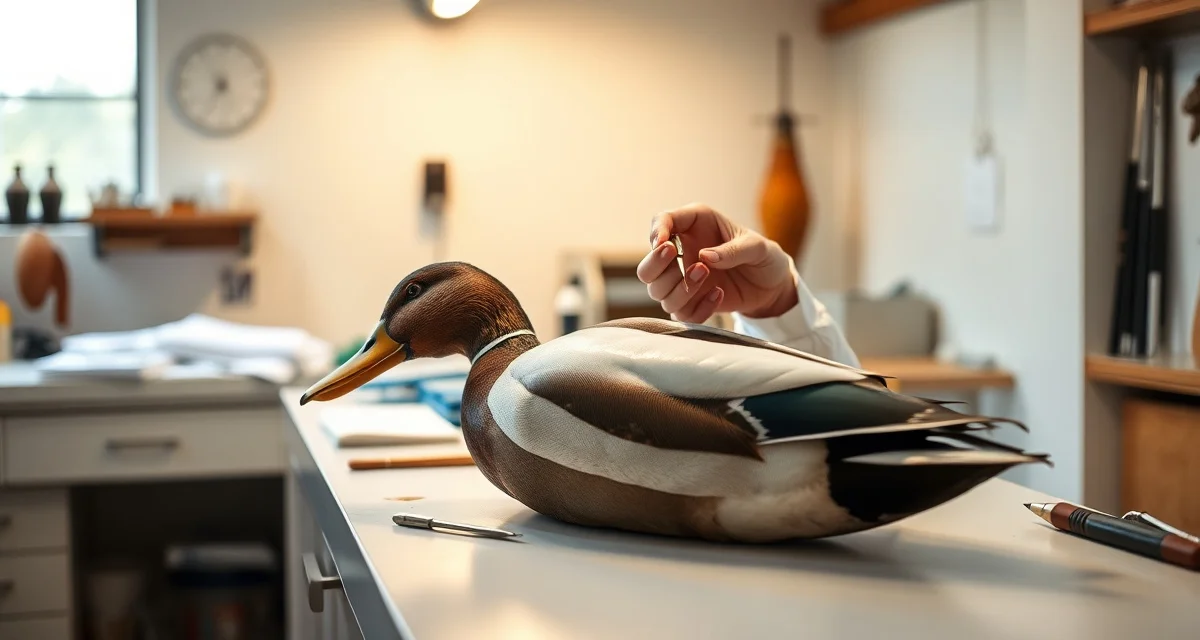
The Complete Waterfowl Taxidermy Season Guide: Duck and Goose
Federal migratory bird permit verification is required before accepting any waterfowl. This single compliance requirement creates a liability that surprises many deer-focused taxidermists who casually begin accepting ducks or geese without understanding what they've taken on.
Waterfowl season runs September through January, overlapping directly with deer firearms season in most states. Managing both simultaneously is the operational reality for any shop that accepts birds. This guide covers the complete waterfowl taxidermy operation, from federal compliance to intake protocols to production workflow to customer communication.
TL;DR
- Note plumage condition, molting birds or partial-plumage birds need to be documented accurately for mount expectations.
- This prevents a situation where you're rushing through duck intake because 15 deer just walked in the door.
- Under federal regulation, your records for migratory birds must be maintained and available for inspection.
- You need a current USFWS taxidermist permit to possess any migratory bird species, including all ducks and geese.
- Your customers need a valid federal Duck Stamp and a state license with appropriate waterfowl authorization for the year they harvested the bird.
- Legal to mount but note that wood ducks are a species with specific population monitoring. Documentation requirements are the same as other ducks.
Federal Compliance: The Foundation of Waterfowl Taxidermy
The Migratory Bird Treaty Act (MBTA) is federal law. Every duck, goose, dove, and crane is a protected species regardless of state hunting regulations. Accepting any of these birds without proper documentation is a federal offense.
For every waterfowl specimen you accept:
Customer federal documentation required:
- Federal Duck Stamp (Migratory Bird Hunting and Conservation Stamp), every waterfowl hunter is legally required to have one
- State hunting license with appropriate waterfowl permit
- Any required HIP (Harvest Information Program) registration
- Harvest state and county
Banded birds:
- If the bird carries a federal or state leg band, document the band number
- Banded birds are under additional reporting obligations for the hunter
- Record the band information in your intake record
Taxidermist federal permit:
- Your USFWS taxidermist permit must be current to possess waterfowl
- This is separate from your state taxidermy license
- Renewal deadlines vary, set a reminder at least 90 days before expiration
Do not accept any waterfowl without verifying all of the above. The penalty for receiving undocumented migratory birds starts at substantial fines and can include criminal charges.
The Waterfowl Taxidermy Season Calendar
September: Early teal season opens in many states. Volume is low but compliance requirements are identical.
October: Main duck season begins in most states. Northern pintails and early migrants move through. Volume begins building.
November: Peak duck season in most states. Direct overlap with firearms deer season. This is the highest-pressure operational period, managing duck intake alongside deer intake requires systems.
December: Late duck seasons continue. Canada goose seasons often peak or extend into December. Snow goose conservation orders begin in some areas.
January: Final duck and goose seasons close in most states. Late Canada goose seasons extend into January in many states.
Winter/Spring: Light goose conservation order runs January through March in many states, creating a small secondary intake window.
Managing Waterfowl and Deer Season Simultaneously
This is the central operational challenge of a full-service shop. During peak November, you may be processing dozens of deer while also accepting ducks and geese that require different compliance documentation, different intake fields, and different production workflows.
The solution is separate intake workflows by species. In MountChief, the waterfowl tracking workflow maintains species-specific fields that prevent deer-focused intake habits from creating compliance gaps on waterfowl.
Practical separation strategies:
Dedicated waterfowl intake hours: Consider setting specific drop-off hours for waterfowl during peak deer season. This prevents a situation where you're rushing through duck intake because 15 deer just walked in the door.
Species-specific intake checklists: Keep a laminated waterfowl compliance checklist at your intake station so federal documentation steps are never skipped even on your busiest day.
Separate freezer space: Mixing deer capes and birds in the same freezer creates identification issues. Maintain dedicated bird storage, clearly labeled by species.
Species-Specific Intake Requirements
Mallards and Common Duck Species
Standard federal documentation requirements apply. Document species at intake using visual identification. Note plumage condition, molting birds or partial-plumage birds need to be documented accurately for mount expectations.
Canada Geese
Large specimens requiring more storage space. Document harvest location carefully, Canada geese have multiple subspecies with different size ranges. Confirm subspecies if the customer knows it.
Snow and Blue Geese
Light goose conservation order creates a separate regulatory framework in some states. Verify the specific regulations for the harvest state.
Wood Ducks
Legal to mount but note that wood ducks are a species with specific population monitoring. Documentation requirements are the same as other ducks.
Swans
Trumpeter and tundra swans are legal to hunt in limited areas. Federal documentation requirements are identical. If you receive a swan, verify the harvest authorization is complete before accepting.
Banded Birds
Any band must be recorded. The customer is typically required to report the band to the USGS Bird Banding Laboratory. You don't file the report, but you should document the band number in your records and confirm the customer has reported it.
Duck and Goose Production Timeline
Waterfowl production is slower than deer work in most cases:
Skinning and preservation: 2-4 hours per bird depending on size and species
Freeze-dry (if applicable): 3-6 months for full-body freeze-dry
Traditional mounting: 30-60 days in production after skin preparation
Customer timeline expectations at intake:
For traditionally mounted birds: 6-12 months is standard
For freeze-dry birds: 12-18 months given freeze-dry time
Communicate these ranges clearly at intake and document them in the signed intake form. Waterfowl customers sometimes expect faster turnaround than deer customers because the physical specimen is smaller.
Waterfowl Records You Must Keep by Law
Under federal regulation, your records for migratory birds must be maintained and available for inspection. You should keep:
- Complete intake record for every bird (customer ID, species, harvest info, date received)
- Federal license documentation for every customer
- Band records for every banded bird
- Disposition record (what happened to every bird in your possession, mounted and returned, or other)
The wildlife compliance software for taxidermy automates most of these records at intake, creating a complete and searchable archive.
Records should be maintained for a minimum of five years. Federal wildlife officers can request records from prior seasons.
Frequently Asked Questions
What federal permits are required for waterfowl taxidermy?
You need a current USFWS taxidermist permit to possess any migratory bird species, including all ducks and geese. Your customers need a valid federal Duck Stamp and a state license with appropriate waterfowl authorization for the year they harvested the bird. At intake, you must verify and document the customer's federal license information. Accepting waterfowl without this documentation is a federal offense regardless of whether the customer had a valid stamp. Verify your own USFWS permit renewal date annually and set calendar reminders well in advance.
How do I manage waterfowl and deer season intake simultaneously?
The key is species-specific intake workflows that don't allow deer-season habits to create compliance gaps on birds. Use a dedicated waterfowl intake checklist that includes all federal documentation steps. Consider setting specific hours for bird drop-offs during peak deer season to prevent rushing. Maintain separate freezer space for birds and deer capes to prevent identification confusion. Use management software that maintains separate workflows by species so waterfowl compliance fields are always captured. The overlap period, peak November, is the highest-risk window for compliance shortcuts.
What waterfowl records must I keep by law?
Federal regulations require you to maintain complete records for every migratory bird in your possession, including the customer's name and contact information, species, harvest state and county, federal license documentation, and any band information. You must also maintain a disposition record showing what happened to each bird. Records must be available for inspection by federal wildlife officers without advance notice. The retention period is typically five years minimum. Digital records that can be searched and produced instantly during inspections are significantly more practical than paper records for compliance purposes.
How does this apply to solo taxidermy shops?
The principles in this guide apply to solo shops just as they do to larger operations, though the scale differs. A single-person shop may have lower absolute volume but faces the same documentation, compliance, and customer communication requirements. The practical advice here scales down to any shop size.
What is the most common mistake taxidermists make with taxidermy shop waterfowl season complete?
The most common mistake is treating taxidermy shop waterfowl season complete as an afterthought rather than building it into the standard workflow from the start. Shops that encounter problems in this area typically did not establish clear processes before season, which means every situation becomes a one-off decision rather than a standard response.
Related Articles
- Elk Season Taxidermy Management Guide: Western Shop Operations
- Taxidermy Shop Insurance: Complete Coverage Guide for Shop Owners
Try These Free Tools
Put these insights into practice with our free calculators and planners:
Sources
- National Taxidermists Association (NTA)
- US Fish & Wildlife Service
- Ducks Unlimited
- Small Business Administration (SBA)
Get Started with MountChief
Fish and waterfowl jobs require the same organized intake and tracking as big-game work. MountChief handles every species type with the same efficient intake system, customer portal, and production tracking. Try MountChief to manage all your species types in one organized platform.