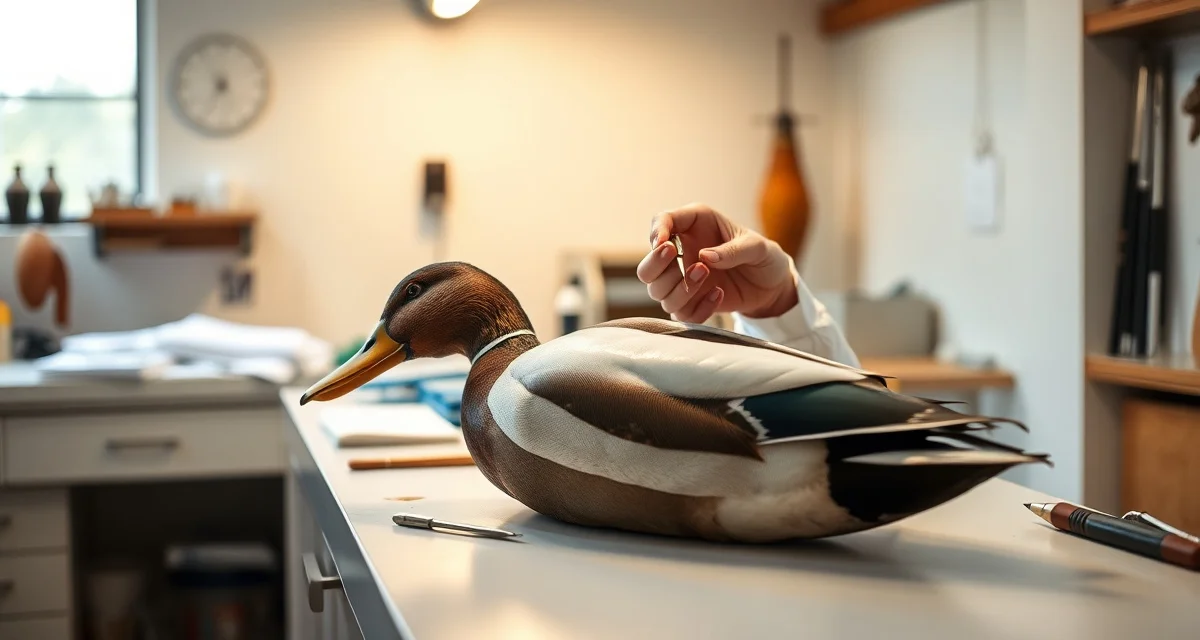
Waterfowl Season Management Guide for Taxidermy Shops
Waterfowl work is different from big game in almost every way. Faster turnaround. Different skin prep. More complex compliance. Customers who care intensely about species accuracy. And federal documentation requirements that carry criminal penalties if you get them wrong.
For shops that do any significant duck or goose volume, the fall and winter waterfowl season needs its own management system. Running it through the same process you use for deer capes invites problems.
This guide covers everything specific to managing waterfowl taxidermy from intake through delivery.
TL;DR
- For most shops, 8-14 weeks is typical for a standard full-body duck mount.
- A customer who brings in a duck in November and doesn't hear anything for 10 weeks might be puzzled, deer hunters have been conditioned to wait 8-12 months; duck hunters haven't.
- For a duck full-body mount, you're looking at 8-12 weeks."
- For shops that do any significant duck or goose volume, the fall and winter waterfowl season needs its own management system.
- If the customer doesn't have it with them, they need to bring it before you start work.
- If that oil isn't removed before mounting, it will migrate into the mounted skin over time, discoloring feathers and degrading the mount.
Part 1: Federal Compliance, Non-Negotiable
Waterfowl compliance is the area where taxidermists face the most serious federal exposure. The Migratory Bird Treaty Act (MBTA) makes possession of migratory bird parts a federal offense without proper documentation. As a commercial taxidermist, you're protected when you have the right paperwork on file. When you don't, you're exposed even if you did nothing intentionally wrong.
What You Must Have at Intake for Every Waterfowl Specimen
Federal Migratory Bird Hunting and Conservation Stamp (Duck Stamp)
This is the federal permit every waterfowl hunter must purchase. It's sold at post offices and hunting license vendors. A valid duck stamp is signed by the hunter. If the customer doesn't have it with them, they need to bring it before you start work. No duck stamp on file = no legal possession on your part.
State Migratory Bird Hunting License
Most states require a separate migratory bird permit or endorsement beyond the basic hunting license. Know your state's requirements and the requirements of the top states your customers hunt in.
Harvest Information Program (HIP) Certification
Many states require HIP certification as part of the waterfowl hunting process. Some require documentation at intake. Check your state's requirements.
Species and Sex Documentation
Migratory bird regulations set season dates and bag limits by species and sex. You need to document what species you're receiving. Some species have very restrictive seasons, a poorly documented intake can create compliance questions.
MountChief's Waterfowl Compliance Fields
MountChief's intake form for waterfowl automatically triggers additional fields when a migratory bird species is selected:
- Federal duck stamp number
- Duck stamp state (signed or unsigned, it must be signed)
- State migratory bird permit/endorsement
- HIP certification if applicable
The job won't advance past received status without these fields being confirmed or specifically overridden with a reason documented. That gate prevents the situation where you've got three mallards in your staging area six weeks into the season with no federal documentation on file.
Part 2: Waterfowl Species Identification at Intake
If you're doing duck and goose work at any volume, you need to be confident in species identification. Not because you're doing anything wrong, but because your documentation needs to match the actual specimen, and because some species have meaningfully different regulations, seasons, and values to hunters.
Common Ducks You'll See
Mallard (Anas platyrhynchos), Most common. Drake: iridescent green head, yellow bill, purple speculum with white borders. Hen: mottled brown, orange bill, same speculum pattern.
Wood Duck (Aix sponsa), Drakes are unmistakable. Hens are grayish with distinctive white teardrop eye ring. One of the most requested mounts among waterfowl hunters.
Teal (Blue-winged, Green-winged, Cinnamon), Small ducks, very popular for mounting. Distinguish by wing patch color and body markings. Season dates often differ from mallards.
Pintail (Anas acuta), Long pintail feathers on drakes. Slim profile. Popular for full-body mounts.
Canvasback (Aythya valisineria), Diving duck with distinctive rusty red head on drakes. Chestnut back. Specific season restrictions in many states.
Goldeneye (Common and Barrow's), Diving ducks, distinctive head coloration. Less commonly mounted.
Scaup (Greater and Lesser), Very similar species. Head shape is primary distinction. Customer may or may not care about the distinction, but your records should be accurate.
Bufflehead, Small diving duck, bold black-and-white pattern on drakes. Increasingly popular for mounting.
Geese
Canada Goose, Multiple subspecies ranging from the giant Canada goose (very large body) to the cackling goose (much smaller, sometimes mistakenly identified as a small Canada). Regulations sometimes differ.
Snow Goose and Ross's Goose, White geese with light phase and dark phase morphs. Liberal seasons in many areas due to population management concerns. Often mounted in flocks.
Specklebelly (Greater White-fronted Goose), Distinctive orange beak and speckled belly pattern. Popular among avid waterfowlers.
Brant, Coastal goose, less common inland but occasionally brought to shops near coastal flyways.
Why Accurate Species ID Matters
Your documentation must accurately reflect the species in your possession. If a customer tells you it's a mallard and it's actually a pintail (which may have different season restrictions), your documentation is wrong. Document what you see, not just what the customer says.
MountChief's AI intake can assist with species identification, photograph the specimen and the AI suggests species and sex based on plumage characteristics. You confirm. This catches the occasional misidentification at intake before it becomes a documentation problem.
Part 3: Waterfowl Skin Prep, What's Different
Big game hides go to a chemical tannery. Waterfowl don't. Bird skin preservation uses borax, freeze-drying, or wire-and-form construction depending on the piece and technique. Your waterfowl skinning and prep process doesn't involve tannery shipping, which changes the timeline significantly.
Standard Waterfowl Mount Timeline
For a typical full-body duck or goose mount:
- Skinning and fleshing: 1-3 hours depending on species and experience
- Degreasing (critical for diving ducks and fatty species): 24-72 hours
- Borax preservation and drying: several weeks
- Form fitting and mounting: 2-6 hours depending on pose and complexity
- Feather cleaning and setting: additional hours on complex poses
Total shop timeline: 6-14 weeks for most duck mounts. Faster than deer, no tannery wait. This matters for setting customer expectations.
Degreasing: The Most Critical Step for Waterfowl
Waterfowl skin contains significantly more oil than deer hide. If that oil isn't removed before mounting, it will migrate into the mounted skin over time, discoloring feathers and degrading the mount. This is especially pronounced in diving ducks (scaup, canvasback, bufflehead) and in goose work.
Standard degreasing protocol:
- Use a commercial degreaser (Dawn dish soap is a common choice, as is commercial taxidermy degreaser)
- Work through the skin and feathers, not just the surface
- Multiple wash cycles if needed, rinse and check between cycles
- Make sure degreasing is complete before proceeding to borax treatment
Under-degreased waterfowl mounts will yellow and develop an odor over time. This is a preventable problem that causes customer complaints years after pickup.
Freeze-Dried vs. Traditional Method
Some taxidermists use freeze-drying for waterfowl, especially small ducks and intricate birds. Freeze-drying requires specialized equipment (a freeze-drying unit costs $3,000-$15,000+) but produces excellent results with natural feather positioning.
If you offer freeze-drying, document it clearly at intake, customers should know which method you're using. Some prefer one over the other.
Part 4: Pricing and Customer Communication for Waterfowl
Typical Pricing Ranges
These vary significantly by region and shop volume, but general ranges:
- Duck full-body mount: $175-$350
- Goose full-body mount: $350-$550
- Turkey full-body strutter: $400-$700
- Turkey fan mount (fan, beard, spurs): $100-$200
- Duck wall mount (simpler wing display): $75-$150
Diving ducks, particularly those requiring extensive degreasing, sometimes carry a premium.
What Waterfowl Customers Care About
Waterfowl hunters are often more specific about their mounts than big game hunters. They know the species well, many are serious birders as well as hunters. Common customer requests:
- Specific pose (landing, swimming, wing-spread)
- Decoy placement for diorama-style mounts
- Natural habitat material (water surface, cattails)
- Partner mounts (drake and hen paired)
- Specific species accuracy they'll notice if wrong
Get specific at intake. Don't assume a drake mallard means "standard standing pose on a flat walnut panel." Ask what they want and document it.
Communication Timelines for Waterfowl
Because waterfowl mounts have shorter turnarounds than deer work (no tannery), customers may have higher expectations about communication frequency. A customer who brings in a duck in November and doesn't hear anything for 10 weeks might be puzzled, deer hunters have been conditioned to wait 8-12 months; duck hunters haven't.
Set clear expectations at intake: "Duck work is faster than deer, we don't ship to a tannery. For a duck full-body mount, you're looking at 8-12 weeks."
MountChief's automated stage updates keep waterfowl customers informed without additional work on your part. When the duck moves to "In Production" status, they get a text. When it moves to "Ready for Pickup," they get a text.
Part 5: Managing Waterfowl Season Alongside Deer Season
The bad news: early waterfowl season (September teal, October ducks) overlaps with early deer season intake. Late waterfowl season extends well past December. You're managing both at the same time.
The practical approach: don't treat waterfowl intake as secondary to deer. The compliance requirements are actually more stringent for federal migratory birds than for most deer. A missed duck stamp on file is a more serious documentation gap than a hunting license number you meant to write down.
Use MountChief to manage both species queues simultaneously. The system handles deer, waterfowl, turkey, bear, fish, and exotics in the same queue with species-specific fields and compliance prompts for each.
Stage your waterfowl work to run in parallel with deer, they don't compete for the tannery, so a full deer intake queue doesn't affect your waterfowl timeline. The bench hours are separate, but they're real hours, and your total capacity for the season includes both.
Related Articles
- 5 Ways Ohio Taxidermy Shops Are Winning Deer Season with Software
- 5 Ways Texas Taxidermy Shops Are Managing Deer and Exotic Season
- The Complete Waterfowl Taxidermy Season Guide: Duck and Goose
- Waterfowl Season Preparation for California Taxidermy Shops
FAQ
Is a federal duck stamp required even if the customer only plans to keep the feathers?
Yes. Under the Migratory Bird Treaty Act, commercial possession of migratory bird parts for the purpose of taxidermy requires the proper hunting documentation regardless of which specific parts you're working with. The duck stamp requirement applies to the taxidermist who possesses the parts, not just the hunter in the field.
How do I document a pintail that came in during a season with special pintail restrictions?
Document the species accurately, get the complete hunting license and duck stamp, and note the harvest date and location. If the harvest date or location puts the bird's legality in question, that's the hunter's problem, but accepting and possessing it becomes your problem. When there's any question about whether a bird was legally taken, get the documentation in order before you start work.
What is the typical turnaround time for a full-body duck mount?
For most shops, 8-14 weeks is typical for a standard full-body duck mount. Diving ducks requiring more extensive degreasing may run slightly longer. More complex poses (wing-spread, landing with habitat) take more production hours. Unlike deer work, there's no tannery transit, all the time is bench time, which makes the timeline more predictable and more controllable.
How does this apply to solo taxidermy shops?
The principles in this guide apply to solo shops just as they do to larger operations, though the scale differs. A single-person shop may have lower absolute volume but faces the same documentation, compliance, and customer communication requirements. The practical advice here scales down to any shop size.
What is the most common mistake taxidermists make with waterfowl season taxidermy guide?
The most common mistake is treating waterfowl season taxidermy guide as an afterthought rather than building it into the standard workflow from the start. Shops that encounter problems in this area typically did not establish clear processes before season, which means every situation becomes a one-off decision rather than a standard response.
Try These Free Tools
Put these insights into practice with our free calculators and planners:
Sources
- National Taxidermists Association (NTA)
- US Fish & Wildlife Service
- Ducks Unlimited
- Small Business Administration (SBA)
Get Started with MountChief
Fish and waterfowl jobs require the same organized intake and tracking as big-game work. MountChief handles every species type with the same efficient intake system, customer portal, and production tracking. Try MountChief to manage all your species types in one organized platform.