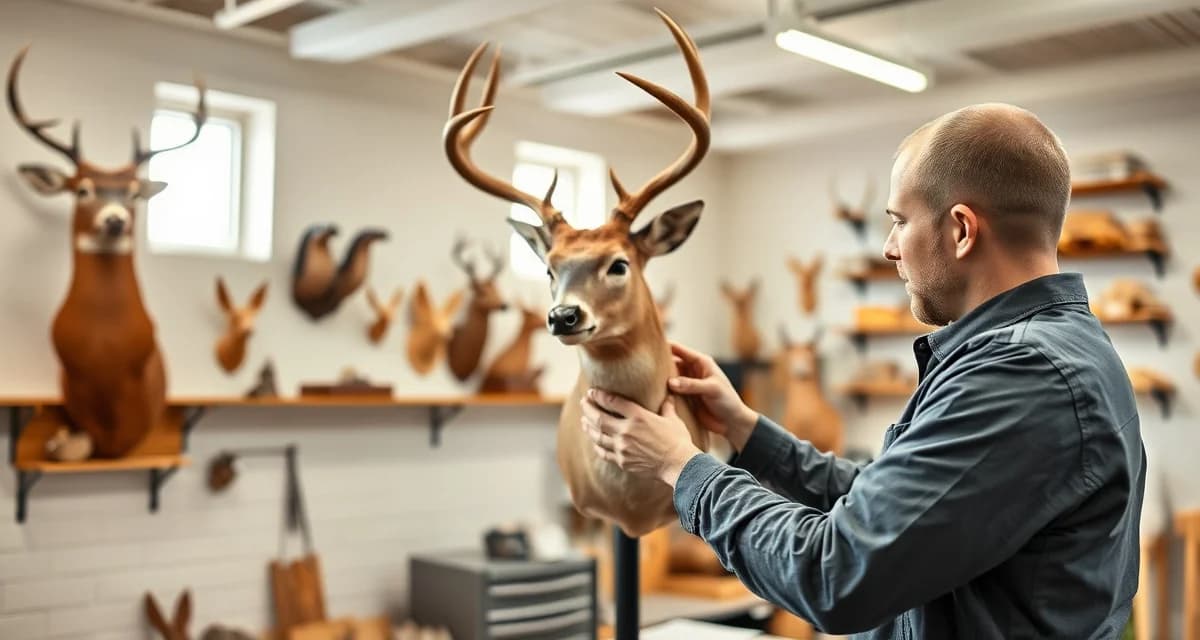
Do You Need a License to Do Taxidermy?
The short answer: In most US states, yes, performing taxidermy commercially requires a state-issued commercial taxidermist license. Requirements vary by state, but operating without the proper license can result in fines, loss of your ability to possess wildlife, and in serious cases, criminal charges.
TL;DR
- Most states require a taxidermist to hold a state-issued commercial taxidermist license before accepting any specimens.
- Federal permits including the migratory bird salvage permit are separate from and in addition to state licenses.
- License fees range from under $20 to over $300 depending on the state.
- Licenses must be displayed in your shop and renewed on the schedule your state requires.
- Operating without a required license can result in fines, permit revocation, and inability to legally possess specimens.
Why Licensing Exists
Taxidermists handle protected wildlife, game animals, migratory birds, and sometimes federally regulated species. States regulate commercial taxidermists to ensure proper documentation of legally harvested specimens, appropriate record-keeping, and accountability in the wildlife handling chain.
Without licensing requirements, bad actors could use taxidermy as a cover for wildlife trafficking, accepting illegally taken specimens and creating records that obscure their origins. Licensing and the associated inspections create a regulated framework for legitimate practitioners.
What a Commercial Taxidermist License Covers
A standard commercial taxidermist license authorizes you to:
- Possess legally harvested wildlife specimens for the purpose of preservation and mounting
- Accept specimens from licensed hunters as a commercial transaction
- Transport specimens to licensed tanneries and suppliers
- Return finished mounts to the original hunter
It typically does NOT cover:
- Possession of endangered species without additional federal permits
- International wildlife requiring CITES documentation (that's a separate federal process)
- Resale of finished wildlife specimens (some states require additional permits for this)
Licensing Requirements by Category
Most states with explicit commercial taxidermist licensing:
States like Michigan, Wisconsin, Pennsylvania, Texas, Colorado, and most others require either a dedicated commercial taxidermist license or a commercial wildlife handler license that covers taxidermy. These are issued by the state wildlife agency (varies: Department of Natural Resources, Game and Fish Commission, Wildlife Agency).
Typical requirements include:
- Application and fee (typically $25-$100 annually)
- Proof of legal residence
- Agreement to maintain records and allow inspections
- Some states require completion of a training or examination
- Renewal annually or biannually
States with minimal requirements:
A small number of states have minimal or no specific commercial taxidermist licensing requirements for intrastate work. This doesn't mean anything goes, federal requirements still apply, and state wildlife regulations still govern possession of game.
Federal requirements that apply everywhere:
Even in states with minimal commercial licensing, federal law applies to:
- Migratory birds (Migratory Bird Treaty Act)
- CITES-regulated species
- Federally listed threatened and endangered species
A state license doesn't substitute for federal permits on federally regulated species.
Hobbyist vs. Commercial Taxidermy
Many states distinguish between hobbyist taxidermy (personal use only, no compensation) and commercial taxidermy (payment received for services). Hobbyist taxidermists working only on their own legally harvested specimens may have minimal requirements in some states.
The commercial threshold is usually: if you accept any payment, including deposits, for taxidermy work performed on someone else's specimen, you're operating commercially and need the commercial license.
Consequences of Operating Without a License
Administrative penalties: Fines from state wildlife agencies, typically $100-$1,000 depending on the state and circumstances.
Loss of authority to possess wildlife: Operating without a commercial taxidermist license means your possession of specimens may be unauthorized. Every specimen in your shop could be considered unlawful possession.
Criminal exposure: If wildlife possession violations rise to the level of Lacey Act issues (taking, transporting, or selling wildlife in violation of law), the federal penalties are significantly more serious.
Inability to defend against complaints: If a customer files a complaint, your first line of defense is your license and records. Without a license, you're starting from a position of non-compliance.
How to Get Licensed
- Identify your state wildlife agency (DNR, Game and Fish, etc.)
- Search their website for "commercial taxidermist license" or "wildlife handler license"
- Complete the application, typically includes personal information, business address, and agreement to recordkeeping requirements
- Pay the application fee
- Receive your license and display it as required (many states require it to be posted at your shop)
- Set a calendar reminder for renewal, lapses are common and create compliance gaps
Related Articles
- Why Do Taxidermists Need Color Reference Photos for Fish?
- What is a Taxidermy Customer Portal and Why Do I Need One?
- What Should Be on a Taxidermy Intake Form?
- What Do I Need to Open a Taxidermy Shop?
FAQ
Do I need a federal license in addition to a state license?
For most standard commercial taxidermy work (deer, turkey, non-migratory game), a state commercial license is sufficient. Federal permits are required specifically for migratory bird work (through MBTA regulations), CITES-regulated species, and any species listed under the Endangered Species Act. Most taxidermists don't need a separate federal license but must comply with federal documentation requirements for applicable species.
What happens if my license lapses and I continue operating?
Even a brief lapse puts you in technical violation. If you discover a lapse, stop accepting new work and renew immediately. Don't backdate records. Contact your state wildlife agency if you have a question about how to handle specimens that were received during the lapse period, transparency is better than attempting to cover a gap.
I'm just starting out and haven't charged anyone yet. Do I still need a license?
If you're genuinely working only on your own specimens with no compensation involved, you may not need a commercial license in your state. The moment you accept compensation, including deposits, for someone else's specimen, you're operating commercially. Get licensed before you accept your first paying customer, not after.
What are the most common taxidermist license violations?
Operating with an expired license, failing to display the license in the shop, accepting wildlife before the license is issued, and operating without required additional endorsements are the most common violations. These are generally correctable violations on first inspection, but repeat violations or more serious offenses involving illegal specimens carry more significant consequences.
Do I need a separate license for each state if I accept out-of-state specimens?
Generally no. Your state taxidermist license covers your operations within your state. Accepting a specimen from a hunter who harvested in another state does not require a license in that other state, as long as the specimen was legally transported across state lines. The state of harvest's laws governed the harvest and transport; your state's laws govern your possession and processing.
How do I find out what licenses and permits I need in my state?
Check your state wildlife agency's website for commercial license requirements. Look specifically for taxidermist, commercial taxidermist, or wildlife taxidermist permit requirements. The NTA also maintains resources for members on state-by-state licensing requirements. If you are unclear after reviewing the agency website, call the agency directly.
Try These Free Tools
Put these insights into practice with our free calculators and planners:
Sources
- State wildlife agencies
- US Fish & Wildlife Service
- National Taxidermists Association (NTA)
Get Started with MountChief
License compliance is the foundation of legal taxidermy operations, and staying current on all required permits protects everything you have built. MountChief's compliance tools include reminders for license renewals and species-specific permit requirements so nothing slips through. Try MountChief to keep your compliance documentation organized.