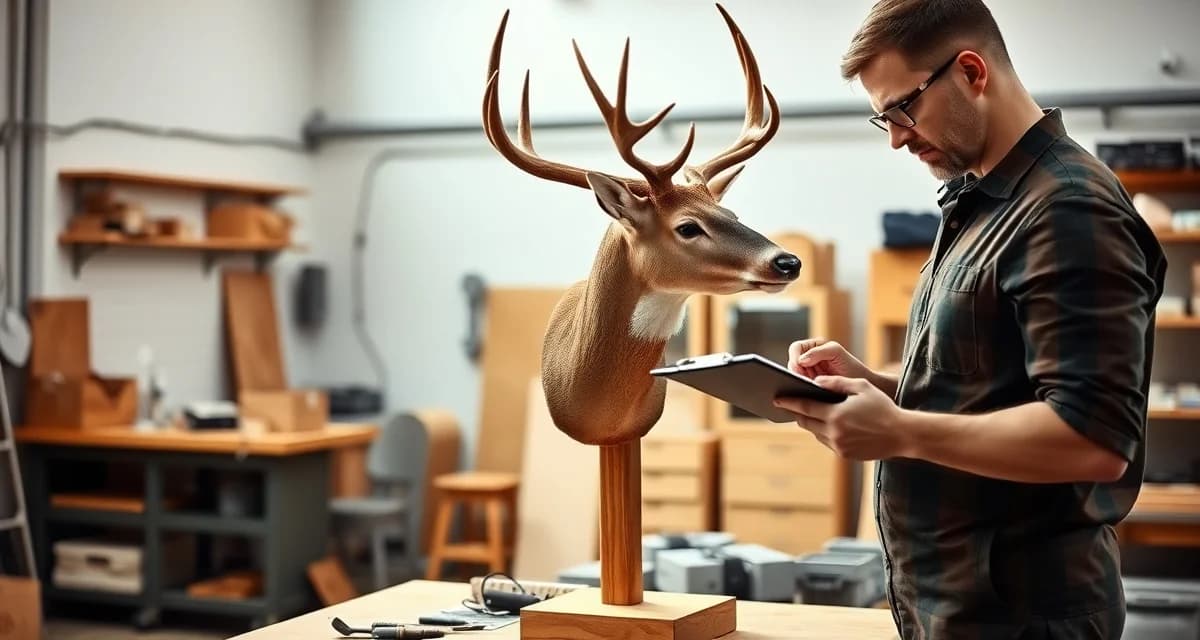
Taxidermy Shop Quality Assurance: Inspection Checklist Before Customer Pickup
Quality inspection before customer contact prevents the "it doesn't look right" complaint cycle. When you inspect the mount yourself and identify any issue before the customer sees it, you control the resolution. When the customer identifies it first, you're responding to a complaint.
Documented QA checks protect against post-pickup quality disputes. A completed inspection record shows when the mount was checked, what was verified, and that it passed your standards before leaving your shop.
TL;DR
- Step back 10 feet and view every finished mount from the customer's viewing angle before marking it complete.
- Note any quality issue in the job record before contacting the customer, even if you address it before delivery.
- A formal pre-delivery inspection checklist reduces the number of customer complaints that arrive after pickup.
- Hide separation, loose eyes, and unfinished lip or nose detail are the three most common post-delivery complaints.
- Competition work standards, even informally applied to production mounts, elevate quality across all price points.
- The job record is the place to document quality decisions made during production, protecting you if any dispute arises.
When to Conduct the QA Inspection
The inspection should happen after the mount is fully finished and before you notify the customer of completion. Do not call or send a completion notification until the mount has passed your QA checklist.
This sequence matters. Contacting the customer, having them drive to pick up, and then discovering an issue at pickup creates a bad experience even if you fix it immediately. Discovering and fixing issues before contact creates a smooth pickup experience.
Universal QA Checklist (All Species)
These items apply to every mount regardless of species:
Structural integrity:
- No visible cracks in the form material around seams
- All joins and attachments are secure, nothing that will separate with normal handling
- The mount is stable on its plaque, panel, or base without wobbling
Finish quality:
- No drips, runs, or uneven coverage in the finish coat
- All areas are evenly sealed and finished
- No visible adhesive or filler material showing
Symmetry:
- The mount appears symmetrical when viewed from the front
- No noticeable lean or twist in the positioning
Labeling and documentation:
- Your shop name is on the mount (standard practice)
- Any engraving or plaque text is correct (verify spelling of the customer's name)
Deer Shoulder Mount QA Checklist
Eyes:
- Both eyes are seated at equal depth
- Eye color matches the signed intake selection
- No visible gap between the eye and the skin around it
- The highlight of each eye is positioned correctly for the pose
- No adhesive visible around eye margins
Ears:
- Both ears are equally sized and positioned
- Ear cartilage recreation looks natural, no buckling or unnatural angles
- Ear hair direction follows natural growth patterns
- Ear tips are fully filled, no hollow or sunken tips
Nose:
- Nose is correctly shaped for the deer's sex and subspecies (buck vs doe noses differ slightly)
- No cracking in the nose or lip area
- All lip detail is preserved and aligned
Hair:
- No visible bald spots or thin areas
- Hair flows consistently in natural directions across the mount
- No visible tanning or chemical staining on the hair
Cape-to-form fit:
- No wrinkles or bunching in the skin around the neck
- The brisket area lays naturally
- No pulled or stretched areas around the head-to-neck junction
Antlers:
- Antlers are secured at the natural angle (not pointing up or down unnaturally)
- Any antler repairs or treatments are not visible
- Burr area is cleanly finished
Final check:
- Step back 10 feet and view the mount from the angle a customer would see it on the wall
- Does it look natural and lifelike?
- Does it represent the quality you'd want to display in your own home?
Fish Mount QA Checklist
Body form:
- The body shape follows the customer's reference photos
- No depressions or flat spots from form imperfections
- The lateral line is defined and accurate
Scale work:
- Scale definition is clear and consistent across the mount
- No areas where scales are compressed or blurred
- Scale edges are clean, not ragged
Fins:
- All fins are fully extended and supported in their final position
- Fin rays are defined and natural-looking
- No cracking or shrinkage in fin membranes
- All fin tips are intact
Color and paint:
- Color matches the customer's reference photos as closely as possible
- Transitions between color zones are smooth
- No visible brushstrokes, paint drips, or airbrush lines
- The gloss or matte finish is even across the entire mount
Eyes:
- Both eyes match the species (glass taxidermy eyes for accurate color)
- Eyes are properly set and sealed
Turkey Mount QA Checklist
Feathers:
- No broken or damaged feathers introduced during mounting
- Feathers lie in natural position without visible manipulation marks
- The iridescent coloring hasn't been damaged by handling
Fan:
- Fan is fully spread and secure
- Fan feathers are evenly spaced
- No feather crossovers or gaps in the fan
Head:
- Head color is natural (or recreated naturally if the skin dried)
- Caruncles are accurately formed
- Snood is positioned correctly for the species and sex
Legs and spurs:
- Spurs are correctly attached and positioned
- Feet are posed naturally
Body posture:
- The posture (full strut, standing, walking) matches the intake selection
Bear QA Checklist (Rug)
Hide:
- Hair quality is consistent across the rug, no bald spots or visible slippage areas
- Color is even and natural
- No visible salt or chemical residue in the hair
Head:
- Head form is accurately shaped for the species and sex
- Lips are fully fleshed and sealed
- Teeth are intact and properly positioned
- Eyes are correctly set
Paws:
- All four paws are properly filled and positioned
- Claws are intact and attached
- Paw pads are realistic
Backing:
- Felt or fabric backing is evenly attached
- No visible staples or adhesive on the face side
Documenting the QA Inspection
Record the inspection in your management software at the same time you update the job status to "complete." Note:
- Date of inspection
- Inspector name (yourself or staff member)
- Pass/fail for each major category
- Any issues identified and how they were resolved
This record demonstrates that a formal inspection was conducted before pickup. If a customer raises a quality concern after pickup, your documented pre-pickup inspection shows the mount met your standard at time of release.
The taxidermy job tracking system in MountChief includes a QA stage in the production workflow.
What to Do When an Issue Is Found
If the inspection reveals a problem:
- Note the issue in the job record
- Repair it before contacting the customer
- Re-inspect after repair
- Only contact the customer after the mount has passed a clean re-inspection
Some issues can be repaired quickly (a minor paint touch-up, a loose antler). Others require more work (resetting an eye, reworking a wrinkled cape area). Do the work before the customer arrives. The time investment is worth it compared to handling a pickup complaint.
Frequently Asked Questions
What should I inspect on a finished deer shoulder mount?
Inspect in sequence from the most critical areas: eyes (depth, symmetry, color match, no visible gaps), ears (equal size and position, natural cartilage, filled tips), nose and lips (correct shape, no cracking, natural detail), hair quality (no bald spots, natural flow, no chemical staining), cape-to-form fit (no wrinkles, natural brisket, clean head junction), antlers (secured at natural angle, burr finished). Then step back 10 feet and look at the complete mount from the viewing angle. If anything looks unnatural or unbalanced from 10 feet, it will look unnatural or unbalanced to the customer. Fix it before they see it.
What QA checks apply to fish mounts before customer pickup?
Body shape against the reference photos, scale definition and consistency, all fin conditions (extension, no cracking, ray definition, intact tips), color accuracy against reference photos, paint quality (no drips, even transitions, correct gloss), and eye accuracy for the species. Step back and compare to the reference photos the customer provided at intake. The customer will make the same comparison. Any significant deviation from the reference needs to be addressed before pickup or disclosed to the customer before they arrive.
How do I document quality inspection results in case of a later dispute?
Record the inspection as a timestamped note in the job record, noting the date, inspector, and the result for each major quality category. If all areas passed, note that explicitly. If issues were found and repaired, note both the issue and the resolution. When you notify the customer of completion, note that notification date as well. This creates a timeline showing: inspection date, pass result, notification date, and (after pickup) pickup date. If a customer later claims the mount had a pre-existing issue, your documented inspection record and the pickup date establish when the mount left your control.
How does this apply to solo taxidermy shops?
The principles in this guide apply to solo shops just as they do to larger operations, though the scale differs. A single-person shop may have lower absolute volume but faces the same documentation, compliance, and customer communication requirements. The practical advice here scales down to any shop size.
What is the most common mistake taxidermists make with taxidermy shop quality assurance?
The most common mistake is treating taxidermy shop quality assurance as an afterthought rather than building it into the standard workflow from the start. Shops that encounter problems in this area typically did not establish clear processes before season, which means every situation becomes a one-off decision rather than a standard response.
Related Articles
- What Should a Taxidermist Do When a Customer Refuses Pickup?
- How Often Do Customers Call Taxidermy Shops About Status?
- Is a Taxidermy Customer Portal Safe for Customer Privacy?
Try These Free Tools
Put these insights into practice with our free calculators and planners:
Sources
- National Taxidermists Association (NTA)
- US Fish & Wildlife Service
- Small Business Administration (SBA)
Get Started with MountChief
Compliance mistakes and missed customer updates cost taxidermy shops real money. MountChief centralizes specimen tracking, documentation, and communication so those gaps close.