Taxidermy Shop Photography: How to Photograph Finished Mounts
Portfolio photos are the number one factor hunters cite when choosing a taxidermist. That single fact should change how you think about documentation time. Every finished mount you photograph well is a future customer walking in the door. Every photo taken with bad lighting from an awkward angle is a missed opportunity.
The good news is you don't need expensive equipment. You need a consistent setup, decent light, and a few minutes per mount. Once you build the habit, it becomes part of your workflow.
TL;DR
- good news is you don't need expensive equipment.
- You need a consistent setup, decent light, and a few minutes per mount.
- Position your mount so the light hits it from a 45-degree angle rather than straight on.
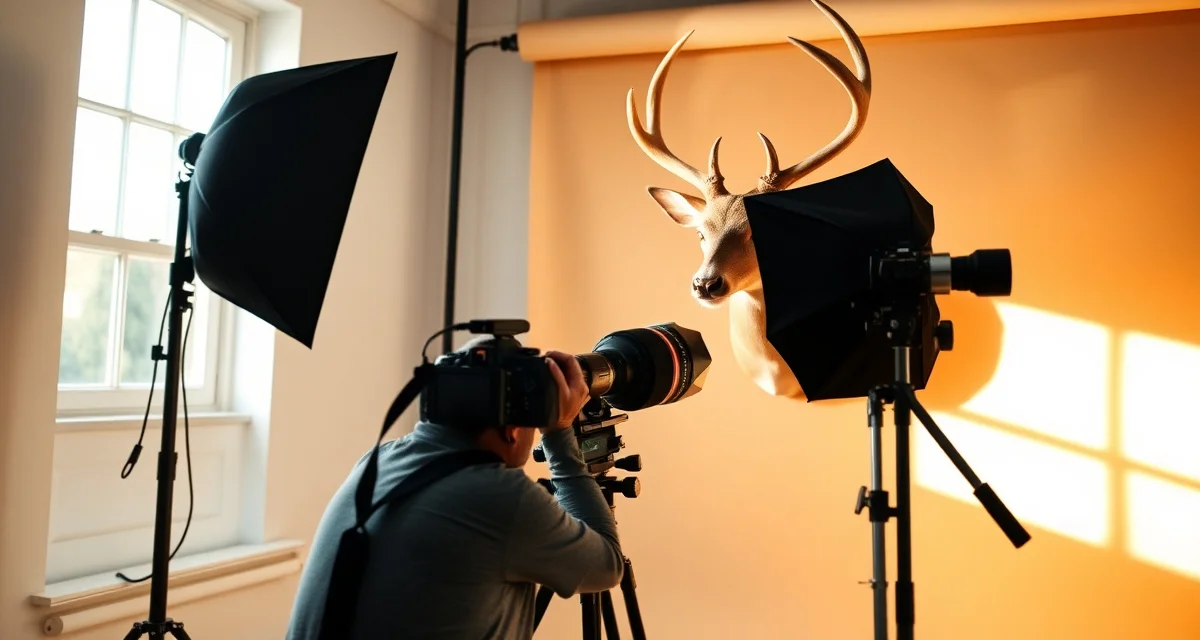
- If you're shooting indoors with artificial light, use two softbox lights at 45-degree angles on either side of the mount.
- You can find budget softbox kits for under $80.
- Properly lit mount photos receive 4x more Instagram engagement than casual phone photos taken in a dark corner of a shop.
Lighting: The Make-or-Break Factor
Natural light from a north-facing window is your best free resource. Position your mount so the light hits it from a 45-degree angle rather than straight on. Straight-on light flattens a mount and kills depth. Angled light shows the texture in the hide, the detail in the nose leather, and the shadow that makes a deer look three-dimensional.
Avoid shooting in direct sunlight. It creates harsh shadows and blows out detail on light-colored areas. Overcast days outside or a shaded area of your shop are ideal natural light situations.
If you're shooting indoors with artificial light, use two softbox lights at 45-degree angles on either side of the mount. You can find budget softbox kits for under $80. The difference between one direct flash and two softboxes is dramatic.
Properly lit mount photos receive 4x more Instagram engagement than casual phone photos taken in a dark corner of a shop. That gap compounds every time you post.
Camera and Phone Settings
Your phone's camera is capable of producing professional-quality portfolio images if you use it correctly. A few settings matter:
Turn off portrait mode for mounts. Portrait mode blurs the background but also blurs the tips of antlers and the edges of ears, which you want sharp.
Use HDR mode in mixed lighting conditions. It prevents overexposed highlights in bright areas while keeping shadow detail.
Grid lines help you frame the mount consistently. Enable them in your camera settings and align the eyes of the subject near an intersection point rather than dead center.
Set your white balance manually if your camera allows it. Auto white balance can drift between shots and make your photos look inconsistent.
Angles That Work
For a shoulder mount, take three photos: a straight-on frontal shot, a 45-degree three-quarter shot from the animal's left, and a close-up of the face showing the glass eyes, nose, and ear detail.
The three-quarter angle is the most flattering for most mounts. It shows depth, antler mass, and the natural posture of the animal better than any other angle.
For European mounts, photograph them against a clean white or dark background. Hold the antlers at eye level and shoot slightly upward. This gives the antlers a presence they don't have when you shoot down at them.
For fish mounts, shoot from directly in front of the fish with the body horizontal. A slight downward angle of about 10-15 degrees shows the dorsal fin detail. Backlit fish mounts can look dramatic but require more advanced lighting.
For bird mounts, get down to eye level with the bird. Most bird photos from above make the bird look small and flat. Eye level creates a much more powerful image.
Backgrounds and Props
A plain background makes the mount the subject. A cluttered background fights for attention. Keep it simple.
A fabric backdrop that you pin or hang behind mounts costs about $20-30 and instantly professionalizes every photo you take. Dark charcoal or forest green works for most game species. White or off-white works for fish and lighter birds.
Avoid shooting in front of shelving, cluttered work tables, or shop equipment. Hunters scrolling Instagram don't want to see your chemical storage in the background of a beautiful whitetail mount.
Building Your Portfolio Systematically
Photograph every single finished piece before it leaves your shop. No exceptions. This is the rule. Once a mount walks out the door you have almost no control over how it's photographed later, and most customers don't have the setup to do it justice.
Keep a dedicated folder on your phone or computer organized by species and year. When you need social content, you already have hundreds of options to choose from.
If you use MountChief's job tracking, attach the finished mount photos directly to the customer's job record. This documents the condition at pickup and builds your portfolio at the same time.
Tag customers in your Instagram or Facebook posts when they give permission. Most hunters are proud of their trophy and will share the post, which puts your work in front of their entire hunting network.
Consistency Over Perfection
A consistent, clean photo taken in the same spot with the same light every time looks more professional than a collection of photos with wildly different backgrounds, angles, and lighting. Pick a spot in your shop. Set it up. Use it every time.
After a season of consistent photography you'll have a portfolio that looks curated rather than accidental. That quality of documentation signals to potential customers that you run a professional operation. Learn more about how your taxidermy shop social media strategy can use this content effectively.
Frequently Asked Questions
What lighting is best for photographing a finished deer mount?
North-facing window light is ideal for natural-light photography of deer mounts. Position the mount at a 45-degree angle to the light source rather than facing it directly. This creates the side shadows that reveal hide texture and antler detail. If you're shooting indoors with artificial light, two softbox lights at 45-degree angles on either side of the mount eliminate harsh shadows. Avoid direct flash, which flattens depth and washes out detail. A basic two-softbox kit costs around $80 and produces dramatically better results than any on-camera flash.
What angles make taxidermy mounts look most impressive in photos?
For shoulder mounts, the three-quarter angle at about 45 degrees from the animal's left is the most flattering. It shows antler mass, body posture, and facial detail simultaneously. Always include a close-up of the face showing eye, nose, and ear work. For European mounts, shoot slightly upward from eye level to give the antlers presence. For fish, shoot straight-on from the side with a slight downward angle. For birds, get to eye level with the bird rather than shooting down at it. Three shots per mount minimum: frontal, three-quarter, and face close-up.
How do I build a portfolio for my taxidermy shop?
Photograph every finished piece before it leaves your shop. No exceptions, no shortcuts. Create a dedicated folder on your phone or computer organized by species and year. Set up one consistent background spot in your shop - a fabric backdrop costs $20-30 - and use it for every piece. After one deer season you'll have 50-200 portfolio images to draw from for social media and your website. Attach finished photos to job records in your management software to document condition at pickup. Tag customers in your posts when they give permission. A consistent, clean portfolio signals professionalism to every hunter who finds you online.
How does this apply to solo taxidermy shops?
The principles in this guide apply to solo shops just as they do to larger operations, though the scale differs. A single-person shop may have lower absolute volume but faces the same documentation, compliance, and customer communication requirements. The practical advice here scales down to any shop size.
What is the most common mistake taxidermists make with taxidermy shop photography guide?
The most common mistake is treating taxidermy shop photography guide as an afterthought rather than building it into the standard workflow from the start. Shops that encounter problems in this area typically did not establish clear processes before season, which means every situation becomes a one-off decision rather than a standard response.
Related Articles
- Elk Season Taxidermy Management Guide: Western Shop Operations
- High-Volume Taxidermy Shop Software: 300–500 Mounts Per Year
- All Species Taxidermy Shop Guide: Managing Every Animal Type
- Taxidermy Shop Bookkeeping: Simple Systems for Non-Accountants
Try These Free Tools
Put these insights into practice with our free calculators and planners:
Sources
- National Taxidermists Association (NTA)
- US Fish & Wildlife Service
- Small Business Administration (SBA)
Get Started with MountChief
The busiest taxidermy shops run on systems, not memory. MountChief replaces scattered spreadsheets and sticky notes with one organized workflow from intake to pickup.